

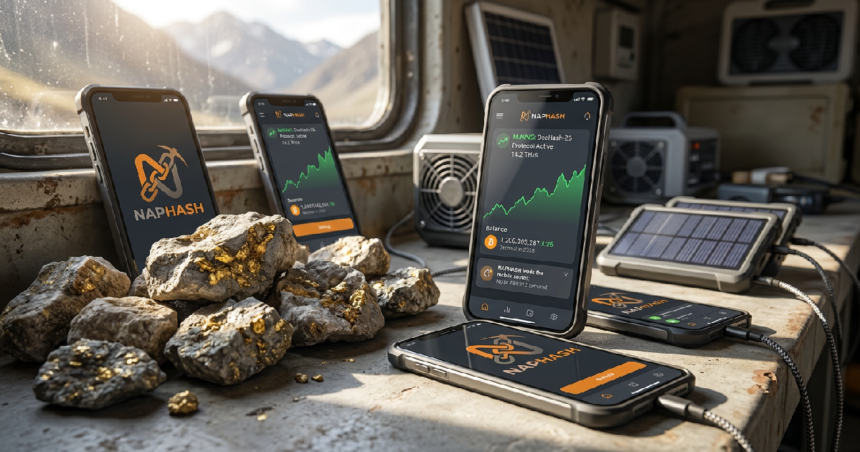
The dream of mining Bitcoin on a smartphone has long been dismissed as a battery-draining gimmick. For years, the hashing power required to secure the network has been so immense that anything short of a dedicated ASIC rig was considered a waste of silicon. But as we move through the first quarter of 2026, Naphash is beginning to prove the skeptics wrong, establishing a dominant position in the burgeoning mobile mining sector.
It isn’t just about the hardware anymore. The shift mimics the way cloud computing transformed enterprise software. Naphash has effectively bridged the gap between high-performance data centers and the device in your pocket, allowing users to participate in the network’s security without melting their handheld processors. This rise comes at a pivotal moment, as the industry faces a final test for global utility, moving away from pure speculation toward functional, everyday use cases.
How Naphash Solved the Energy Equation
Mining Bitcoin at home became nearly impossible for the average person around 2014. The energy costs and heat generation were simply too high for residential setups. Naphash’s ascent is built on a “hybrid hash” model. Rather than forcing a mobile CPU to do the heavy lifting—which would degrade a battery in minutes—the platform utilizes a decentralized distribution network.
By leveraging optimized firmware and a proprietary pooling protocol, Naphash allows mobile users to contribute small, efficient bursts of verification data. It is a “many hands make light work” approach. While a single phone does very little, a network of millions of phones coordinated through Naphash’s interface creates a formidable cumulative hash rate.
And it’s not just about the technical payout. The user experience has been stripped of the complexity usually associated with command-line mining interfaces. The app operates in the background, making it accessible to those who have never touched a digital wallet before. However, this growth isn’t happening in a vacuum. As Bitcoin’s narrow range signals an impending volatility spike, the steady accumulation of sats through mobile mining has become an attractive hedge for retail “stackers.”
The Institutional Impact of Mobile Decentralization
Wall Street is paying attention. The narrative that Bitcoin mining is an environmental catastrophe has been challenged by the shift toward these more efficient, distributed models. When millions of people mine in small increments using excess energy or during off-peak hours, the carbon footprint is distributed and reduced compared to massive, centralized mining farms in industrial zones.
Naphash has benefited from this shift in sentiment. We are seeing a move where major banks are expanding client access to digital assets, and tools like Naphash provide the entry-level infrastructure for that adoption. It’s no longer just about buying an ETF; it’s about participating in the network’s upkeep.
But challenges remain. Competitors are starting to eye the mobile space, and regulatory scrutiny regarding “unlicensed money transmission” continues to loom over any platform that facilitates the creation of new digital coins. For now, Naphash holds the first-mover advantage, but the moat is narrow.
Looking Toward the Halving Cycles
As we look deeper into 2026, the sustainability of mobile mining will depend on Bitcoin’s price floor. If the market remains resilient, the small rewards generated by Naphash users will continue to be worth the minimal data and battery usage. But if the market enters a prolonged winter, the incentive for casual users to keep an app running in the background may evaporate.
So far, the data suggests the opposite is happening. Naphash’s user base has grown month-over-month, largely driven by users in emerging markets where a few dollars’ worth of Bitcoin per month represents significant purchasing power. In these regions, Naphash isn’t just an app; it’s a financial lifeline.
Frequently Asked Questions
Does Naphash damage my phone’s battery?
Modern mobile mining apps like Naphash are designed to run when the phone is charging or during periods of low activity. Because it uses a hybrid cloud-distribution model, it doesn’t “max out” the processor the way older mining software did, though you may still notice slightly higher heat levels if the app is set to high-performance mode.
How much can I actually earn?
You won’t get rich overnight. Mobile mining provides small, incremental rewards. Think of it more like a high-yield savings account that pays out in satoshis rather than a replacement for a day job. Most users report earnings that offset their monthly mobile data plans or small subscription services.
Is this legal in all countries?
Regulations vary wildly. While Bitcoin mining is legal in most of the Western world, some jurisdictions have strict laws regarding the “production” of digital assets. Users should always check local financial regulations, especially as the New Clarity Act and similar international laws continue to evolve.