

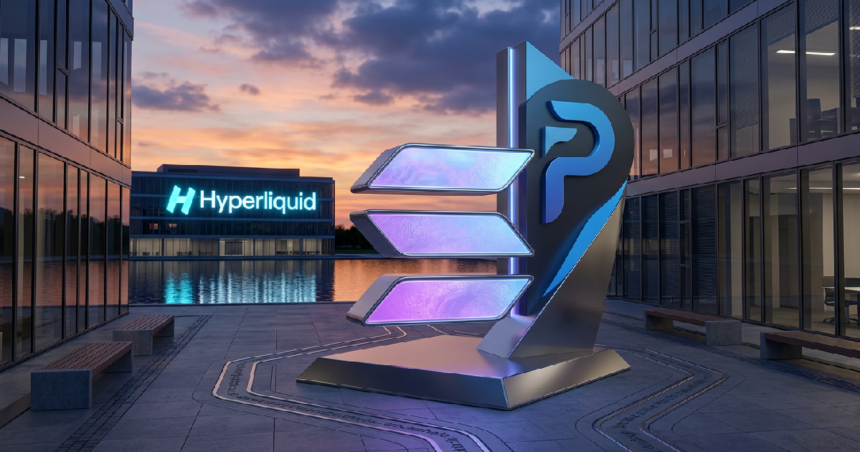
The Solana Foundation is moving beyond its role as a neutral network steward to become a direct competitor in the high-stakes world of decentralized derivatives. In a move that has caught many market observers off guard, the Foundation today announced its acquisition of Perpolator, an emerging decentralized exchange (DEX) infrastructure provider. The deal is a clear shot across the bow of Hyperliquid, the current market leader that has dominated the perpetual futures sector in recent months.
For Solana, this isn’t just about adding another tool to the ecosystem. It’s an aggressive pivot. By bringing Perpolator’s tech stack in-house, the Foundation aims to build a native liquidity layer that can match the vertical integration that has made Hyperliquid so successful. While Solana has always boasted high throughput and low latency, it has struggled to prevent liquidity from fragmenting across dozens of different protocols. This acquisition suggests the Foundation is tired of waiting for third-party developers to solve the problem.
The Battle for Perpetual Dominance
Hyperliquid has set the gold standard for what a decentralized perpetual exchange can look like. By running on its own dedicated blockchain (an L1 optimized specifically for trading), Hyperliquid offers an experience that feels like a centralized exchange but retains the self-custody of DeFi. It has consistently sucked the air out of the room, drawing billions in volume away from established players on Arbitrum and Solana alike.
Perpolator, though smaller in scale, offers a unique architecture that the Solana Foundation believes can turn the tide. Its core technology allows for near-instant settlement of complex derivative products without the “jitter” often seen during periods of high network congestion. By integrating this directly into the foundational layer of Solana, the goal is to create a “liquidity fly-wheel” that makes it cheaper and faster to trade on Solana than anywhere else.
But the move isn’t without controversy. Some developers in the Solana ecosystem are already voicing concerns about “state-sponsored” competition. If the Foundation owns and promotes its own trading infrastructure, where does that leave independent projects like Drift or Jupiter? It’s a delicate balance between growing the network and cannibalizing the very developers who built it.
Engineering a Liquidity Moat
The technical integration of Perpolator is expected to focus on a few key areas that have historically been pain points for DeFi traders. First is the “oracle latency” issue. Most DEXs rely on external price feeds that can lag by a few seconds—an eternity in a volatile market. Perpolator’s proprietary “Fast-Fill” engine reportedly narrows this gap significantly.
Second is the capital efficiency of the margin system. Most decentralized platforms require heavy over-collateralization. Perpolator’s tech allows for more nuanced risk engine calculations, which could theoretically allow for higher leverage with lower liquidation risks. If the Solana Foundation can successfully implement this at scale, it could undermine Hyperliquid’s primary value proposition.
And then there’s the user experience. The acquisition includes Perpolator’s front-end suite, which is designed to abstract away the complexities of wallet signatures and gas fees. The vision is a “one-click” trading environment that mirrors the ease of Binance or Coinbase, but remains fully on-chain.
What This Means for the 2026 DeFi Market
This acquisition marks a new era of “Protocol Realpolitik.” We are moving away from the era where foundations simply hand out grants and hope for the best. In 2026, the competition for users is too fierce for a hands-off approach. As we’ve seen with other shifts in the utility of digital assets, the window for capturing market share is closing.
If the Solana Foundation manages to integrate Perpolator effectively, it could cement Solana as the premier destination for institutional-grade trading. However, if the transition is clunky or if it alienates the existing developer community, it could inadvertently drive users toward more neutral platforms. Hyperliquid is unlikely to sit still; they have already hinted at further decentralizing their sequencer to stay ahead of the regulatory and competitive curve.
Frequently Asked Questions
Will current Solana DEXs be shut down?
No. The Solana Foundation has stated that the Perpolator technology will be available as a public good for other builders to use. However, the Foundation will likely champion its own “official” implementation, which will naturally attract the most liquidity.
Why did they target Hyperliquid specifically?
Hyperliquid currently holds a significant portion of the “on-chain perps” market share. For Solana to prove its technical superiority, it needs to beat the current champion on its own turf—high-frequency, low-fee derivative trading.
Is this acquisition a sign of centralization?
Critics say yes. They argue that a Foundation shouldn’t pick “winners” in its own ecosystem. Supporters argue that this is a necessary move to ensure Solana remains competitive against specialized app-chains that are purpose-built for trading.