

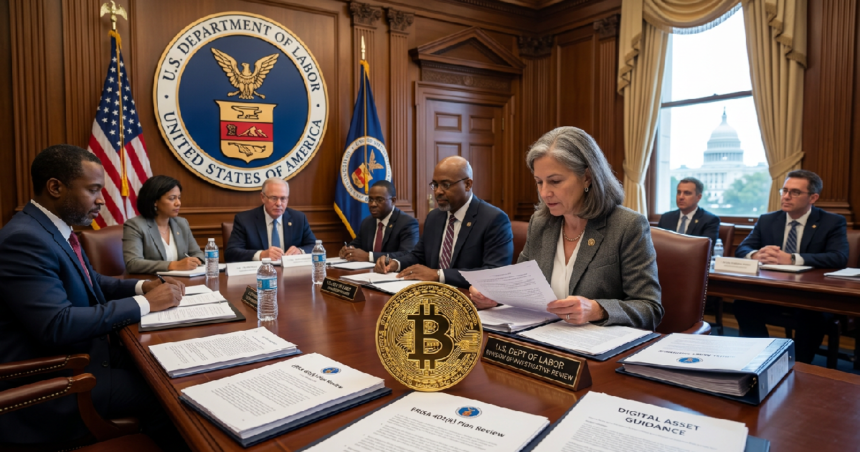
The U.S. Labor Department is officially weighing whether to open the door for Bitcoin to become a mainstay in 401(k) retirement plans. In a development that could reshape the American retirement landscape, officials have begun reviewing existing guidance to determine if digital assets can meet the strict fiduciary standards required for pension and retirement funds.
For years, the Labor Department has maintained a skeptical stance on the matter. It previously cautioned plan sponsors that including volatile assets like Bitcoin in retirement portfolios could lead to legal liabilities. However, the tide appears to be shifting. As institutional adoption grows and spot Bitcoin ETFs provide a more regulated bridge for investors, the Department is under increasing pressure to provide a clearer path for employers who want to offer crypto options to their workers.
Shifting Away from the Cautionary Era
Back in 2022, the Labor Department issued a compliance assistance release that essentially put plan sponsors on notice. The agency expressed “serious concerns” about Bitcoin and other digital assets, citing their speculative nature and the high risk of fraud or theft. But the financial world looks different in 2026. The approval of institutional-grade products and more sophisticated custody solutions has made it difficult for regulators to maintain a blanket “stay away” policy.
Industry groups suggest that the Department’s latest review is less about endorsing Bitcoin and more about clarifying how employers can fulfill their fiduciary duties while acknowledging participant demand. It’s a delicate balance. On one hand, the Labor Department must protect retirees from excessive risk. On the other, it cannot ignore the growing body of institutional-grade market data that suggests Bitcoin is moving toward becoming a legitimate asset class.
The Impact of the Spot Bitcoin ETF Landscape
The catalyst for this renewed interest is the maturity of the spot Bitcoin ETF market. Since their launch, these funds have provided a regulated wrapper that solves many of the Labor Department’s previous concerns regarding physical custody and valuation complexity. Because ETFs trade on major exchanges and are managed by traditional financial giants, they fit more neatly into the existing 401(k) infrastructure than direct holdings on a crypto exchange.
And while regulators remain cautious, the sheer volume of capital flowing into these products has created a “too big to ignore” scenario. Large wealth management firms, including Morgan Stanley, have already expanded access for their clients. The Labor Department is now forced to reckon with the fact that retail investors often have broader access to Bitcoin through their personal accounts than through their employer-sponsored retirement plans.
Fiduciary Risks and The Path to Adoption
The hurdle remains the Employee Retirement Income Security Act (ERISA). Under ERISA, plan sponsors must act solely in the interest of participants. If a plan sponsor adds Bitcoin and the price crashes, they could face lawsuits for a breach of fiduciary duty. Critics argue that the Labor Department’s hesitation has actually harmed retirees by denying them exposure to a high-performing asset class during its growth phase.
But the Department isn’t ready to give a green light without strings attached. Sources close to the discussions indicate that any formal guidance would likely include strict limits on the percentage of a portfolio that can be allocated to crypto. It may also require specialized education for employees to ensure they understand the volatility risks before they opt-in.
Looking Toward a Multi-Asset Future
If the Labor Department provides a favorable update, it won’t just be Bitcoin entering the retirement frame. The framework could eventually apply to other digital assets that prove their utility and market stability. This aligns with broader market shifts where the focus has moved from speculation to domestic utility and institutional integration.
For now, plan sponsors are watching closely. Most are unlikely to act until the Labor Department replaces its 2022 warning with something more constructive. Until then, Bitcoin remains on the periphery of the 401(k) world—visible and accessible to some, but still waiting for the official stamp of approval from the nation’s pension regulators.
U.S. Retirement Crypto Access FAQ
Will the Labor Department mandate that 401(k) plans include Bitcoin?
No, the Department does not mandate specific investments. Instead, they provide the regulatory framework and safety guidelines. It will be up to individual employers and plan sponsors to decide if they want to offer Bitcoin as an option to their employees.
What happened to the previous 2022 warnings against crypto?
The 2022 compliance release is still technically active, but the current review suggests the Labor Department is looking to modernize that stance. The goal is to move from a position of “serious concern” to one that provides specific rules for safe implementation.
Can I add Bitcoin to my 401(k) right now?
It depends on your employer. Some plans offer a “brokerage window” (like a self-directed option) that allows you to buy various ETFs, including Bitcoin funds. However, very few plans currently offer Bitcoin as a core, direct investment option for the average participant.