

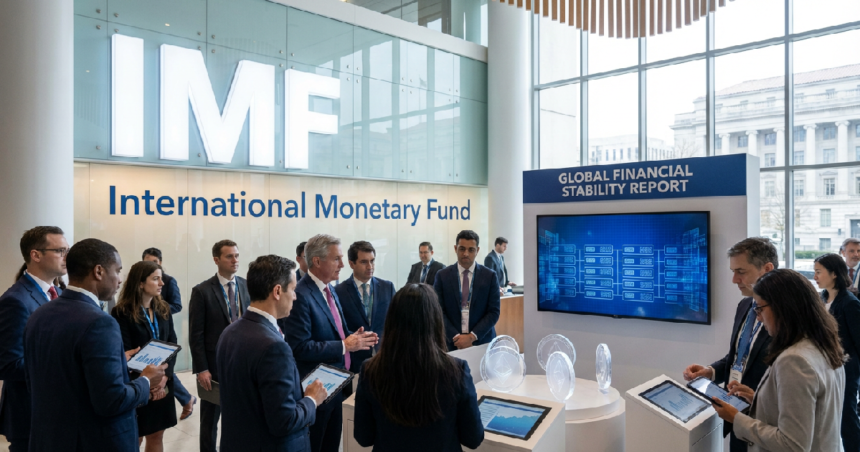
For years, the division between traditional finance and the volatile world of digital assets has remained relatively clear. That wall, however, is thinning as major banks and asset managers rush to bring trillions of dollars in real-world assets onto blockchain networks. The International Monetary Fund (IMF) issued a blunt warning today, suggesting that the very “tokenization” meant to modernize finance could instead act as a high-speed conduit for crypto-native risks to infect the global economy.
In its latest assessment of financial stability, the IMF argues that while moving bonds, real estate, and private equity onto distributed ledgers offers efficiency, it also creates new, unexplored “interconnectedness.” The worry is that the instability seen in decentralized finance (DeFi)—episodes of extreme leverage, rapid liquidations, and liquidity evaporation—could soon have a direct line to the plumbing of traditional markets.
The Bridge Between Two Worlds
Tokenization is no longer a fringe experiment. BlackRock, JPMorgan, and Citigroup have already begun moving portions of their infrastructure toward “on-chain” solutions. By converting physical or financial assets into digital tokens, these institutions hope to settle trades instantly and reduce administrative overhead. But the IMF notes that this efficiency comes at a cost of transparency and control.
When a traditional asset is tokenized, it often ends up being used as collateral within the broader crypto ecosystem. The IMF’s concern is that a sudden crash in the price of Bitcoin or a stablecoin could trigger a chain reaction. If a bank or fund is using tokenized assets to back other trades, a margin call in the digital space could force the selling of traditional assets, potentially dragging down stock or bond prices in the “real” world.
And it’s not just about the assets themselves. The technology brings its own set of headaches. The IMF highlighted “operational risks” like smart contract failures and cyber-security breaches. Unlike a manual bank error that can be reversed by a central authority, an automated crypto protocol might liquidate an entire portfolio in seconds if the code dictates it, regardless of the broader market panic it might cause.
Regulatory Gaps and Liquidity Mismatches
The core of the problem lies in the speed difference between the two systems. Traditional markets have circuit breakers, “T+2” settlement times, and weekend closures that provide a cooling-off period during crises. Crypto markets never sleep and trade with near-instant settlement. A liquidity shock on a Sunday morning in a tokenized pool could be irreparable by the time traditional regulators open their doors on Monday.
The IMF pointed specifically to “liquidity mismatches,” where investors believe they can exit a tokenized real estate or private equity position instantly, even though the underlying asset is notoriously difficult to sell. This illusion of liquidity has been the downfall of many financial booms in the past, and the IMF fears tokenization repeats these classic mistakes with faster technology.
Recent legislative efforts, such as the New Clarity Act, suggest that lawmakers are beginning to wake up to these risks. However, the IMF remains skeptical that current frameworks are enough to handle a fully integrated system where the barrier between a volatile memecoin and a government bond is just a few lines of code.
Stability over Speed
The institution is calling for a “measured approach” to adoption. They aren’t suggesting that tokenization should be banned—the benefits for cross-border payments and transparency are too great to ignore—but they are pushing for strict capital requirements and clearer oversight of the “gatekeepers” who connect these two worlds.
As we’ve seen with the recent warnings of institutional pullbacks due to volatility, the appetite for risk is changing. If the IMF’s warnings are ignored, the next financial crisis might not start with a housing bubble or a bank run, but with a bug in a smart contract that ties together the global economy.
Frequently Asked Questions
What is the IMF’s biggest concern with tokenization?
The main worry is that tokenization creates a direct link between the unstable crypto market and traditional finance. If crypto prices crash, it could force the sale of tokenized “real-world” assets like bonds or property, spreading the crisis into the broader economy.
Doesn’t tokenization make markets more efficient?
On paper, yes. It allows for 24/7 trading and instant settlement. However, the IMF argues that this speed removes the “speed bumps” that usually help prevent market panics from spiraling out of control. Instant trading means instant contagion.
How will this affect the average investor?
For now, most of the impact is at the institutional level. However, if your pension fund or bank starts heavily using tokenized assets, the risks mentioned by the IMF—like liquidity mismatches or smart contract hacks—could eventually affect the stability of those traditional financial products.