

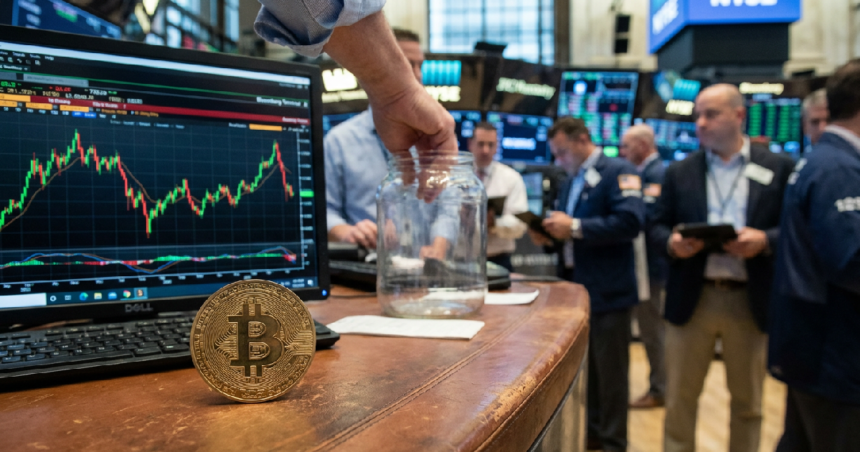
Bitcoin is showing signs of life again, but the path toward new highs is increasingly cluttered with technical hurdles and a shifting macroeconomic backdrop. After a period of directionless trading that left many retail investors on the sidelines, market data suggests there is still significant room for a rally—provided the asset can clear a specific set of hurdles that have stymied previous attempts at a breakout.
The current setup is a classic “wall of worry” scenario. On one hand, institutional inflows through exchange-traded funds (ETFs) remain a consistent tailwind. On the other, a strengthening U.S. dollar and a more hawkish tone from the Federal Reserve have dampened the “easy money” euphoria that characterized early 2024. For Bitcoin to move higher, it won’t just need momentum; it will need to prove it can decouple from traditional risk assets that are currently feeling the squeeze of higher-for-longer interest rates.
The Technical Case for a Secondary Move
Market observers looking at the charts see a familiar pattern emerging. Bitcoin has spent the last several weeks consolidating within a tightening range, a move that often precedes a violent breakout. When an asset spends this much time “bouncing around a box,” as some traders call it, the eventual exit from that range usually carries a lot of force.
The current liquidity profile suggests that sell-side pressure is thinning out at higher levels. Many of the “paper hands” who bought near the peak have already exited, transferring their coins to long-term holders. This exhaustion of sellers is often the fuel for a rally. If Bitcoin can reclaim the $70,000 level with conviction, there is very little historical resistance standing between it and the $80,000 mark. But getting there requires overcoming a significant “catch” that involves more than just price action.
The Catch: A Drying Liquidity Well
Here is the problem: the “catch” that could derail the rally is the thinning volume across major exchanges. While the price might look ready to pop, the actual amount of capital flowing into the spot markets has slowed significantly compared to the first quarter. Much of the recent price movement has been driven by futures and leverage, rather than the organic, spot-buying demand that sustains a long-term bull market.
We are also seeing a shift in how institutional players are behaving. While Morgan Stanley has expanded Bitcoin access for its wealth clients, many of these investors are not buying with the “diamond hands” mentality of early adopters. They are treating Bitcoin as a tactical allocation—a tool to be traded in and out of based on global liquidity signals. If the U.S. Treasury continues to issue high volumes of debt, sucking liquidity out of the private sector, Bitcoin may struggle to find the fresh cash needed to fuel a sustained run.
Macro Winds and the Geopolitical Backdrop
It’s impossible to discuss Bitcoin’s room to rally without mentioning the geopolitical climate. In recent months, Bitcoin has occasionally acted as a digital hedge during times of uncertainty, but that relationship is inconsistent. For instance, Bitcoin edged higher recently as the White House signaled a pause in certain international responses, proving that the asset is deeply sensitive to the global “risk-on/risk-off” switch.
The upcoming months are likely to be defined by this tug-of-war. If inflation data continues to come in hotter than expected, the “room to rally” may quickly disappear as investors flee to the safety of short-term government bonds. Conversely, any sign of a “soft landing” or a pivot toward rate cuts could be the catalyst that allows Bitcoin to break its current range and chase new all-time highs.
Volatility is the Only Certainty
For those holding Bitcoin, the message is clear: the technical room for a rally exists, but the structural “catch” of declining liquidity and macro volatility means the ride will be anything but smooth. We are currently in a volatility squeeze, and these periods rarely end quietly. Whether the breakout is to the upside or downside, the next move is likely to be fast and unforgiving for those caught on the wrong side of the trade.
Frequently Asked Questions
Does Bitcoin still have the potential to hit $100,000 this year?
The math says it’s possible, but the timeframe is the issue. For Bitcoin to reach six figures, it would need a massive influx of spot buyers to overcome the current technical resistance. While the “room to rally” is there, it requires a favorable shift in Federal Reserve policy that hasn’t materialized yet.
What is the biggest risk to a Bitcoin rally right now?
The biggest “catch” is liquidity. If the U.S. dollar continues to strengthen and interest rates remain high, there is less “extra” cash in the system to flow into speculative assets like Bitcoin. A liquidity crunch could turn a potential rally into a sharp correction.
How are institutional investors changing the market?
Institutional players bring stability, but they also bring a different mindset. Unlike retail “HODLers,” institutions are more likely to sell if Bitcoin stops performing as a diversification tool. Their presence makes the market more mature but also more closely linked to traditional stock and bond markets.