By Mark Tyler
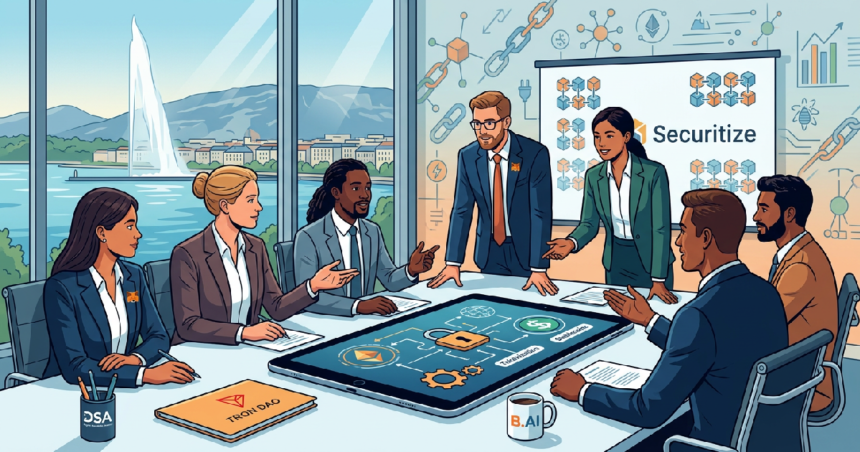
TRON DAO and Securitize recently partnered to host an exclusive industry gathering, the TRON Whale Night, which reportedly brought together prominent leaders from MetaMask, the Digital Standards Alliance (DSA), and B.AI. The event, held in Geneva, Switzerland, aligned with a major industry summit to address the evolving relationship between the Bitcoin ecosystem, stablecoin liquidity, and the acceleration of institutional tokenization. By gathering these infrastructure providers, TRON DAO highlighted its strategic focus on real-world assets and the technical frameworks required to support high-net-worth and institutional participation in decentralized finance.
The assembly provided a platform for TRON to emphasize its role as a primary corridor for global stablecoin circulation. As the network continues to facilitate a substantial portion of USDT transactions worldwide, the alliance with Securitize points toward a broader move into regulated, institutional-grade tokenization. While some
mid-cap tokens face selling wave pressures across the wider market, the discussions in Geneva focused on TRON’s positioning as a utility-driven hub for value transfer, particularly in regions where demand for dollar-pegged digital assets remains high.
Representatives from MetaMask and B.AI contributed to the dialogue by focusing on user accessibility and the integration of automated intelligence in blockchain operations. The presence of the Digital Standards Alliance underscored a collective industry push toward standardized protocols, which are viewed as essential for bridging the gap between legacy finance and public ledgers.
Securitize and the Move Toward Institutional Tokenization
The collaboration between TRON DAO and Securitize arrives as the digital asset industry pivots toward practical financial applications. Securitize has consistently focused on migrating traditional securities to the blockchain, and its engagement with TRON suggests an intent to utilize the network’s high throughput and lower cost structure for regulated products. This shift emphasizes tangible utility over speculative trading, reflecting broader trends where
utility shifts dictate 2026 market strategies for established networks.
Market observers suggest that bringing digital securities to the TRON ecosystem could address liquidity constraints often found in private markets. By enabling around-the-clock settlement and fractional ownership of assets, tokenization can transform previously illiquid investments into more accessible digital formats. This transition is seen as a necessary evolution for public networks seeking to prove their long-term economic value to traditional financial institutions.
MetaMask and the Requirement for Multi-Chain Access
MetaMask’s participation in the event highlighted the growing demand for seamless cross-chain experiences. As institutions and retail participants increasingly move assets between Bitcoin, TRON, and various Ethereum-based layers, wallet providers are under pressure to simplify complex interactions. The discussions centered on maintaining high security standards while lowering the technical barriers for institutional users entering the space through private placements or structured products.
But technical friction remains a hurdle. Moving assets between disparate networks often involves bridge risks that the DSA aims to resolve through unified industry standards. By creating a common language for how data and value are managed across various chains, these organizations are looking to reduce the friction that often deters large-scale institutional entry into the decentralized space.
Artificial Intelligence and Standardized Protocols
B.AI’s contributions to the evening focused on the intersection of blockchain analytics and artificial intelligence. As the scale of transactions on the TRON network increases, managing significant positions requires advanced tools capable of monitoring liquidity and managing risk in real-time. The potential integration of AI into the TRON stack is expected to provide users with more sophisticated risk management capabilities, which is vital for participants navigating
imminent volatility spike patterns that characterize the digital asset sector.
The work of the DSA provides the regulatory and technical foundation for these AI-driven systems. Establishing standards for how automated agents interact with smart contracts is a priority, intended to ensure that increased automation does not result in unintended market consequences. The conversations held in Geneva indicate that the future of the TRON network will likely be defined by its ability to integrate software intelligence with high transactional capacity.
Consolidating Stablecoin Infrastructure
The foundation of TRON’s current market position remains its significant stablecoin volume. During the program, the DAO reiterated its commitment to maintaining the network as a primary venue for USDT. While several other blockchains have sought to increase their market share in the stablecoin sector, TRON’s existing infrastructure and deep liquidity pools have established it as a central hub for dollar-pegged assets globally.
Looking ahead, the success of these strategic partnerships will depend on the network’s ability to adapt to changing legislative environments. As the sector moves into a more mature phase, the relationships established at high-level industry gatherings will likely determine which ecosystems remain relevant. For now, the focus is squarely on building the financial plumbing necessary for institutional capital to move efficiently across the blockchain.