

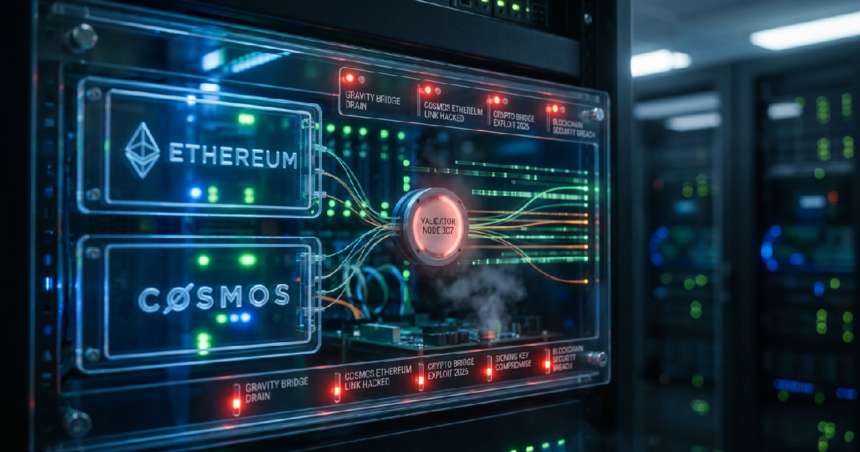
Gravity Bridge, the cross-chain protocol linking the Ethereum and Cosmos ecosystems, halted operations on Saturday, May 30, 2026, after an attacker drained approximately $5.4 million in digital assets. The security breach, which occurred early Saturday morning, has forced a total suspension of bridgework while the development team and validators investigate a suspected compromise of signing keys rather than an exploit in the smart contract code.
The Gravity team confirmed the incident via X (formerly Twitter), directing all validators and orchestrators to immediately stop operations. This emergency pause aims to prevent further outflows and protect the remaining liquidity locked within the bridge’s contracts. Early forensic data indicates the drained funds were moved to a wallet ending in 7C62da1F9, with a portion already routed through services like ChangeNow and Binance to obscure the money trail.
The breach targets a critical piece of infrastructure in the multi-chain world. Unlike several high-profile bridge hacks of previous years that relied on faulty code, the Gravity Bridge incident appears to stem from unauthorized withdrawals approved through compromised authorization. This suggests a failure in private key management or the validator set’s security protocols rather than a math error in the bridge logic.
Breakdown of assets stolen in the Gravity Bridge drain
The attacker successfully extracted a variety of stablecoins and tokenized assets from the bridge’s Ethereum-side treasury. According to on-chain records, the largest portion of the haul consisted of $4.3 million in USDC, followed by 274 Wrapped Ether (WETH) valued at roughly $553,000. Additionally, the perpetrator made off with $434,000 in USDT and a smaller amount of PAXG worth $64,000.
Security researchers, including the team at PeckShield, noted that the attacker’s wallet still holds a substantial balance of approximately 2,102 ETH, worth about $4.23 million. This remaining capital sits under intense scrutiny from blockchain analysts. The swiftness of the bridge’s halt likely prevented the drain from becoming a total liquidation of the protocol’s reserves.
For users who regularly move assets between chains, this incident is a stark reminder of the risks inherent in “lock-and-mint” mechanics. While Ether enters rare accumulation phase for long-term holders, those utilizing bridges often face heightened counterparty risk at the infrastructure level. The Gravity Bridge specifically relies on validator signatures to authorize transfers, making those keys high-value targets for sophisticated actors.
Suspected signing key compromise identified by analysts
On-chain analyst Specter was among the first to flag the suspicious activity, identifying the affected Gravity Bridge contract as the address ending in 1F2D906. Specter’s analysis pointed toward a possible signing key compromise, as the withdrawals appeared to follow standard authorization patterns but were clearly not legitimate user transactions. This theory has since gained traction among other security firms.
The Cosmos-to-Ethereum link functions by locking collateral on the Ethereum side and minting mirrored tokens on the Cosmos-based Gravity chain. If the keys used to sign these transactions are stolen, the bridge can be “tricked” into releasing the locked Ethereum collateral without a corresponding burn of tokens on the Cosmos side. This creates an unbacked liability and a massive hole in the project’s balance sheet.
Operational status and the road to recovery
The protocol remains in a state of indefinite suspension as the team works toward a full postmortem. Validators have been instructed not to restart their nodes until a software patch or a coordinated recovery plan is released. This means any assets currently bridged between the two networks are effectively “trapped” until the bridge is safely reactivated.
While the broader market remains volatile, decentralized finance participants are increasingly wary of these central points of failure. Even as Michael Gillick says CFTC is ready for more oversight, the technical reality of bridge security often outpaces regulatory frameworks. The focus now shifts to whether the Gravity team can negotiate with the attacker or if the stolen funds are permanently lost to washing services.
Immediate impact on the Cosmos and Ethereum ecosystems
The $5.4 million loss, while smaller than some of the billion-dollar exploits seen in previous cycles, creates immediate “de-pegging” risks for assets on the Cosmos side. If the bridge doesn’t have the assets to back the minted tokens, those tokens may lose value relative to their Ethereum counterparts. Arbitrageurs and liquidity providers are currently watching these price spreads closely.
The Gravity Bridge team’s next steps will be critical. Historically, projects in this position have attempted to contact the hacker to offer a “white hat” bounty in exchange for the return of funds. Given that some transactions were linked to Binance, there is a chance that centralized exchange KYC (Know Your Customer) data might assist in identifying the culprit, depending on how the funds were initially moved.
For now, users are advised to stay clear of any third-party links claiming to offer “refunds” or “claims” regarding the Gravity Bridge. These events frequently attract secondary scammers looking to prey on affected victims. Official updates are expected to come solely through the project’s verified social media channels and GitHub documentation as the investigation evolves over the coming days.