

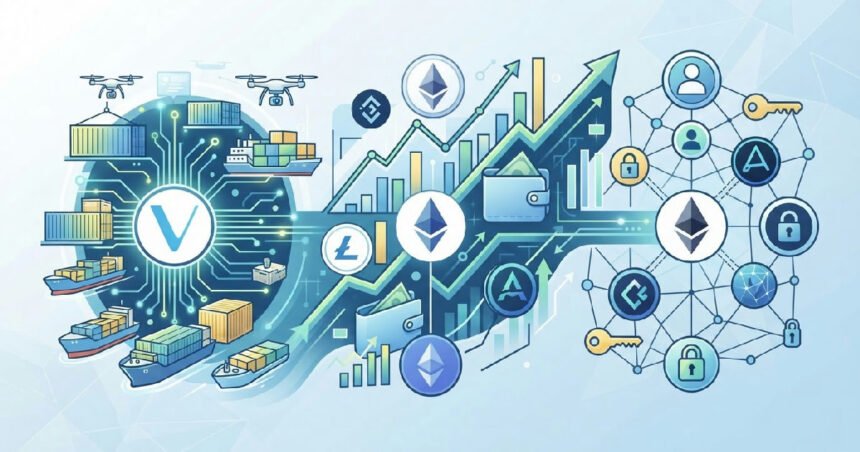
Emerging altcoin projects are rapidly transcending their speculative origins, focusing instead on solving specific real-world problems. By leveraging blockchain and distributed ledger technologies, these innovative digital assets are designed to create tangible value across critical sectors like supply chain management, decentralized finance (DeFi), and digital identity.
No longer just a subject for market traders, the true utility of these emerging altcoin projects is now shaping new economic models. They offer efficient, transparent, and secure alternatives to established centralized systems.
The practical applications of emerging altcoin projects
An “altcoin” broadly refers to any cryptocurrency developed as an alternative to Bitcoin. While prominent networks like Ethereum often garner their own distinct discussions due to their scale, many other cryptocurrencies are categorized as altcoins.
Each altcoin typically possesses unique features, goals, and specific use cases that set it apart. This focus marks a critical shift in the crypto sphere, where utility now drives development.
These emerging altcoin projects are explicitly engineered to address widespread inefficiencies, reduce operational costs, and enhance transparency in various industries. They are building solutions often more accessible and secure than their traditional counterparts.
This commitment to practical utility is driving a new wave of adoption and integration into mainstream business operations. They aim to improve efficiency, reduce costs, enhance transparency, and create new economic models, which can be seen in the key categories driving innovation today.
Core blockchain mechanisms underpinning utility
The practical solutions offered by these projects stem directly from several foundational blockchain mechanisms. These technical elements allow decentralized systems to address complex challenges in ways conventional centralized systems cannot.
Smart contracts stand as a cornerstone of this utility, allowing for automated and trustless processes. These are self-executing agreements with the terms of the contract coded directly onto the blockchain, removing the need for third-party intermediaries.
Decentralized networks further enhance this capability by eliminating single points of control or failure. This architecture inherently boosts security, makes the systems resistant to censorship, and often leads to significantly reduced operational costs for all participants.
Tokenization and consensus for security
Tokenization is another powerful mechanism that enables fractional ownership and increased liquidity. It represents real-world assets or utilities as digital tokens on a blockchain, simplifying asset transfers.
Finally, various consensus mechanisms are crucial for validating transactions and securing the network. Methods such as Proof-of-Stake (PoS), Delegated Proof-of-Stake (DPoS), Proof-of-History, and Hashgraph are used.
Each is designed for specific trade-offs between speed, security, and decentralization, tailored to the project’s specific needs. Many of these projects require careful examination to separate hype from true utility, making it crucial to evaluate cryptocurrency projects thoroughly.
VeChain’s role in supply chain management
One of the most compelling examples of an altcoin delivering tangible real-world value is VeChain (VET). This project is specifically designed for complex supply chain management and tackling prevalent anti-counterfeiting issues.
Global logistics have long grappled with widespread inefficiencies, a lack of transparency, and the persistent challenge of fake goods. Altcoins provide immutable ledgers to track products from their origin all the way to the consumer.
VeChain’s solution, the VeChainThor blockchain platform, provides an immutable ledger for tracking. This system ensures product authenticity and significantly improves traceability, offering clarity to both businesses and end-users throughout the logistics chain.
The platform operates on a dual-token economy to manage its operations effectively. VET functions as the primary token for value transfer and staking, while VTHO (VeThor Token) is used to cover transaction fees.
This setup ensures predictable costs for enterprises integrating the network into their daily operations. VeChain secures its network through a Delegated Proof-of-Stake (DPoS) consensus mechanism.
VeChainThor’s utility extends across various applications, providing real-time, tamper-proof data. This includes tracking the freshness of seafood, authenticating luxury goods, and monitoring carbon emissions for sustainability goals.
Expanding utility across digital sectors
While supply chain management highlights a clear use case, the utility of emerging altcoin projects stretches far wider. These decentralized technologies are fostering innovation in areas desperately needing more efficiency and security.
In decentralized finance (DeFi), altcoins are creating alternative financial systems that bypass traditional banks and institutions. They enable peer-to-peer lending, borrowing, and trading with reduced fees and increased transparency.
This accessibility makes financial services available to a broader global audience. Digital identity solutions powered by altcoins are also revolutionizing how individuals manage their personal data.
These projects allow users to control their digital identities securely and privately, enhancing privacy and reducing the risk of data breaches associated with centralized entities. Data management is another key area where altcoins provide substantial benefits.
By utilizing immutable ledgers, these projects ensure data integrity and security. This makes it impossible to tamper with records once they are stored on the blockchain, which is crucial for sensitive information across various industries.
The gaming sector is also seeing significant disruption, with altcoins enabling true ownership of in-game assets. This fosters new play-to-earn economic models where players can genuinely own, trade, and even earn real value from their digital possessions.
Moreover, decentralized computing projects are leveraging altcoins to create more resilient and scalable alternatives to traditional cloud services. These networks distribute computational tasks across a global network of nodes, reducing reliance on single providers and enhancing overall system robustness.
The long-term implications for value creation
The current shift toward practical applications underscores a maturing cryptocurrency market. The focus is increasingly on sustainable value creation, moving past the fleeting speculative gains of previous cycles.
The ability of these emerging altcoin projects to tackle real-world challenges positions them as more than just digital currencies; they are fundamental, transformative technologies. They aim to improve efficiency, reduce costs, and create new economic models that are more accessible.
By decentralizing processes, these projects represent a fundamental rethinking of how numerous industries operate globally. They challenge established business models and offer new avenues for efficiency, trust, and financial inclusivity.
Looking ahead, the ongoing development and broader adoption of utility-driven altcoins will likely reshape sectors from global logistics to personal finance. Their success hinges on continued innovation and deeper integration with existing digital infrastructure.
Industry watchers often scrutinize how different projects secure the necessary development capital, making understanding the funding models an important part of project analysis.
Ultimately, the utility of emerging altcoin projects demonstrates a clear path forward for blockchain technology. It’s a path defined by practical applications, tangible benefits, and a commitment to creating systems that are more fair, efficient, and transparent for everyone.