

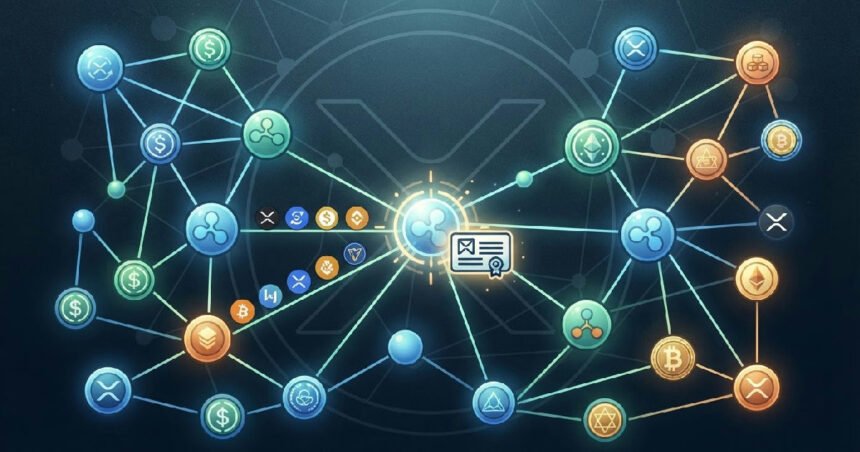
Trust lines on the XRP Ledger serve as a crucial mechanism for managing various issued currencies beyond the native XRP. This explicit opt-in system allows users to define which non-XRP assets they are willing to hold from specific issuers, streamlining multi-asset portfolios and protecting against unwanted tokens.
Essentially, a trust line acts as a permission slip, connecting two accounts on the decentralised ledger. It dictates the maximum amount of a particular issued asset an account will accept from a designated issuer, establishing a clear framework for digital asset interactions.
Understanding Issued Currencies and Trust Lines on the XRP Ledger
Issued currencies, also known as tokens or IOUs, represent digital assets on the XRP Ledger that are distinct from XRP itself. These assets often derive their value from real-world counterparts, such as fiat currencies, commodities, or loyalty points, held off-ledger by an issuer.
Issuers are accounts responsible for creating and distributing these digital currencies. Gateways, acting as intermediaries, facilitate the issuance, redemption, and exchange processes on the XRP Ledger, often bridging traditional financial systems with their blockchain representations. The XRP Ledger consistently processes transactions with high efficiency, which is vital for these processes.
These issued currencies are meticulously tracked through the accounting relationships established by trust lines. Without a trust line, an account cannot receive or hold these specific non-XRP assets, which helps maintain order and user preference on the network.
The Foundational Mechanics of Trust Line Operation
Trust lines are fundamentally recorded within the XRP Ledger as RippleState entries, which signify a bidirectional relationship between two participating accounts. This on-ledger record is central to the system’s integrity and functionality.
An account initiates a trust line by sending a TrustSet transaction, unilaterally declaring its willingness to trust another account as an issuer. This action broadcasts the user’s intention to engage with a specific issued asset and its originating entity.
During this setup, the user explicitly defines a Limit, specifying the maximum quantity of the issued token they are prepared to receive from that particular issuer. This limit provides users with critical control over their asset holdings, preventing overexposure or unwanted accumulation of specific tokens.
Each trust line is unique to a given currency code and its specific issuer; an account can maintain multiple trust lines for different currencies or different issuing entities. This flexibility allows users to manage a diverse portfolio of digital assets from various sources, all within a single XRP Ledger account.
Reserve Requirements: A Deeper Look
Establishing each trust line incurs an owner reserve of 0.2 XRP, which is locked within the account for the duration of the trust line’s existence. This amount is not a transactional fee deducted from the user’s balance but rather a deposit to ensure network stability and prevent resource abuse.
The reserve is designed to discourage the creation of an excessive number of trust lines that might unnecessarily bloat the ledger. It encourages users to be deliberate in their choices, only establishing trust with issuers they genuinely intend to transact with.
The locked XRP is automatically released back into the account’s usable balance once the trust line is deleted, typically when both sides are in a default state and the balance is zero. This ensures that the user’s funds are not permanently held, but rather temporarily allocated to support the network’s operational integrity.
Notably, new accounts may have this reserve waived for their first two trust lines, offering an initial incentive for user adoption before the full owner reserve applies to subsequent objects. This credit helps new users get started on the XRP Ledger by easing the initial financial commitment required for basic multi-asset functionalities.
Advanced Capabilities: Rippling and Pathfinding on XRPL
Beyond simple transfers, trust lines underpin more intricate payment functionalities on the XRP Ledger, including rippling and pathfinding. These features significantly enhance the ledger’s utility for cross-asset transactions and debt settlement, providing sophisticated financial routing capabilities.
Rippling describes the indirect movement of funds for payments involving trust line tokens. It enables transfers between holders of the same token, or even across different issuers using the same currency code, by dynamically adjusting balances via intermediary trust lines. This process facilitates complex payment scenarios and distributed debt settlement across the network.
For example, if Account A owes Account B a certain issued currency, and Account B owes Account C the same currency, rippling can settle both debts without direct transfers between all three parties. It acts as an efficient clearing mechanism, reducing the number of on-ledger transactions required for settlement.
Pathfinding is a sophisticated feature that autonomously identifies the most efficient and cost-effective route for cross-currency payments or asset exchanges. It intelligently leverages existing trust lines, the liquidity within the decentralised exchange, and other on-ledger factors to determine optimal transaction paths.
This allows a user to send one type of asset and have it arrive as another, with the XRP Ledger automatically calculating the best conversion route. Pathfinding ensures that users achieve the best possible exchange rates and lowest transaction costs, even for complex multi-hop payments involving several different assets and issuers.
Strategic Benefits for Multi-Asset Portfolio Management
The trust line mechanism is pivotal for secure and controlled multi-asset management on the XRP Ledger. By requiring explicit consent, it acts as an effective spam filter, ensuring users only receive tokens they have opted to hold.
Users maintain full control over their digital assets, defining limits on acceptance and managing their exposure to various issued tokens. This structured approach fosters a more reliable environment for holding diverse digital assets, protecting users from unexpected or malicious token transfers.
It also protects users from unsolicited transfers that could clutter their accounts or expose them to unwanted liabilities. This level of granular control is a distinguishing feature, differentiating the XRP Ledger from other blockchain platforms with less restrictive token reception mechanisms.
Understanding these foundational elements is essential for sustainable altcoin growth on the ledger. The explicit nature of trust lines promotes a healthier ecosystem by empowering users with the final say over what assets enter their wallets, fostering trust and predictability.
The Broader Role of Trust Lines in the XRPL Ecosystem
Ultimately, trust lines transform the XRP Ledger into a robust platform for managing a wide array of digital assets beyond its native currency. They provide the necessary framework for a secure and user-centric ecosystem where financial instruments can be issued, exchanged, and held with confidence.
This foundational layer helps mitigate risks associated with decentralised finance, ensuring that participation in the XRP Ledger’s multi-asset environment remains intentional and well-governed. It underpins much of the network’s functionality, enabling a diverse range of financial services.
The ability to issue and manage various forms of digital assets through trust lines means the XRP Ledger can support a wide array of applications, from stablecoins representing fiat currencies to tokenised commodities and even loyalty points. This broad utility positions the XRPL as a versatile platform for innovation.
This allows for diverse applications and financial innovations without compromising user security or control. Such comprehensive features are essential when navigating the broader crypto landscape and considering altcoin investments, as they provide a clear and secure method for asset interaction.
The trust line system underscores the XRP Ledger’s commitment to user autonomy and system stability. It represents a deliberate design choice that enhances the ledger’s reliability and appeal for sophisticated financial applications and everyday digital asset management alike.