

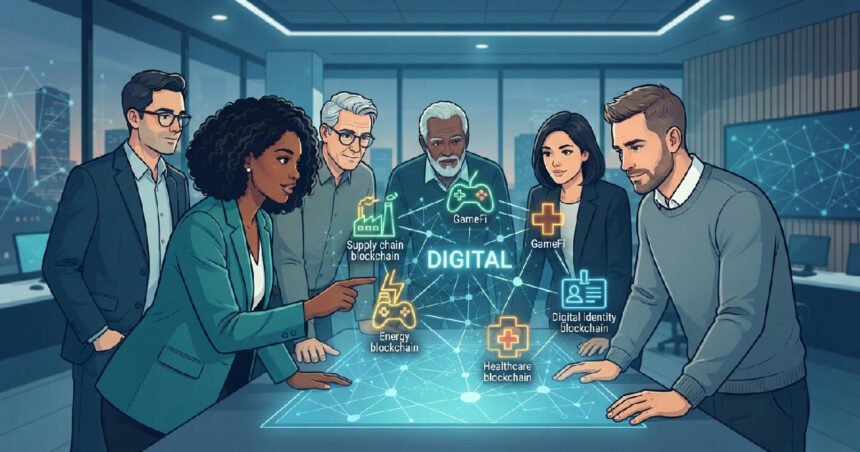
Emerging altcoin applications are fundamentally reshaping industries far beyond the confines of traditional finance. These innovative digital currencies and their underlying blockchain technology offer compelling real-world use cases, enhancing efficiency, security, and trust in diverse sectors like supply chain management, energy, gaming, digital identity, and healthcare.
This transformative shift harnesses the core principles of decentralization, transparency, and immutability, moving blockchain from speculative asset to indispensable infrastructure.
Understanding digital currencies and blockchain foundations
An altcoin, short for “alternative coin,” is any cryptocurrency that isn’t Bitcoin. Many altcoins aim to build upon or improve Bitcoin’s original design, often introducing novel functionalities or addressing specific industry needs.
At its heart, blockchain acts as a decentralized and immutable ledger. It meticulously records and tracks data or transactions, with each new entry, or “block,” cryptographically linked to the previous one. This architectural design makes data manipulation exceedingly difficult, ensuring a shared and tamper-proof record of information across a network.
Core Concepts Powering Decentralized Innovation
The innovation isn’t just in the coins themselves but in the technologies they enable. Smart contracts are self-executing agreements with terms written directly into code.
They automatically trigger actions when predefined conditions are met, drastically reducing reliance on intermediaries. Similarly, Decentralized Applications (dApps) operate on decentralized networks, typically blockchains, rather than centralized servers. Ethereum is a prime example of a platform facilitating dApp development.
Tokenization further expands these capabilities by converting asset rights into digital tokens on a blockchain. This can apply to both tangible assets like real estate and intangible ones such as intellectual property, democratizing ownership and transfer.
Mechanisms Driving Industry Reshaping
Altcoins and their foundational blockchain technology are disrupting established industries through several key mechanisms. These principles address longstanding inefficiencies and vulnerabilities inherent in centralized systems.
At the core of this disruption is decentralization, which fundamentally rearchitects how data and processes are managed. By distributing control across a network rather than concentrating it in a single entity, systems become inherently more resilient and cost-efficient, bypassing traditional intermediaries and their associated overheads. This shift empowers a more democratic and robust operational framework.
Furthermore, the inherent transparency and immutability of blockchain provide an unparalleled level of trust and accountability. Every transaction and data point is recorded permanently and is visible to authorized participants, creating an unchangeable audit trail. This, combined with the automation capabilities of smart contracts, streamlines complex processes, reduces errors, and accelerates transaction times, transforming how businesses operate.
Decentralization, Transparency, and Security
Decentralization removes the need for central authorities, which in turn can significantly reduce operational costs and boost overall efficiency. By distributing control, systems become more resilient and less susceptible to single points of failure.
Transparency and immutability ensure that all transactions and data recorded on a blockchain are visible to authorized participants and cannot be altered. This creates an unchangeable audit trail, fostering unprecedented levels of trust and accountability.
Cryptographic principles secure the data within a blockchain, making it highly resistant to fraud and unauthorized access. This robust security framework is crucial for protecting sensitive information across various applications.
Automation with Smart Contracts
Smart contracts automate complex processes, ensuring that agreements are executed precisely as programmed without human intervention. This automation streamlines operations, reduces errors, and speeds up transaction times across industries.
The shift towards automated, trustless systems represents a major leap forward for business processes. It removes much of the friction traditionally associated with multi-party agreements and transactions.
Innovative Real-World Use Cases
The impact of altcoins is most evident in the specific, tangible solutions they offer to real-world problems. These applications are moving blockchain from theoretical potential to practical implementation.
Across diverse sectors, these technologies are delivering tangible improvements. In supply chains, they provide unprecedented transparency, enabling end-to-end product tracking and significantly reducing fraud. Within the energy sector, altcoins facilitate decentralized trading and management, fostering greater efficiency and supporting sustainable practices. Similarly, healthcare benefits from secure, tamper-proof record-keeping, enhancing data integrity and patient privacy.
Moreover, altcoin applications are redefining user interactions and ownership. The gaming industry, through GameFi, now offers players true digital ownership and innovative play-to-earn economic models. Digital identity solutions leverage blockchain to provide enhanced security and privacy, giving individuals sovereign control over their personal data. These examples underscore the profound shift from centralized control to decentralized, user-centric ecosystems.
Supply Chain Management
Altcoins and blockchain technology are addressing critical issues within traditional supply chains, such as a pervasive lack of transparency, systemic inefficiencies, and persistent fraud. A decentralized and immutable ledger tracks products from their origin to the end consumer, recording every step in an unalterable manner.
Companies gain enhanced transparency, allowing them to track products meticulously. Walmart, for example, uses blockchain to trace food items, which proved invaluable for quickly identifying contamination sources during food safety incidents. This level of traceability significantly reduces counterfeiting, particularly for pharmaceuticals and luxury goods, by providing an unalterable record of a product’s journey.
Projects like VeChain (VET) leverage tamper-proof distributed ledger technology (DLT) to offer market transparency and detailed product information to consumers. Waltonchain (WTC) integrates IoT and RFID with blockchain to eliminate fraud. Other notable initiatives include IBM Food Trust, De Beers’ Tracr for diamonds, and TradeLens, a platform by Maersk and IBM focused on global trade data transparency.
Energy Sector Transformations
Energy coins represent a new class of digital currencies designed to enhance the efficiency, transparency, and decentralization of energy management. They actively support the global transition towards more sustainable energy sources.
These altcoins utilize blockchain to establish decentralized energy networks. Within these networks, users can directly generate, trade, and consume energy, bypassing traditional energy companies. This creates decentralized energy marketplaces, improving efficiency and transparency within the energy industry.
The Energy Web Token (EWT) aims to integrate blockchain into the energy sector to decentralize global energy infrastructure. SunContract (SNC) seeks to democratize the energy market, enabling peer-to-peer energy trading using SNC tokens. Powerledger (POWR) is another top energy token by market capitalization.
Moreover, projects like Chia Network (XCH) champion sustainable practices by using a “proof-of-space-and-time” consensus mechanism, which dramatically reduces environmental impact compared to energy-intensive proof-of-work systems.
Gaming Industry (GameFi)
Altcoins are now an essential component of the GameFi sector, which merges gaming with decentralized finance. This convergence is enabling entirely new economic models and fostering true digital ownership for players.
Gaming altcoins facilitate in-game economies where players can own, trade, and monetize digital assets, often as Non-Fungible Tokens (NFTs). This means players have true digital ownership, allowing them to trade or sell assets outside the game’s ecosystem. The innovative play-to-earn models reward players with cryptocurrency for their participation and achievements.
Leading projects in this space include Axie Infinity (AXS), a prominent play-to-earn game, and The Sandbox, a virtual world where players build and monetize experiences. Gala is another significant blockchain gaming platform. Enjin (ENJ) provides vital tools for creating and managing blockchain-based gaming assets.
Solana (SOL) is also a key blockchain platform, renowned for its speed and scalability, supporting numerous projects across GameFi, DeFi, and NFTs. Discussion around top altcoins often highlights their role in such evolving sectors.
Digital Identity Solutions
Blockchain technology is offering robust solutions for digital identity that prioritize security, privacy, and user control. Traditional centralized identity systems are vulnerable to data breaches, a risk mitigated by decentralized approaches.
Decentralized Identifiers (DIDs) allow users to create and manage their own digital identities. Personal data is stored off-ledger in secure digital wallets, with the user retaining complete control. This model offers enhanced privacy and security, as individuals determine how their data is shared, leading to self-sovereign identity (SSI).
This approach significantly reduces fraud by combating fake identities. Hedera (HBAR) is one project emphasizing applications in digital identity, demonstrating the practical deployment of these concepts.
Healthcare Sector Innovations
Blockchain can vastly improve various aspects of healthcare, from managing patient data securely to ensuring the integrity of pharmaceutical supply chains. The technology creates tamper-proof electronic health records (EHRs), making them less susceptible to hacking and manipulation.
It also provides secure and transparent tracking for medical supplies. This capability helps track drugs from manufacturing to pharmacies, a critical step in preventing counterfeit medications from entering the market. Smart contracts can further automate healthcare processes.
Storing clinical trial data transparently on a blockchain also reduces the risks of manipulation and enhances public trust. The improvements here address some of the most sensitive and critical data management challenges in modern society.
Market Implications and Future Outlook
The expanding utility of altcoins beyond finance suggests a maturing cryptocurrency ecosystem. This shift indicates that blockchain technology is increasingly recognized for its fundamental capabilities, not just its speculative value.
As more industries adopt these decentralized solutions, we can expect a broader integration of blockchain into everyday processes. This will likely drive further innovation and foster new economic models that prioritize transparency, security, and efficiency across the global economy.
Concluding Summary
Altcoins are transcending their initial financial applications to become powerful tools for industrial transformation. From securing supply chains and decentralizing energy markets to enabling digital ownership in gaming and fortifying digital identity and healthcare, their real-world impact is undeniable.
By leveraging blockchain’s core attributes, these emerging applications promise to build more transparent, efficient, and secure systems across a multitude of critical sectors.
Frequently Asked Questions About Altcoin Applications
- What is an altcoin?
- An altcoin is any cryptocurrency other than Bitcoin. Many altcoins introduce new functionalities or address specific needs not met by Bitcoin’s original design.
- How do altcoins impact industries beyond finance?
- Altcoins and their underlying blockchain technology enhance efficiency, security, and trust in diverse sectors like supply chain, energy, gaming, digital identity, and healthcare through decentralization, transparency, and automation via smart contracts.
- What are smart contracts?
- Smart contracts are self-executing agreements with terms directly coded into them. They automatically carry out actions when predefined conditions are met, reducing the need for intermediaries.
- Can blockchain really prevent counterfeiting in supply chains?
- Yes, by providing an immutable and transparent ledger, blockchain can track products from origin to consumer. This unalterable record significantly reduces counterfeiting, especially for high-value goods like pharmaceuticals and luxury items.
- What is GameFi?
- GameFi combines gaming with decentralized finance (DeFi), allowing players to own, trade, and monetize digital assets (often NFTs) within games. This creates play-to-earn models where players can earn cryptocurrency for their participation.