

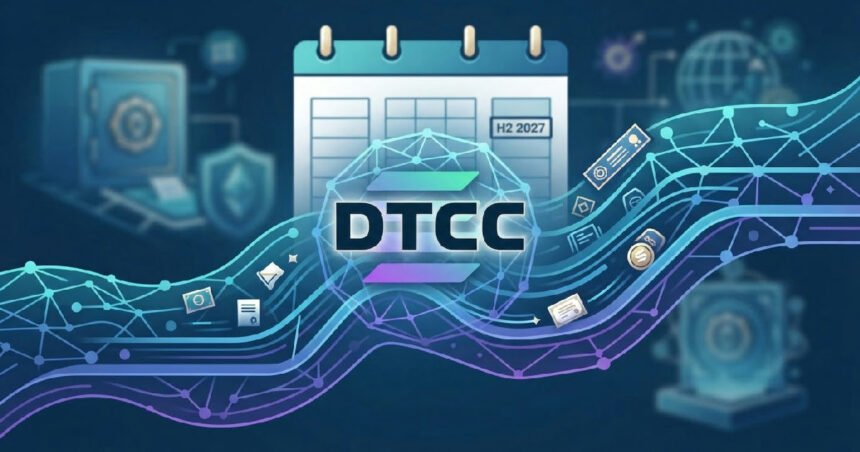
The Depository Trust & Clearing Corporation (DTCC), a cornerstone of the global financial markets, has announced it plans to extend its DTCC Tokenization Service to the Solana blockchain. The firm is targeting the second half of 2027 for the integration, marking a pivotal step in bridging traditional securities with public distributed ledger technology.
This move signals a significant vote of confidence in public blockchains for handling high-value institutional assets. The announcement, originally made on May 29, 2024, at the Digital Asset Summit, places a concrete timeline on a development that could reshape the architecture of post-trade processing and settlement.
Depository Trust and Public Blockchains
The DTCC sits at the heart of the U.S. financial system, processing trillions of dollars in securities transactions every year. Its decision to integrate with a public, high-throughput blockchain like Solana is a calculated strategy to modernize market infrastructure and explore new efficiencies.
This follows the service’s initial launch on October 28, which utilized the Canton Network and DTCC’s private Besu network. While those first steps were crucial, extending support to a public network represents a much broader vision for the future of finance. It reflects a strategic push by DTCC to modernize market infrastructure and adapt to the evolving digital asset landscape.
The service allows eligible users to convert their securities held at the Depository Trust Company (DTC), a DTCC subsidiary, into tokenized versions. These digital representations can then be moved to a digital wallet of the user’s choice and converted back into traditional securities, demonstrating Solana’s technological capabilities for such transfers. This maintains a seamless link to the existing financial ecosystem.
According to Brian Steele, president of DTCC Clearing & Securities Services, these tokenized assets will retain all the investor protections and regulatory safeguards of their traditional counterparts. This assurance is critical for gaining the trust and participation of large, regulated financial institutions.
The strategic selection of Solana
The choice of Solana is not accidental. The blockchain is renowned for its high transaction speeds and low costs, attributes essential for an entity that handles the immense volume of the U.S. securities market. The integration aims to leverage these features to enable innovations like atomic settlement, potentially reducing settlement times from days to seconds.
Improving Solana network performance indicators has been a key focus for its developers. This makes it an increasingly attractive platform for enterprise-grade applications. DTCC’s goal is to support the entire lifecycle of a tokenized asset, from its initial issuance to its transfer and final settlement, all on-chain.
Jennifer Peve, DTCC’s Head of Strategy and Business Development, emphasized the project’s ambition to “drive the industry forward” and “unlock the full potential of tokenized assets.” By exploring public blockchains, the corporation is positioning itself to lead the evolution toward a more efficient, transparent, and accessible market structure.
This initiative directly addresses long-standing challenges in the tokenized securities market. These include liquidity fragmentation and operational bottlenecks. By providing a regulated and robust infrastructure, the DTCC aims to create a more unified and streamlined environment for digital assets to flourish.
Part of a broader institutional trend
The DTCC’s work is a key component of a larger global effort to tokenize real-world assets (RWAs). This specific initiative is part of “Project Guardian,” a collaborative pilot program with the Monetary Authority of Singapore (MAS). It’s designed to test the feasibility of tokenization in wholesale funding markets.
The project involves several of the biggest names in finance, including J.P. Morgan, BNY Mellon, Bank of America, Citi, Morgan Stanley, and UBS. These firms have already signed agreements to use the tokenization service, signaling broad industry buy-in. Their involvement underscores the collective push to modernize financial plumbing through blockchain technology.
This trend isn’t isolated to the DTCC. Other major exchanges and financial infrastructure providers are also exploring various distributed ledger technology (DLT) platforms for tokenized assets. For example, Samsung Electronics’ recent move to launch USDC on Solana showcases the growing interest in the network. This broader context highlights the accelerating convergence of traditional finance and the digital asset world.
The road from pilot to production
The path to the 2027 Solana integration has been methodical. A crucial step was receiving a no-action letter from the U.S. Securities and Exchange Commission (SEC) in December 2025. This regulatory clarity allowed DTC to proceed with tokenizing a range of important assets.
The scope of eligible securities is substantial. It includes Russell 1000 stocks, major U.S. equity index exchange-traded funds (ETFs), and a variety of U.S. Treasury instruments. This wide range ensures the service has immediate and significant utility for institutional players.
The first limited production trades commenced in July 2026. In a key trial, JPMorgan successfully tokenized a portion of its Invesco QQQ Trust holdings. The bank retained the ability to convert them back to traditional shares.
What this means for the future of securities
When a foundational piece of market infrastructure like the DTCC embraces public blockchains, it sends a powerful message. It validates the technology as a viable and potentially superior alternative for core financial services. The integration with Solana could act as a catalyst, encouraging other legacy systems to explore similar paths.
The scale of the DTCC’s operations cannot be overstated. Its depository subsidiary provided custody and asset servicing for an astounding $114 trillion in securities in 2025. If even a tiny fraction of that value transitions to a tokenized format on a public blockchain, it would represent a monumental shift in capital flows and market structure.
Looking ahead, the successful implementation of this service could unlock numerous benefits. These include enhanced liquidity, greater transparency in ownership records, and the potential for programmable securities that can automate complex financial processes. It represents a fundamental reimagining of how assets are held, traded, and settled.
While the 2027 target is still some time away, the groundwork being laid today is essential. The collaboration between the DTCC, its institutional partners, and public blockchain communities like Solana is paving the way for a more interconnected and efficient global financial system.