

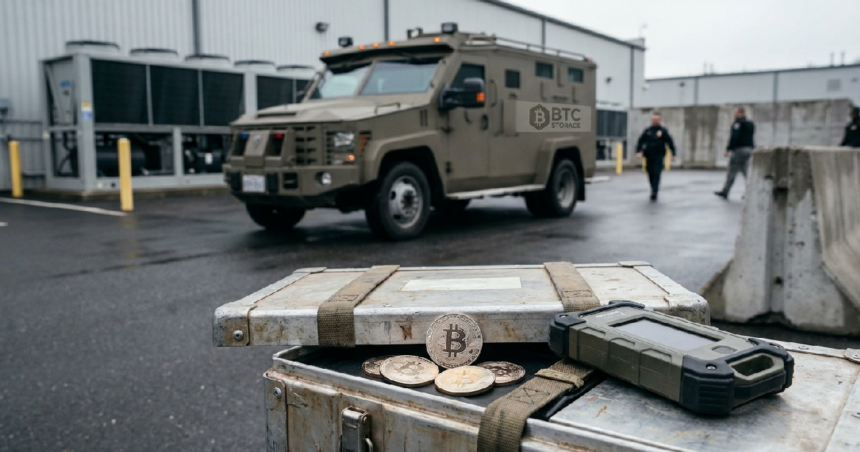
Bitcoin’s price action has entered a period of relative stagnation, but the calm is proving to be deceptive. While the headline figures show a market oscillating within a tight range, on-chain data and whale movement patterns suggest a massive liquidity shift is brewing beneath the surface. For the first time in several months, the supply of Bitcoin on centralized exchanges has hit a multi-year low, creating what some analysts are calling a “supply shock” waiting to happen.
But the lack of immediate price movement is testing the patience of retail traders. As the market digests the recent cooling signals, the gap between long-term holders and short-term speculators is widening. While institutional players like Morgan Stanley expand access for their wealth clients, the broader market is watching for a catalyst that could break the current deadlock.
The Liquidity Squeeze on Centralized Exchanges
One of the most telling metrics in the current climate is the steady drain of BTC from major trading platforms. When Bitcoin moves off exchanges into “cold storage” or private wallets, it generally signals a lack of intent to sell in the immediate future. This trend has accelerated this week, even as price volatility appears to have flatlined.
Historically, these “exchange outflows” correlate with periods of accumulation. Large-scale investors, often referred to as whales, seem to be absorbing the selling pressure from smaller participants who are discouraged by the lack of a clear upward trend. This creates a scenario where a sudden increase in demand could lead to an outsized price jump, simply because there is very little “liquid” supply available to buy on the open market.
It’s a classic standoff. Sellers are running out of ammunition, but buyers aren’t yet willing to chase the price higher until there is more clarity on the macroeconomic front.
Institutional Absorption and the Volatility Gap
The role of institutional players cannot be overstated in 2026. With Bitcoin increasingly integrated into traditional financial portfolios, the asset’s behavior is shifting. Rather than the wild 20% swings seen in previous cycles, we are seeing a “slow-burn” accumulation phase. This is partly due to the Bitcoin volatility warning issued by several major desks, which has led to more disciplined, algorithmic buying rather than emotional retail entries.
Market analysts are currently split on whether this narrow range is a “launchpad” or a “trap door.” The technical charts show a tightening wedge, a pattern that almost always precedes a breakout. However, the direction of that breakout remains the million-dollar question. If the market breaks to the upside, the thin liquidity on exchanges could see BTC bypass previous resistance levels with startling speed. Conversely, a break below current support could trigger a cascade of liquidations from over-leveraged traders.
Macro Triggers and the Path to the Dollar Mark
Outside of the Bitcoin ecosystem, other assets are providing clues about where the smart money is moving. We have seen a significant rally in precious metals, which often indicates a hedging sentiment among global investors. When silver and gold rise, it suggests that the market is bracing for currency instability or geopolitical friction.
And then there is the altcoin market. While Bitcoin dominates the conversation, assets like Cardano (ADA) are being watched as bellwethers for risk appetite. The long-term ADA recovery narrative depends largely on Bitcoin stabilizing and providing a “safe” environment for capital to flow into more speculative assets. If Bitcoin fails to hold its current range, the spillover effect on the rest of the market could be severe.
What to Watch in the Coming Sessions
The current lack of volume is the most important factor to monitor. Low-volume environments are notoriously easy to manipulate, and a single large sell or buy order can cause an “artificial” move that traps retail traders. The “smart” move, according to many veteran desk traders, is to watch the order books for signs of hidden support.
Will the current supply squeeze be enough to overcome the lack of retail enthusiasm? Or will we need a more significant fundamental catalyst—perhaps a shift in central bank policy or a major corporate adoption announcement—to jumpstart the next leg of the bull run? For now, the charts are screaming for a move, but the market is holding its breath.
Frequently Asked Questions
Why is the Bitcoin price not moving despite high demand?
Market “stagnation” usually happens when buying and selling pressure are perfectly matched. While whales are accumulating and moving coins off exchanges, short-term traders are selling into that demand, keeping the price pinned in a narrow range. This usually ends when one side finally exhausts their resources.
What does “exchange supply” mean for the average investor?
When the supply of BTC on exchanges is low, it means there is less Bitcoin available for immediate purchase. If a big news event happens and everyone wants to buy at once, the price has to move up much faster to find someone willing to sell. It’s a fundamental supply-and-demand imbalance.
Is this a good time to enter the market?
Low-volatility periods are often seen by long-term investors as “accumulation zones.” However, for those looking for quick gains, the current market is frustrating. Most analysts suggest looking at the underlying on-chain data rather than just the daily price candle to get a true sense of the market’s health.


