

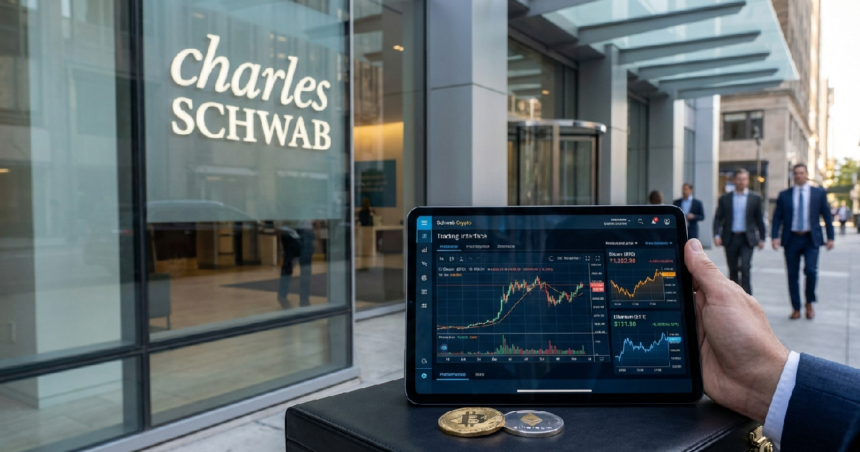
Charles Schwab, the financial services powerhouse overseeing more than $12 trillion in assets, has officially entered the digital asset arena. The firm announced the launch of “Schwab Crypto,” a dedicated trading service that marks a definitive shift in how traditional brokerage giants approach the decentralized economy. For years, the firm maintained a cautious distance, but the demand from its massive retail and institutional client base has finally tipped the scales.
Bitcoin and Ether lead the Schwab rollout
The new service is not a broad-market experiment. Instead, Schwab is taking a conservative, surgical approach by supporting only the two largest cryptocurrencies by market capitalization: Bitcoin (BTC) and Ethereum (ETH). By focusing on these established assets, the brokerage aims to provide a bridge for traditional investors who have been wary of the “wild west” reputation of smaller altcoins.
The rollout reflects a broader trend among legacy financial institutions. While smaller fintech firms and dedicated crypto exchanges like Coinbase have dominated the space for a decade, the entry of a $12 trillion behemoth suggests that digital assets are no longer being treated as a fringe curiosity. It follows a path similar to Morgan Stanley’s recent expansion of Bitcoin access, proving that Wall Street’s biggest players are now competing for a slice of the crypto pie.
Regulatory hurdles and geographic limits
Despite the massive scale of the announcement, the launch comes with significant geographic caveats. Schwab Crypto will be available to clients in most of the United States, but residents of New York and Louisiana are currently sidelined. This exclusion is largely due to the stringent regulatory environments in those specific states—most notably New York’s “BitLicense” requirements, which have historically slowed the rollout of crypto services from major financial institutions.
The timing of the launch is particularly relevant as the industry faces a critical juncture. As noted in recent analysis regarding the final test for global utility, the transition from speculative trading to institutional integration is the defining theme of 2026. Schwab’s entry provides the kind of “main street” legitimacy that Bitcoin advocates have sought for years, effectively turning crypto into just another line item in a standard brokerage account alongside Apple stock or an S&P 500 index fund.
A defensive play in a changing market
Market analysts suggest this move is as much about retention as it is about innovation. As younger investors increasingly demand exposure to digital assets, Schwab risked losing market share to neo-brokers and crypto-native platforms. By integrating BTC and ETH directly into their existing ecosystem, they eliminate the friction of moving funds to external wallets or third-party exchanges.
However, the launch coincides with a period of heightened scrutiny. Markets are currently navigating various headwinds, and some analysts have warned of a sharp correction risk as institutional signals cool. Schwab’s entry might provide a much-needed floor of liquidity, but it also means more retail investors are now exposed to the volatility inherent in the crypto markets.
Looking ahead for Schwab Crypto
The initial phase of Schwab Crypto is likely just the beginning. While the firm is starting with a “spot” trading model for BTC and ETH, the industry will be watching closely to see if they expand into staking services or broaden their asset list to include other majors like Solana or XRP. Given the current legislative climate, including the New Clarity Act’s impact on stablecoins, the firm’s cautious approach is a calculated move to stay on the right side of Washington regulators.
For now, the message is clear: the wall between traditional finance and digital assets has effectively crumbled. When a firm managing $12 trillion decides it’s time to trade Bitcoin, the debate over the asset’s “permanence” is effectively over.
Frequently Asked Questions
Can I transfer my existing Bitcoin into my Schwab account?
Initially, Schwab Crypto is focused on the buying and selling of BTC and ETH within their ecosystem. Users should check the specific terms of service regarding “in-kind” transfers, as many traditional brokerages start with a closed-loop system before allowing external wallet transfers.
Why is the service unavailable in New York and Louisiana?
These states have specific, often more complex, regulatory frameworks for digital asset businesses. Schwab likely requires additional state-specific licenses or approvals before they can legally offer crypto trading to residents in those jurisdictions.
Will Schwab allow trading for smaller tokens or “meme coins”?
As of the launch, the firm is sticking strictly to Bitcoin and Ethereum. Given Schwab’s history as a relatively conservative brokerage, it is unlikely they will add highly volatile speculative assets in the near term, focusing instead on assets with the highest institutional adoption.


