

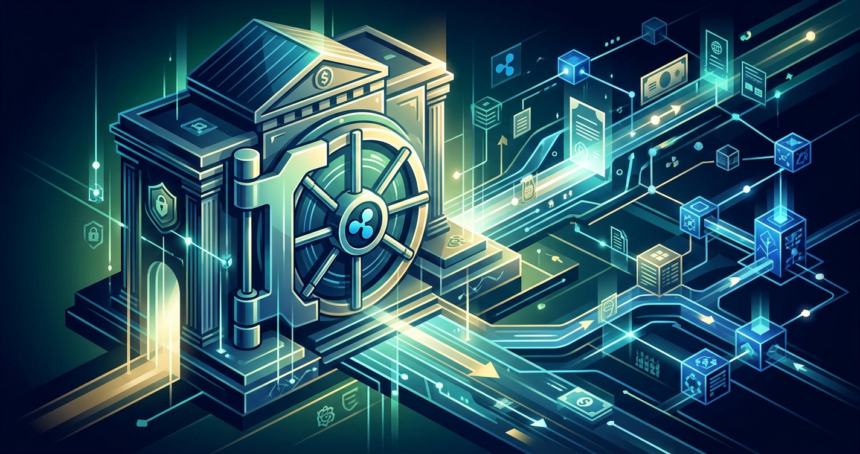
Wall Street’s plumbing is getting a digital overhaul. The Depository Trust & Clearing Corporation (DTCC), the massive engine room of the U.S. financial markets, is moving deeper into the world of distributed ledger technology. But this isn’t just another pilot program or a flashy press release. The industry is watching a fundamental shift in how assets are settled, and Ripple appears to be securing a seat at the table.
The core of the matter centers on the National Securities Clearing Corporation (NSCC), a subsidiary of the DTCC. Recent developments suggest an integration that brings Ripple’s technology closer to the systems that handle trillions of dollars in transactions daily. While the DTCC has flirted with blockchain for years via its “Project Ion” and “Project Whitney” initiatives, the specific inclusion of Ripple’s infrastructure marks a new chapter in the push for instant, or “T+0,” settlement.
The End of the Two-Day Wait
In the traditional world of finance, when you buy a stock, the actual change of ownership takes time. We’ve moved from T+3 to T+1, but the “holy grail” is instantaneous settlement. The problem isn’t the speed of the internet; it’s the collateral risk. When money and assets sit in limbo for 24 hours, banks have to hold massive amounts of capital to cover potential defaults.
By integrating tokenization frameworks directly into the NSCC’s workflow, the DTCC is attempting to automate the messy back-end work of clearing. Ripple’s ledger technology is built for this specific purpose—moving value across borders and between institutions without the need for a convoluted chain of intermediary banks. If the NSCC can use these rails to move tokenized representations of stocks and bonds, the capital efficiency for major banks would be enormous.
However, this transition isn’t without its hurdles. The U.S. regulatory environment remains a patchwork. While the industry is pushing for modernization, the New Clarity Act recently blocked interest payments on stablecoins, adding a layer of complexity for firms looking to earn yield on the cash leg of these digital transactions.
Why Ripple and Why Now?
Ripple has spent the last few years pivoting away from being just a “payment company” to becoming a comprehensive provider of financial infrastructure. Their acquisition of custody firms and their focus on Central Bank Digital Currencies (CBDCs) has made them a logical partner for a legacy giant like the DTCC. Unlike many speculative crypto projects, Ripple has focused on the “unsexy” side of finance: compliance, liquidity, and messaging standards like ISO 20022.
The timing is also critical. Institutional appetite for digital assets has shifted from speculative trading toward operational utility. We are seeing a final test for global utility as the window for “purely theoretical” blockchain projects begins to close. The DTCC knows that if it doesn’t modernize, it risks being bypassed by newer, faster alternatives emerging in Europe and Asia.
And then there is the XRP factor. While the DTCC’s interest is primarily in the private ledger technology, the broader ecosystem often views these institutional moves as a litmus test for the underlying asset. Many analysts believe regulatory hope continues to keep the market buoyant, even as the focus shifts to the technical integration of the NSCC.
Infrastructure vs. Speculation
It’s important to distinguish between the technology and the token. The DTCC is likely utilizing a permissioned version of ledger technology which offers the privacy and control that a national clearinghouse requires. But the broader implications for the crypto market are hard to ignore. When the entity responsible for the safety of the world’s most liquid markets starts using these tools, the “blockchain is a fad” argument effectively dies.
We are also seeing a shift in how Wall Street treats crypto-linked firms. As these integrations become reality, Wall Street is shifting its outlook on traditional stocks that have heavy exposure to the digital asset space. It is no longer about who is holding Bitcoin on their balance sheet; it is about whose software is powering the settlement of US Treasuries.
The Road to Full Integration
Don’t expect the entire financial system to move to a blockchain by next Tuesday. The DTCC moves with the caution of a glacier for a reason—if they fail, the global economy halts. The integration with Ripple and the rollout of tokenized assets at the NSCC will likely happen in tiers. Small batches of less-liquid assets will be tokenized first, followed by a slow migration of the “Big Board” stocks.
The long-term goal is a unified ledger where the “cash” and the “security” live in the same digital environment. This eliminates “settlement risk” because the trade only happens if both sides are verified instantly. It’s a cleaner, faster, and cheaper way to run a market, provided the security can match the current legacy standards.
Frequently Asked Questions
Is the DTCC replacing its entire system with Ripple’s tech?
No. The DTCC is integrating specialized distributed ledger components into its existing NSCC infrastructure to handle tokenized assets and speed up settlement. It is an evolution of their current stack, not a total replacement of their core mainframe systems.
What does this mean for the average retail investor?
Initially, very little. You won’t see “Ripple” on your brokerage app. However, over time, it could lead to faster access to your funds after selling a stock and potentially lower trading fees as brokerages spend less on settlement costs and collateral requirements.
Why is tokenization considered the future of Wall Street?
Tokenization allows for “fractionalization”—owning a tiny piece of an expensive asset—and 24/7 trading. More importantly, it allows for “atomic settlement,” where the asset and the payment swap hands simultaneously, removing the risk that one party fails to deliver.


