

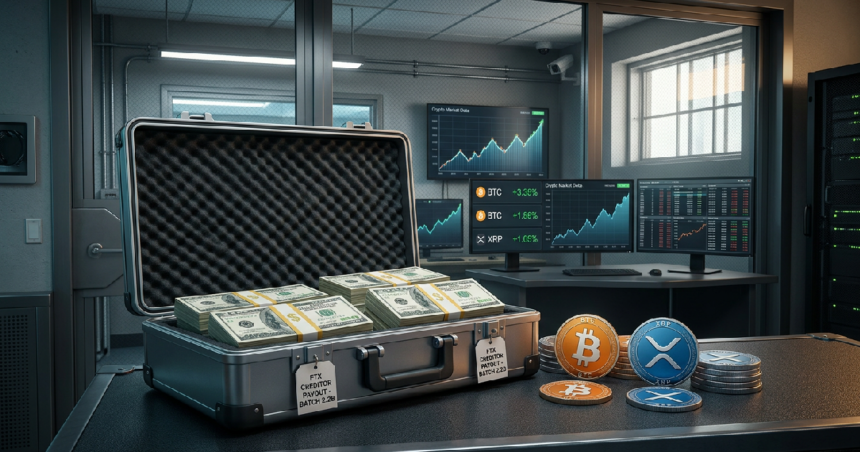
The long-running saga of the FTX estate is moving into a decisive new phase. Liquidators for the collapsed exchange have moved to release approximately $2.2 billion in assets intended for creditors, a move that comes at a delicate moment for the broader digital asset market. For those who have spent years waiting for the return of their funds, the disbursement represents the first significant sign of liquidity since the exchange’s dramatic implosion in late 2022.
This massive liquidity injection isn’t just a relief for individual claimants. Analysts are closely watching how this capital might flow back into the ecosystem, particularly with renewed interest in major tokens like Bitcoin and XRP. The timing is notable; the payout arrives just as the market attempts to find its footing following recent volatility, leading some to speculate that a “re-investment wave” could provide a late-spring tailwind for the industry.
The logistics of the $2.2 billion release
The distribution of these funds is the result of months of legal wrangling and asset liquidation by the current FTX management. While the $2.2 billion figure is substantial, it’s only a portion of the total liabilities owed. However, it serves as a critical test of the estate’s infrastructure for handling large-scale payouts without causing undue market friction.
Most of the funds being released are in the form of cash or cash equivalents, rather than the original tokens held by users. This distinction is vital for the market. Because creditors are receiving “dry powder”—effectively US dollars—they have the agency to decide where that money goes next. Historically, during large bankruptcy distributions in the crypto space, a significant percentage of recipients choose to buy back into the market, often looking toward established assets with high liquidity.
BTC and XRP at the center of investor focus
Bitcoin remains the primary destination for institutional and retail capital alike during periods of uncertainty. With the $2.2 billion release, many expect a portion of that capital to flow directly into BTC. This comes at a time when Bitcoin’s narrow range signals an impending volatility spike, and a sudden influx of buying pressure from former FTX customers could be the catalyst for a breakout.
And then there is XRP. The token has maintained a dedicated following throughout the FTX proceedings, and recent legal clarifications have bolstered its standing among those looking for utility-driven assets. Some market participants are betting that the FTX payout will coincide with a broader rotation into XRP, especially as analysts project diverging paths for XRP value over the coming years. For many creditors who lost money while holding altcoins, returning to a “top five” asset like XRP feels like a safer path toward recovery.
The broader industry impact
The release of these funds does more than just settle debts; it removes a psychological cloud that has hung over the industry for nearly four years. The collapse of FTX was a “black swan” event that destroyed trust, and seeing the bankruptcy process actually deliver funds back to users is a milestone for the sector’s maturity.
But it’s not all clear skies. The regulatory environment remains stringent. For instance, the New Clarity Act blocks interest payments on stablecoins, which may influence how creditors choose to store their recovered wealth. If they can’t earn yield on USD-pegged tokens, the incentive to move that capital back into more volatile assets like Bitcoin increases significantly.
What to expect in the coming weeks
As the $2.2 billion begins to hit bank accounts and digital wallets, the immediate impact on price may be muted by the sheer scale of the distribution timeline. It takes time for thousands of international creditors to process their payments and decide on a strategy. We aren’t likely to see a vertical price move on day one.
Instead, look for a steady increase in buy-side volume over the next month. If Bitcoin holds its current support levels, the FTX “re-investment” could provide the necessary floor to prevent the sharp correction risks that some analysts have warned about recently. For the FTX creditors, the wait is almost over; for the market, a new supply of capital is about to arrive.
Frequently Asked Questions
Will the FTX payout be in Bitcoin or cash?
According to the current liquidation plan, most creditors are receiving the value of their claims in cash (USD) based on token prices at the time of the bankruptcy filing, rather than receiving the original cryptocurrency tokens themselves.
Could this lead to a market sell-off?
Actually, many analysts believe the opposite. Since the assets have already been liquidated by the estate to raise the $2.2 billion, the “selling” has already happened. The distribution means that billions in cash are now in the hands of crypto-native investors who may choose to buy back into the market.
Is XRP a common choice for recovered funds?
While individual choices vary, XRP remains one of the most liquid and widely traded assets in the space. Given its recent regulatory milestones, it is often cited alongside Bitcoin as a primary target for investors looking to redeploy capital into established projects.


