

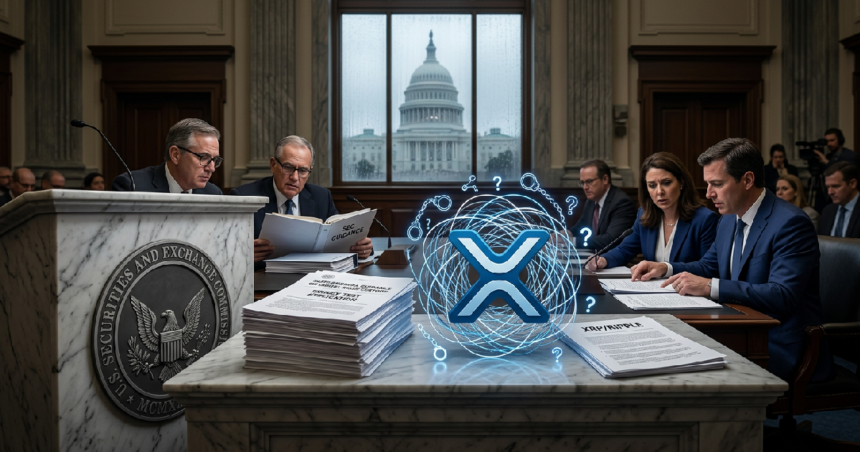
The Securities and Exchange Commission (SEC) has reignited a fierce debate within the digital asset industry today, releasing updated guidance on crypto asset custody that critics say does more to muddy the waters than clear them. While the regulator maintains that its framework is designed to protect retail investors, market participants argue the lack of precision is creating a “compliance trap” for American firms.
At the heart of the latest friction is how the SEC defines “sufficient decentralization” and the specific obligations for platforms holding customer private keys. Despite years of litigation and public consultation, the commission’s refusal to provide a bright-line test has left legal departments at major exchanges scrambling to interpret how existing securities laws apply to rapidly evolving DeFi protocols.
Ambiguity persists in custody requirements
The latest circular from the SEC aims to address how traditional financial institutions can interact with digital assets. However, rather than offering a clear roadmap, the agency has doubled down on its “facts and circumstances” approach. This means every individual token and service model must be evaluated on a case-by-case basis, a process that industry leaders claim is both prohibitively expensive and legally risky.
One major point of contention involves the accounting treatment of digital assets held in custody. The SEC continues to signal that these assets should be listed as liabilities on a firm’s balance sheet—a requirement that differs significantly from how traditional assets like stocks or bonds are handled. For big banks looking to enter the space, this creates a massive capital requirement hurdle that many are unwilling to jump.
And it isn’t just the big players feeling the squeeze. Smaller startups are finding that the cost of legal counsel to navigate these “questions” is becoming a barrier to entry. There is a growing sense that the SEC is using guidance as a tool for “regulation by enforcement,” effectively chilling innovation by making the cost of a mistake too high to bear.
A widening gap between regulators and the industry
The timing of this guidance is particularly sensitive. With the New Clarity Act already impacting how stablecoins are managed, firms were hoping for a more conciliatory tone from the SEC. Instead, the focus remains on whether digital assets fit into the decades-old Howey Test, a standard the industry argues was never meant for programmable software tokens.
Legal experts suggest that the SEC’s reluctance to provide specific rules is a strategic choice. By keeping the definitions broad, the commission retains the power to bring enforcement actions against any firm it deems to be operating outside the law. But this strategy may be reaching its limit. Several high-profile court cases are currently challenging the SEC’s authority, and judges have begun to push back on the agency’s lack of transparency.
Meanwhile, the market is already reacting to the uncertainty. We are seeing a shift where utility begins to dictate survival, and companies that cannot find a clear regulatory path are simply moving their operations offshore. This “brain drain” is becoming a primary concern for lawmakers who worry the U.S. is losing its competitive edge in the financial technology sector.
What the lack of clarity means for investors
For the average holder, the SEC’s stance is a double-edged sword. On one hand, the agency’s skepticism has likely prevented some fraudulent schemes from gaining mainstream traction. On the other, the lack of a clear framework prevents reputable U.S. institutions from offering the kinds of secure, regulated products that many investors want.
This atmosphere of confusion often leads to higher volatility. When the SEC releases a new statement or guidance, the market tends to react first and ask questions later. Without a firm set of rules, every minor update is scrutinized for hidden signals, leading to the kind of “volatility spikes” that have become a hallmark of the 2026 trading environment.
The road to the Supreme Court
Most observers now agree that the “questions” left by the SEC won’t be answered by the agency itself. Instead, the resolution will likely come from the judicial branch. There are currently three major cases making their way through the appellate courts that specifically target the SEC’s right to regulate crypto assets without explicit Congressional authorization.
Until a definitive ruling arrives, the industry remains in a holding pattern. Firms are forced to balance the desire to innovate with the very real threat of an SEC subpoena. It’s a precarious position that suggests the “crypto winter” of regulatory uncertainty is far from over, even if asset prices themselves are showing signs of life.
Frequently Asked Questions
Why is the SEC’s guidance considered confusing?
The SEC often uses broad language that applies to traditional stocks, but doesn’t easily fit how cryptocurrencies work. Because they don’t provide a list of “approved” or “unapproved” tokens, companies have to guess whether they are breaking the rules until they get sued.
How does this affect my crypto holdings?
It mostly affects the platforms you use. If an exchange can’t meet the SEC’s vague custody requirements, they might stop offering certain tokens to U.S. customers or move their business to another country, which can limit your access to liquidity.
Will Congress step in to fix this?
There are several bills currently in the works, like the Clarity Act, but the political climate makes passing comprehensive crypto legislation difficult. Most experts believe the courts will provide an answer before Congress does.


