

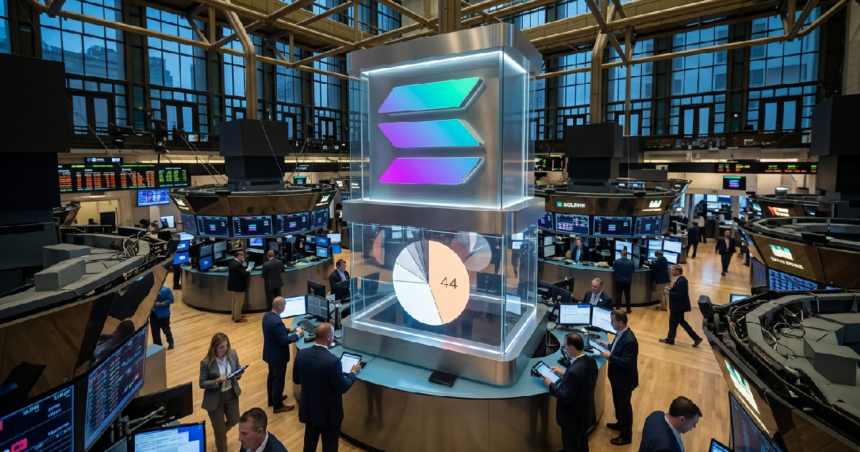
Solana’s dominance in the blockchain transaction space is showing signs of a retreat. For months, the network has been the undisputed leader in retail activity, fueled by a relentless memecoin frenzy and a high-speed architecture that made competitors look sluggish by comparison. But the latest data reveals a shift in the wind: Solana’s share of total crypto transactions has dipped to 44%.
The decline marks a cooling period for a network that, at its peak, seemed to be absorbing the lion’s share of on-chain volume. While 44% remains a formidable figure—far outpacing many of its Layer 1 rivals—the trend highlights a market that is beginning to redistribute its attention. It appears the singular focus on Solana-based speculative assets is giving way to a more fragmented environment where Ethereum and various Layer 2 solutions are clawing back some ground.
The Easing of the Memecoin Mania
Much of Solana’s recent transaction volume was built on the back of speculative trading. The network became the de facto home for retail traders looking for the next viral token, bolstered by low fees and near-instant finality. However, as the initial fervor around these assets begins to normalize, the raw number of transactions has naturally followed suit.
But this isn’t necessarily a sign of failure for the network. Rather, it represents a maturing phase. The “casino” phase of a blockchain often precedes more technical or utilitarian adoption. As specific market signals suggest investors are cooling on high-risk assets, Solana is finding itself in a position where it must prove its worth beyond being a playground for influencers and bot-driven trading pairs.
Congestion Concerns and Technical Hurdles
The dip in transaction share also coincides with a period of renewed scrutiny over Solana’s network stability. Despite several successful upgrades, the sheer volume of spam and failed transactions during peak periods has occasionally hindered the user experience. When the network slows down, or when users have to pay higher “priority fees” to get their trades through, the competitive advantage over Ethereum Layer 2s begins to thin.
And as we see the crypto market window move toward utility-driven shifts, developers are looking for more than just speed. They are looking for reliability. If Solana wants to regain its 50%-plus market share, it will likely need to convince the broader industry that its infrastructure can handle institutional-grade applications without the hiccups that have plagued it in the past.
Base and Ethereum Layer 2s Gain Momentum
While Solana’s share slides, the beneficiaries aren’t just the “old guard.” Ethereum’s ecosystem of Layer 2 networks—specifically Base and Arbitrum—has been aggressively courting the same retail audience that Solana won over last year. These platforms have improved their onboarding processes and lowered fees to the point where they are now viable alternatives for everyday users.
The competition is no longer just about who is the cheapest. It’s about ecosystem depth. With Ether entering a notable accumulation phase, there is renewed liquidity flowing back into the Ethereum world. This migration of capital is a direct threat to Solana’s previous monopoly on “fun” on-chain activity.
What This Means for the Remainder of 2026
The fall to 44% is a wake-up call, but it doesn’t spell disaster. Solana still hosts a massive amount of developer activity and remains the most user-friendly entry point for many newcomers. The question for the coming months is whether the network can pivot toward high-value transactions—like decentralized physical infrastructure (DePIN) and AI compute—as the retail-led transaction volume stabilizes.
For now, the era of Solana’s “easy” dominance is over. The network is entering a competitive grind where it will need to fight for every percentage point of market share against increasingly sophisticated and well-funded competitors.
Frequently Asked Questions
Why is Solana’s transaction share dropping?
It’s largely a result of the speculative memecoin market cooling down and traders diversifying into other ecosystems like Base and Arbitrum. Additionally, some users have moved away due to occasional network congestion issues that made transaction costs unpredictable.
Is Solana still a top blockchain for developers?
Yes, Solana remains a powerhouse for builders, especially in the AI and DePIN sectors. While retail transaction volume has dipped, the underlying developer interest in its high-performance architecture is still very strong.
How does this affect the price of SOL?
Transaction share and token price don’t always move in lockstep. While lower volume can suggest less demand for SOL as gas, it can also indicate a more “quality over quantity” approach to network usage, which some investors view as a positive sign for long-term sustainability.


