

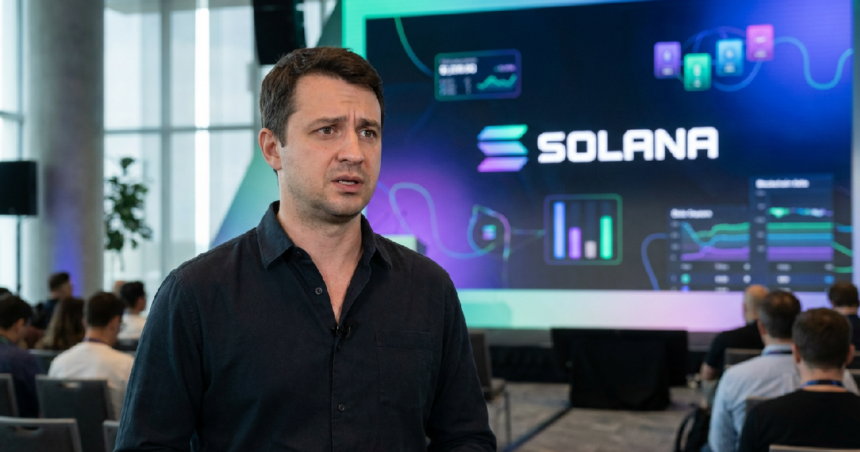
Solana founder Anatoly Yakovenko has issued a sobering response to a massive breach targeting a major decentralized finance (DeFi) protocol within the ecosystem, describing the sophisticated nature of the attack as “terrifying.” The incident, which is being characterized as one of the largest exploits in the history of decentralized finance, has sent shockwaves through the developer community and reignited a fierce debate over the security of high-speed blockchain architectures.
The exploit targeted a complex vulnerability in the protocol’s smart contract logic, allowing the attacker to bypass standard risk parameters and drain significant liquidity from the project’s pools. While the exact methodology is still being dissected by forensic security firms, early reports suggest a multi-staged approach that involved manipulating price oracles and exploiting a specific “re-entrancy” style flaw peculiar to the way Solana handles account states.
Anatoly Yakovenko Warns of Increasing Technical Sophistication
Taking to social media hours after the breach, Yakovenko didn’t mince words. He emphasized that as the ecosystem grows, the caliber of attackers is keeping pace. “The level of planning and execution here is terrifying,” Yakovenko noted, highlighting that the sophistication of modern DeFi exploits now rivals that of state-sponsored cyberattacks. His candid reaction deviates from the typically defensive posture of blockchain founders, reflecting a growing realization that the technical hurdles for securing massive capital on-chain are becoming exponentially higher.
The attack didn’t just impact the singular protocol involved; it triggered a cascade of liquidations across other interconnected Solana-based apps. This “contagion” effect is a byproduct of the highly composable nature of DeFi, where one broken link can jeopardize the collateral of thousands of unrelated users. For Yakovenko, the primary concern lies in the “unknowable” interactions between different smart contracts that are written by separate teams but interact in a single, high-stakes environment.
Breaking Down the Architecture of the Breach
Security researchers at several top-tier firms have spent the day tracing the movement of the stolen funds. Unlike many previous hacks that relied on simple “flash loan” attacks, this specific exploit appeared to leverage a deep understanding of Solana’s Sealevel runtime. The attacker reportedly utilized a series of nested instructions to convince the protocol that the collateral remained in place while simultaneously authorizing several large-scale withdrawals.
The speed of the Solana network, usually its greatest selling point, worked against the defenders in this instance. The entire drain occurred in a matter of minutes, leaving the protocol’s governance team and automated “circuit breakers” with almost no time to pause operations or blacklist the offending addresses. This has led to calls for more robust, automated security layers that can act within the same millisecond timeframe as the exploiters themselves.
Ecosystem Impact and the Path Toward Recovery
The timing of the hack is particularly difficult for the Solana community, which has been attempting to move past recent periods of network instability. However, some analysts argue that these “stress tests,” while painful, are a necessary part of the maturation process for any financial system. The focus has now shifted to “white hat” negotiations, with the protocol’s lead developers offering a sizeable bounty in exchange for the return of user assets.
Critics of the ecosystem point to the incident as proof that Solana’s move-fast-and-break-things culture may be at odds with the conservative requirements of a global financial layer. Meanwhile, supporters argue that the transparency of the blockchain allows for a level of post-event analysis and recovery that traditional banks could never match. As we’ve seen in the broader digital asset industry, 2026 is becoming a transformational year where many projects face their final tests for global utility.
What the “Terrifying” Hack Means for Developers
In the wake of Yakovenko’s comments, several prominent Solana development shops have announced they will be pausing new feature rollouts to conduct comprehensive security audits of their existing codebases. There is a sense that the “easy” days of DeFi development are over. To survive the current environment, teams are having to invest significantly more in formal verification and real-time monitoring tools.
Yakovenko has called for a “new standard of paranoia” among developers. This includes moving away from a reliance on single audits and toward localized “firewalls” within smart contracts that can detect anomalous outflow patterns before they reach a critical mass. Whether the community can adapt fast enough to stay ahead of increasingly clever attackers remains the defining question for the network’s future.
Frequently Asked Questions
What makes this DeFi hack different from previous Solana exploits?
Unlike earlier incidents that often targeted bridge vulnerabilities or basic coding errors, this hack involved a deep, sophisticated manipulation of the protocol’s core logic. The speed and precision of the attack suggest it was carried out by individuals with an expert understanding of Solana’s unique architecture, which is what led Anatoly Yakovenko to describe the situation as “terrifying.”
Will users who lost funds in this breach be reimbursed?
Recovery efforts are currently in the initial stages. Many protocols maintain “insurance funds” for these scenarios, but they rarely cover 100% of the losses. The development team is reportedly in contact with security firms to track the funds and is attempting to negotiate a “bug bounty” return with the attacker, but a full refund is not guaranteed at this time.
How can investors protect themselves from similar DeFi risks?
The most effective way to mitigate risk is through diversification—never keep more in a single DeFi protocol than you can afford to lose. Institutional investors are increasingly using dedicated security platforms that monitor their positions for suspicious activity. As the market conditions in 2026 continue to shift, the importance of using vetted, battle-tested protocols over high-yield “experimental” projects cannot be overstated.


