

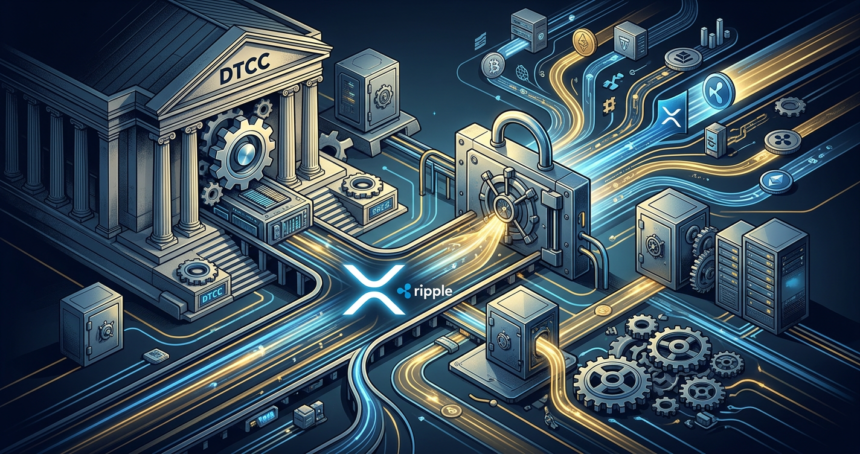
Ripple’s long-standing ambition to bridge the gap between legacy finance and digital assets is facing its most rigorous test yet. As the Depository Trust and Clearing Corporation (DTCC) continues to modernize its infrastructure, the prospect of XRP integrating with a custody and settlement system that handles quadrillions of dollars in annual transactions is moving from a theoretical “white paper” dream toward a technical possibility.
Infrastructure Overhaul Meets Ledger Utility
For years, the DTCC has stood as the backbone of the American financial markets, providing the plumbing for almost all securities transactions in the United States. The organization recently signaled a deeper interest in distributed ledger technology (DLT), specifically focusing on how tokenization can reduce the massive capital requirements currently tied up in settlement cycles. This is where Ripple Labs sees an opening.
The core of the argument for XRP isn’t about retail trading; it’s about the underlying ledger’s ability to handle high-volume, low-latency settlement. If even a fraction of the assets under custody at the DTCC were to move across the XRP Ledger (XRPL), the liquidity requirements would be unprecedented. Industry insiders suggest that the move toward “T+0” settlement—settling trades instantly rather than over days—is the catalyst that could force traditional institutions to look at established blockchains like the XRPL.
But the road isn’t without hurdles. While XRP has seen gains amid regulatory hope, the technical integration of a public ledger with the closed, highly regulated systems of the DTCC remains a complex engineering feat. Critics argue that private, permissioned blockchains are more likely to win this race, while proponents suggest that XRP’s existing liquidity pools provide an advantage that private chains cannot match.
The Math Behind Institutional Liquidity
To understand the scale of what XRP is eyeing, one has to look at the sheer volume of the DTCC’s operations. We are talking about a custody pool that manages roughly $100 trillion in assets. Even a small “pilot” program involving specific equity classes or debt instruments would represent more volume than the entire crypto market has seen in its history.
And while some moonshot theorists have used these numbers to justify an analysis of a $100 XRP valuation, the reality for institutional players is more focused on “slippage” and “spreads.” For the XRPL to be viable for the DTCC, it must prove it can handle the movement of billions of dollars without moving the price of the bridge asset itself. This requires a level of deep liquidity that the market is still building.
The broader context of 2026 shows a market that is consolidating. As noted in recent reports, the digital asset industry faces a final test for global utility. The “hype phase” is over; now, the technology must actually work within the plumbing of global finance or risk being relegated to a secondary speculative asset class.
Regulatory Guardrails and Geopolitical Shifts
Washington’s stance remains the wildcard. While the SEC lawsuits of the past have largely been settled or clarified, new legislative efforts like the Clarity Act are reshaping how assets are classified. If XRP is to function as a settlement layer for the DTCC, it will likely need to operate under a specific “utility” framework that distinguishes it from speculative tokens.
Furthermore, the geopolitical environment is playing a role. As the U.S. looks to maintain the dollar’s dominance in a digital era, having a domestic company like Ripple provide the underlying rail for modernized settlement could be seen as a strategic advantage. However, any institutional pivot of this magnitude will be measured in years, not months.
What to Watch for in the Coming Months
Investors shouldn’t expect an overnight migration of $100 trillion. Instead, look for more “sandboxed” announcements involving tokenized Treasury bills or commercial paper. This is how the DTCC historically operates: slow, methodical, and risk-averse. The fact that XRP is even in the conversation for this level of custody is a testament to how far the project has come since its legal embattlement began years ago.
The diverging paths for XRP’s value by the end of the decade will likely depend on whether it becomes a niche tool for cross-border payments or the primary rail for the world’s largest clearinghouse. If it’s the latter, the current market structure will undergo a fundamental shift.
Frequently Asked Questions
Does the DTCC already use XRP?
No, there is currently no official confirmation that the DTCC uses XRP for its core settlement processes. While the DTCC has acquired DLT-focused firms and explored blockchain pilots, any direct integration of XRP remains speculative or in the early research stages among Ripple’s institutional partners.
Why is the $100 trillion figure important?
That figure represents the estimated total value of assets under management and custody at the DTCC. It is often cited to illustrate the “addressable market” XRP could tap into if it becomes a standard bridge currency for institutional securities settlement.
Is XRP the only contender for this role?
Certainly not. Competition is fierce. Projects like Ethereum, with its growing institutional adoption, and private enterprise solutions from companies like J.P. Morgan (Onyx) are also vying for a piece of the institutional settlement pie. XRP’s advantage lies in its specific design for high-speed, low-cost liquidity, but it is far from the only player in the room.


