

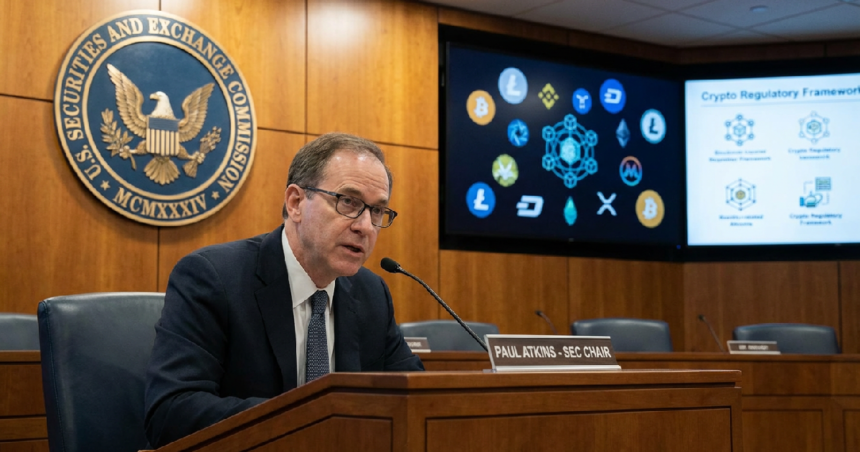
The regulatory fog surrounding digital asset fundraising may finally be lifting. SEC Chair Paul Atkins has indicated that the commission is in the final stages of drafting a dedicated “Reg Crypto” framework, a move that aims to provide a clear rulebook for how startups can raise capital using blockchain technology without running afoul of long-standing securities laws.
Speaking at a recent industry summit, Atkins suggested that the current reliance on legal standards developed in the mid-20th century to determine what constitutes an investment contract has reached its practical limits in the digital age. The proposed regulation is expected to offer a specific pathway for token issuers to register with the agency or qualify for exemptions, potentially ending a period marked by “regulation by enforcement” that has long defined the relationship between the agency and the crypto industry.
Moving beyond outdated legal precedents
For years, a primary friction point between the SEC and the altcoin market has been the lack of a bespoke category for digital assets. Under previous leadership, the agency maintained that most tokens were securities and should be treated no differently than stocks or bonds. But the industry has long argued that tokens represent a new asset class entirely, often starting as investment vehicles but evolving into functional tools for decentralized networks.
The “Reg Crypto” proposal reportedly seeks to bridge this gap. Rather than forcing every new project through the onerous and expensive process of a full public offering, the new rules are expected to provide “safe harbors.” These would allow developers to distribute tokens to the public provided they meet specific disclosure requirements regarding the project’s code, tokenomics, and the degree of decentralization. And it comes at a time when many projects are struggling to find a legal footing in a market that is increasingly demanding [utility or obsolescence from digital assets](/crypto-utility-window-closing-2026-analysis).
A pivot from enforcement to compliance
The shift under Chair Atkins marks a departure from the previous administration’s strategy. By codifying these rules, the SEC is effectively signaling a desire to bring crypto into a formal regulatory structure rather than pushing development offshore. Industry advocates have reacted with cautious optimism, noting that a formal “Reg Crypto” could unlock institutional capital that has remained on the sidelines due to legal uncertainty.
However, the transition won’t be seamless. Existing projects that launched under previous regulatory interpretations may face a transition period where they must retroactively comply with the new standards or face settlement talks. The focus on fundraising specifically addresses the token sale model, which has been a legal minefield for several years. By providing a clear template for fundraising, the SEC hopes to prevent the fraudulent schemes seen in previous market cycles while allowing legitimate technical innovation to flourish.
Impact on the broader altcoin market
For the thousands of altcoins currently trading on secondary markets, this new regulation provides a much-needed roadmap. Many of these assets have functioned in a legal gray area, which has hindered their adoption by traditional financial institutions. With a clear regulatory framework, the market may see a shift as projects that cannot meet disclosure standards are delisted, while those that comply gain a level of legitimacy that could lead to broader integration with the global financial system.
This development is particularly relevant as [the crypto market window closes](/crypto-market-forecast-2026-narrowing-window-analysis) and utility begins to dictate which projects survive. If “Reg Crypto” successfully provides a legal way to launch and trade tokens, it could spark a new wave of development focused on real-world applications rather than pure speculation.
FAQ
What is Reg Crypto and why does it matter?
It is a proposed set of rules from the SEC specifically designed for the cryptocurrency industry. It matters because it seeks to replace the uncertainty of applying decades-old laws to digital tokens, providing a clear checklist for how a company can legally raise money through a token sale.
Will this make it easier for new coins to launch?
It may provide a more certain path for legitimate projects. While it creates a legal “path of least resistance,” it will likely require higher levels of transparency and disclosure than what was common during previous market booms. It aims to make launches safer for investors rather than simply easing the process for developers.
Does this affect existing tokens like ADA or XRP?
While the focus is on future fundraising, the rules will likely offer a framework for existing tokens to align their status with current expectations. For assets like XRP, which has a history of legal scrutiny, a new federal regulation could provide the permanent clarity needed for institutional adoption, as some [analysts project for its long-term value](/xrp-price-projections-2030-analyst-breakdown).