

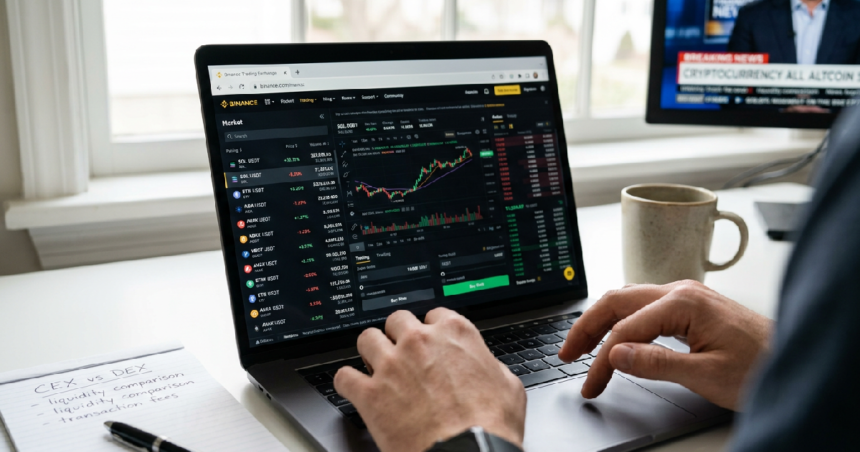
Choosing the Best Crypto Exchange for Altcoins requires balancing asset variety, trading liquidity, and regional compliance to ensure a secure and efficient trading experience. While centralized platforms offer ease of use and high-speed execution, seasoned investors often pivot toward decentralized protocols to access niche tokens before they hit the mainstream market.
The term altcoin encompasses a vast array of digital assets, from established layer-1 protocols like Solana to speculative memecoins and utility tokens. Identifying the right platform means matching your specific investment goals with an exchange’s unique fee structure and security track record. For many, this process begins with determining whether they prioritize custodial convenience or personal control over private keys.
Recent market shifts have seen altcoins strength grow even as market leaders like Bitcoin face technical resistance. This divergence makes the choice of exchange even more critical, as price slippage on lower-cap tokens can quickly erode potential profits during periods of high volatility.
Critical factors for choosing the best crypto exchange for altcoins
The first hurdle in selecting a platform is the sheer breadth of the altcoin market. Not every exchange carries every token; in fact, the most promising small-cap projects often debut on decentralized exchanges (DEXs) long before they reach major retail giants. Investors must verify that their chosen platform supports the specific trading pairs they need, such as an altcoin paired against USDT or Ethereum.
Liquidity serves as the lifeblood of any successful trade. In the crypto world, liquidity refers to the ease with which an asset can be converted into cash or another coin without causing a massive price swing. High liquidity ensures that when you hit the “sell” button, the execution price is close to the market rate, minimizing the “slippage” that often plagues less popular altcoins.
Fees are another silent profit-killer that investors must evaluate. Most exchanges utilize a maker-taker model, where those providing liquidity to the order book pay lower fees than those removing it. Some platforms offer significant discounts if you hold their native token or reach certain monthly trading volumes, which can be vital for high-frequency traders.
Security protocols and asset custody
Security remains the most significant differentiator when Choosing the Best Crypto Exchange for Altcoins. Centralized exchanges (CEXs) act as custodians, meaning they hold your funds and manage the private keys. While some platforms have never suffered a breach, others have faced devastating losses, reinforcing the importance of features like cold storage and multi-factor authentication (MFA).
Withdrawal whitelisting is a feature that every serious trader should utilize. By pre-approving specific wallet addresses, you add a layer of defense against unauthorized transfers. Additionally, some major exchanges have established insurance funds, such as Binance’s Secure Asset Fund for Users (SAFU), to provide a safety net in the event of a system failure or hack.
However, the risk of centralized failure has led many to explore non-custodial options. In cases where security is compromised, such as the Hyperbridge security breach, the ability to control one’s own assets becomes a clear advantage for those using decentralized alternatives.
Comparing centralized and decentralized trading environments
Centralized exchanges are characterized by their user-friendly interfaces and deep liquidity. They are ideal for beginners who need to deposit fiat currency like US Dollars or Euros directly from a bank account. These platforms also provide customer support and advanced tools like margin and futures trading, which are essential for professional strategies.
Decentralized exchanges, or DEXs, operate without a central authority, allowing for peer-to-peer trading directly from a user’s wallet. This environment is the primary frontier for new altcoins. Because there is no listing committee, assets appear here first. However, DEXs require a higher level of technical knowledge and lack the safety nets found on regulated centralized platforms.
The regulatory landscape also plays a major role in your choice. In jurisdictions like the United States or South Korea, exchanges must comply with strict Know Your Customer (KYC) and Anti-Money Laundering (AML) laws. This may limit the types of tokens available to you but offers a level of legal recourse and transparency that unregulated platforms lack.
Navigating fees and hidden costs
When Choosing the Best Crypto Exchange for Altcoins, the sticker price of a trade is rarely the final cost. Beyond the standard trading fee, users must account for deposit and withdrawal charges. Some exchanges mask their high fees by offering “zero-commission” trades while widening the bid-ask spread, essentially charging you a premium on the price of the coin itself.
Network or “gas” fees are particularly relevant for those using DEXs on the Ethereum or Solana networks. During times of high congestion, the cost of a single transaction can sometimes exceed the value of the trade itself. Smart traders monitor network activity to time their entries when gas prices are lower, or they use layer-2 scaling solutions to mitigate costs.
Furthermore, as institutional capital shifts toward different sectors of the market, the liquidity profiles of various altcoins can change rapidly. An exchange that was “best” for a specific token last month might suffer from declining volume this month as professional traders move their assets elsewhere.
Future outlook for altcoin trading platforms
The ecosystem for altcoin trading is currently undergoing a period of intense professionalization. As regulatory frameworks become clearer, the gap between traditional finance and crypto exchanges is narrowing. We are seeing more platforms adopt institutional-grade security and transparent auditing processes to attract larger pools of capital.
Innovations in cross-chain technology are also making it easier to trade assets across different blockchains without relying on a central intermediary. This “omnichannel” future may eventually eliminate the need to choose between the liquidity of a CEX and the autonomy of a DEX, providing a hybrid experience that offers the best of both worlds.
Ultimately, the process of Choosing the Best Crypto Exchange for Altcoins is an ongoing task. As new projects emerge and old ones fade, the platforms that provide the best balance of speed, cost, and security will continue to dominate the market.
For the average investor, staying informed about exchange security and shifting liquidity trends remains the most effective way to protect and grow a digital asset portfolio.