

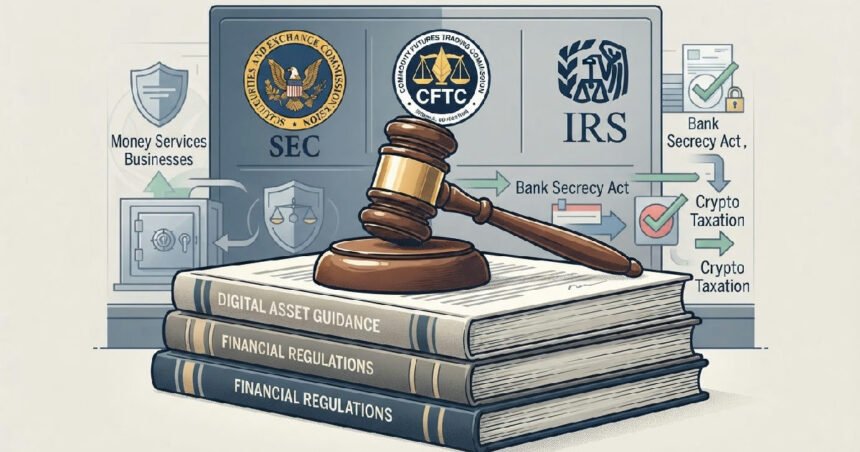
A Guide to US Crypto Laws, mapping the intricate framework governing digital assets across the nation. This complex environment involves multiple federal agencies, each asserting jurisdiction based on the specific nature and function of a crypto asset or activity.
There isn’t a single, overarching federal law solely dedicated to cryptocurrencies. Instead, existing statutes are applied, creating varied classifications and regulatory obligations for participants in the digital asset space.
A Guide to US Crypto Laws: Understanding Federal Oversight
The US crypto legal and regulatory landscape is characterized by its continuous evolution. It reflects a multi-agency approach, where different federal bodies claim authority over the burgeoning digital asset sector.
This fragmented oversight stems from the absence of a comprehensive federal law exclusively for cryptocurrencies. Existing legislation is often adapted to digital assets, leading to diverse classifications and compliance requirements across the industry.
A Multi-Agency Approach
Several key federal agencies contribute to the regulatory patchwork. Their purviews often overlap or intersect, depending on how a specific crypto asset is defined and used.
These agencies include the Financial Crimes Enforcement Network (FinCEN), the Internal Revenue Service (IRS), the Commodity Futures Trading Commission (CFTC), and the Securities and Exchange Commission (SEC).
The Lack of a Single Overarching Law
The decentralized nature of cryptocurrencies has challenged traditional regulatory frameworks. Without a singular piece of legislation, agencies apply existing laws like the Bank Secrecy Act or the Commodity Exchange Act.
This application often depends on whether a crypto asset is deemed a currency, commodity, or security. The lack of a unified legal definition contributes to the ongoing complexity for businesses and consumers alike.
FinCEN’s Stance on Money Service Businesses
FinCEN, a crucial bureau of the U.S. Treasury, leads the charge against money laundering and terrorist financing within the crypto sphere. Its primary tool is the enforcement of the Bank Secrecy Act (BSA).
The agency regulates entities operating as “money services businesses” (MSBs). This designation frequently includes cryptocurrency exchanges and certain wallet providers, along with other Virtual Asset Service Providers (VASPs).
Defining Money Services Businesses
MSBs engaged in crypto activities must register with FinCEN. This registration is a cornerstone of the BSA, designed to enhance transparency in financial transactions.
These entities also face mandates to implement robust Anti-Money Laundering (AML) programs. They must maintain meticulous records and report suspicious activities to the authorities.
Bank Secrecy Act and Travel Rule Compliance
The BSA requires MSBs to uphold stringent compliance standards. This includes adherence to the Travel Rule, which mandates the transmission of sender and recipient information.
Specifically, for convertible virtual currency transactions, this rule applies to amounts exceeding a $3,000 threshold. The Financial Crimes Enforcement Network (FinCEN) mandates the transmission of sender and recipient information for such transactions.
IRS Rules for Cryptocurrency Taxation
The IRS treats cryptocurrency as property for tax purposes, not as conventional currency. This classification significantly impacts how individuals and businesses report their digital asset activities.
It means that engaging in crypto transactions can trigger various tax obligations. This framework aims to ensure that all digital asset-related income and gains are appropriately declared.
Crypto as Property for Tax Purposes
Selling, exchanging, or using cryptocurrency to purchase goods or services typically constitutes a taxable event. Such actions can result in either capital gains or losses, which must be reported.
Moreover, earning cryptocurrency through mining, staking, or as payment for services is generally taxed as ordinary income. This applies regardless of how the digital asset was acquired.
Reporting Requirements and Form 1099-DA
Taxpayers are responsible for reporting all income, gains, and losses from digital asset transactions on their federal income tax returns. This ensures full transparency for the IRS.
Starting with the 2025 tax year, digital asset brokers will be required to issue a new tax form, Form 1099-DA. This new IRS form will report gross proceeds from the sale or exchange of digital assets, simplifying taxpayer reporting.
CFTC’s Role in Crypto Commodity Markets
The CFTC exerts regulatory authority over cryptocurrencies that it classifies as commodities. This jurisdiction primarily covers derivatives contracts tied to digital assets.
The agency can also take enforcement actions against instances of fraud and market manipulation within cryptocurrency spot markets. This provides a crucial layer of consumer protection and market integrity.
Regulating Derivatives and Spot Market Manipulation
Under the Commodity Exchange Act (CEA), the CFTC possesses the power to pursue legal action. This applies to fraud and manipulation cases involving digital assets designated as commodities.
Its oversight helps to maintain fair and orderly markets for these financial instruments. For further insight into the broader regulatory landscape, exploring global approaches and US frameworks can be beneficial.
Navigating SEC Oversight for Digital Assets
The SEC regulates crypto assets that fall under the definition of a “security” according to federal securities laws. This classification is a critical determinant of whether an initial coin offering (ICO) or a digital token is subject to the same rules as traditional stocks or bonds.
The agency’s purview is extensive, aiming to protect investors and maintain fair, orderly, and efficient markets.
Defining Crypto as a Security
The Securities and Exchange Commission is responsible for overseeing crypto assets that meet the criteria of a “security” under existing federal securities laws. This means digital assets, like any other financial instrument, are subject to the regulatory framework designed to protect investors and ensure market integrity.
Should a digital asset be classified as a security, it then becomes subject to the stringent disclosure and registration requirements mandated by federal securities law. This significantly impacts capital-raising efforts and operational strategies for projects within the United States.
The Evolving Landscape and Future Outlook
The US crypto regulatory environment remains dynamic, with ongoing discussions and legislative efforts aiming to provide clearer guidelines. As technology advances, regulators face the challenge of adapting existing laws to novel digital asset structures.
This continuous evolution means that compliance requirements for businesses and reporting obligations for individuals could shift. Staying informed is crucial for participants in this rapidly developing sector.
Ongoing Legislative Efforts
Policymakers continue to debate the most effective approach to regulating digital assets. Proposals often seek to clarify jurisdictional boundaries between agencies and establish comprehensive consumer protections.
These efforts aim to balance innovation with financial stability and national security concerns. The future could see more tailored legislation specifically designed for the unique characteristics of cryptocurrencies.
Impact on Innovation and Adoption
Regulatory clarity can significantly influence the pace of innovation and adoption within the US crypto industry. Predictable rules can encourage legitimate businesses while deterring illicit activities.
Understanding how crypto regulation affects investors is paramount. It helps both individuals and institutional players navigate potential risks and opportunities.
Key Differences in Regulatory Classification
The varying classifications of crypto assets by different agencies create a complex regulatory environment. A token might be a commodity to the CFTC but a security to the SEC depending on its characteristics and how it’s offered.
This table illustrates the primary focus and jurisdiction of the leading federal bodies involved in US crypto oversight:
Why Classification Matters
The classification of a digital asset dictates which laws apply and which agency has primary oversight. This directly impacts compliance costs, operational requirements, and potential liabilities for businesses.
For investors, understanding these distinctions helps in assessing the regulatory risks associated with specific assets or platforms. It’s a fundamental aspect of navigating the digital asset space.
Implications for Businesses and Investors
Businesses often face the challenge of complying with multiple, sometimes conflicting, regulatory regimes. This can stifle innovation and increase operational burdens, especially for smaller startups.
Investors must be aware of the different rules governing various crypto activities and assets. For example, tax implications vary significantly based on how crypto is acquired and used, as outlined in understanding the mandate for oversight.
What are the primary federal agencies regulating cryptocurrency in the US?
The main federal agencies involved in US crypto regulation are the Financial Crimes Enforcement Network (FinCEN), the Internal Revenue Service (IRS), the Commodity Futures Trading Commission (CFTC), and the Securities and Exchange Commission (SEC). Each agency focuses on different aspects of digital assets.
How does the IRS view cryptocurrency for tax purposes?
The IRS classifies cryptocurrency as property, not currency. This means that transactions involving crypto, such as selling, exchanging, or using it to pay for goods, are generally considered taxable events subject to capital gains or losses. Earning crypto through mining or staking is taxed as ordinary income.
Why is there no single, overarching federal law for cryptocurrencies?
Currently, the US applies existing laws and regulations to digital assets rather than having a single, dedicated federal law. This approach leads to different agencies asserting jurisdiction based on how a crypto asset is defined, whether as a money service, commodity, or security.