

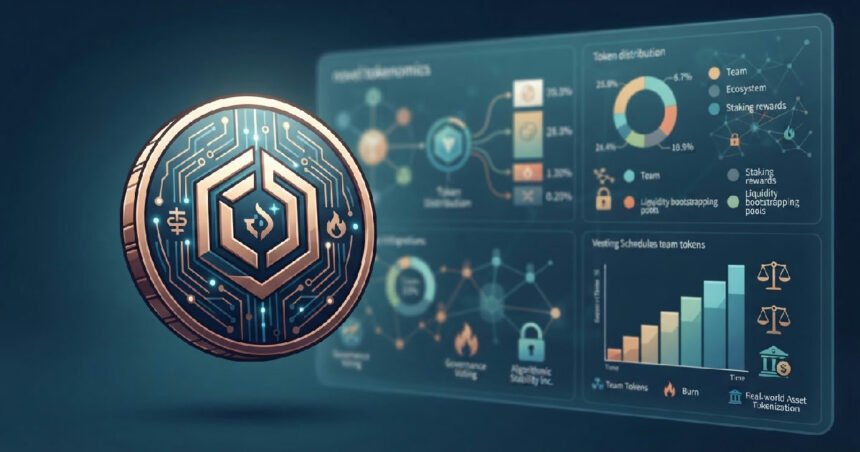
Tokenomics, a portmanteau of “token” and “economics,” refers to the intricate design of a cryptocurrency or blockchain project’s economic framework. It meticulously governs the creation, issuance, distribution, and overall utility of its native digital tokens. This comprehensive design determines how a token can accrue value and underpins the long-term sustainability of the entire crypto endeavor.
Novel tokenomics are increasingly being explored to address the challenges of traditional models.
Novel tokenomics in recent altcoin projects are characterized by innovative approaches to both token distribution and their inherent utility. These modern strategies often prioritize decentralization, broad community ownership, and sustained long-term viability. They mark a significant evolution beyond traditional fundraising and engagement models.
Novel tokenomics for distribution
New altcoin projects are actively moving past conventional Initial Coin Offerings (ICOs) and similar models. Their goal is to foster more equitable and genuinely community-driven distribution of their digital assets.
These innovative approaches aim to align incentives and prevent market manipulation. They build greater trust among participants and ensure a more stable ecosystem from the outset. This shift is critical for the perceived legitimacy and future growth of new digital currencies.
Vesting schedules foster long-term commitment
Vesting schedules represent a key mechanism that gradually releases allocated tokens to various stakeholders. This includes team members, advisors, and early investors over a predetermined period. It’s a strategic alternative to distributing all tokens simultaneously.
The primary purpose of these schedules is to encourage a long-term commitment from foundational participants. They actively prevent immediate, large-scale sell-offs, which are often referred to as market dumps, and help build crucial trust within the broader community.
Tokens are typically allocated at a Token Generation Event (TGE) but remain locked. This is followed by a “cliff period,” an initial phase often lasting 6 or 12 months, during which no tokens are released. After this cliff, a portion may become available to holders.
The main vesting period then commences, gradually releasing tokens monthly or quarterly. This continues until all allocated tokens are fully unlocked, ensuring a measured and predictable release. Uniswap’s UNI token, for instance, featured a 4-year vesting schedule for its team, investors, and advisors, alongside an initial airdrop to past users.
This kind of vesting schedule demonstrates a commitment to gradual supply introduction and long-term project health. Gradual token issuance can be vital for ecosystem stability.
Fair launches prioritize equitable access
Fair launches represent another distribution model designed to offer equal opportunity for all participants to acquire tokens from a project’s inception. These models explicitly eschew pre-mines, private sales, or any early allocations to insiders, promoting a level playing field.
Key characteristics include no tokens reserved for founders or initial investors, eliminating private or exclusive pre-sale rounds. Tokens are distributed publicly from the very beginning, often through mining, staking, or liquidity farming mechanisms. Anyone can participate under identical conditions.
This approach significantly promotes decentralization and cultivates strong community trust. It effectively aligns incentives across all participants and encourages genuine, organic growth. Bitcoin itself is widely considered one of the earliest and most prominent examples of a fair launch, with no pre-mined coins or initial investor allocations.
Liquidity Bootstrapping Pools for efficient price discovery
Liquidity Bootstrapping Pools (LBPs) are specialized Automated Market Maker (AMM) pools, specifically engineered for fair token distribution and accurate price discovery. They are particularly beneficial for launching new projects, offering a structured approach to initial token sales.
Unlike standard liquidity pools with fixed token ratios, LBPs programmatically adjust their token weights over time. This creates a descending price curve, which strategically incentivizes buyers to await a lower price rather than rushing in. This mechanism actively mitigates front-running by bots and large “whale” investors.
Balancer Protocol pioneered LBPs in 2020, with Perpetual Protocol conducting the first such launch. Their advantages include fair price discovery, as the price starts high and gradually declines, allowing the market to find an equitable value. They also offer capital efficiency, allowing projects to launch tokens with minimal initial capital.
Furthermore, LBPs facilitate broad distribution by discouraging large buyers from accumulating tokens cheaply. This leads to a more widespread ownership base. Once the LBP concludes, funds raised are immediately accessible, and new token holders can trade their tokens without lengthy lock-up periods.
Expanding Altcoin Utility Through Tokenomics Innovation
Beyond mere speculative value, tokens within new altcoin projects are increasingly designed with diverse and integral utility. This deep integration within their respective ecosystems ensures tokens serve specific functions beyond simple transfer of value.
This strategic focus on utility is critical for long-term project viability. It moves tokens beyond speculative instruments towards essential components of decentralized applications and services. This approach fosters genuine engagement and network participation.
Governance tokens enable decentralized decision-making
Governance tokens grant their holders the crucial right to participate in the decentralized decision-making processes of a protocol. This often occurs through Decentralized Autonomous Organizations (DAOs), empowering community members with direct influence.
Holders can propose, discuss, and subsequently vote on significant changes to the protocol. These changes may include adjustments to fee structures, system upgrades, treasury allocation, and other vital operational parameters. This democratic mechanism ensures that the community shapes the project’s future direction.
MakerDAO’s MKR token, for example, functions as a governance token, used to vote on protocol changes and proposals aimed at maintaining the stability of its DAI stablecoin. Similarly, Uniswap’s UNI token grants its holders significant governance rights over the Uniswap protocol, illustrating how core decisions are made collectively.
Staking mechanisms secure networks and reward holders
Staking involves users locking up their tokens to actively support the operation and security of a blockchain network. This practice is most common in Proof-of-Stake (PoS) consensus mechanisms, where validators are chosen based on the amount of cryptocurrency they hold and are willing to “stake.”
The mechanics involve stakers, who act as validators, being chosen to confirm new transactions and add them to the blockchain. In return for their vital contribution, they earn rewards, which function much like earning interest in a traditional savings account. This incentivizes participation in network security.
The benefits include passive income generation for holders and enhanced network security without the need for specialized mining hardware. However, a key trade-off is that staked assets are typically locked and cannot be sold or moved until unstaked, with varying unstaking periods depending on the specific blockchain. This locking mechanism aims to ensure network stability, but means assets aren’t immediately liquid.
Deflationary burn mechanisms manage token supply
A burn mechanism is a process where a specific number of tokens are permanently removed from circulation. This is typically achieved by sending them to an inaccessible “burn address,” effectively rendering them unusable forever.
The primary purpose of burning tokens is to reduce the total supply, potentially increasing the scarcity and thus the value of the remaining tokens. It also serves as a critical tool to control inflation within a token’s economy. Various methods are employed to execute these burns.
Automatic burns are often embedded directly into a token’s code, triggering when predefined conditions are met, such as a portion of transaction fees being burned automatically. Manual burns occur when project teams or DAOs decide to burn a specific amount of tokens, often after major sales or to remove unsold allocations.
Buyback and burn initiatives see projects using revenue to purchase tokens from the open market, then burning them, akin to corporate stock buybacks.
Uniswap’s UNI tokenomics evolved to include a burn mechanism activated in December 2025, where protocol fees now fund token burns, positioning UNI as a deflationary asset. Binance Coin (BNB) also employs an auto-burn mechanism to reduce its circulating supply, showcasing a commitment to supply management.
Algorithmic stablecoins and the seigniorage model
Seigniorage models are central to algorithmic stablecoins, which aim to maintain a stable value without full collateralization. They rely on complex algorithms to dynamically adjust token supply and demand, striving for a consistent peg to an asset like the US dollar.
These systems often feature a multi-token structure, typically involving a stablecoin and a “bond” or “share” token. When the stablecoin’s price deviates from its peg, the algorithm mints or burns tokens to restore stability. If the stablecoin trades above its target, new units are minted to increase supply.
Conversely, if it drops below its target, tokens might be burned or users incentivized to burn stablecoins for bond tokens, reducing supply.
The collapse of TerraUSD (UST) in 2022 serves as a stark cautionary tale. It highlighted the critical importance of transparent collateralization and robust economic design in purely algorithmic stablecoins. This event underscored the inherent risks when complex mechanisms fail to account for extreme market conditions.
Real-World Asset tokenization drives liquidity
Real-World Asset (RWA) tokenization is the transformative process of converting ownership or rights over physical or financial assets into digital tokens on a blockchain. This includes assets like real estate, commodities, stocks, or art, bringing traditional finance into the digital age.
This innovation offers several significant benefits. It drastically increases liquidity by transforming traditionally illiquid assets into readily tradable digital assets, enabling fractional ownership and 24/7 trading on global markets. This opens up new avenues for investment and asset management. Tokenized equity, for example, represents a significant step in this evolution.
Fractional ownership is another key advantage, allowing investors to buy and sell smaller portions of high-value assets. This democratizes access and makes these assets far more accessible to a broader range of investors. Furthermore, smart contracts automate asset lifecycle processes, from issuance to distribution, boosting operational efficiency and transparency across the board.
The Strategic Impact of Tokenomics on Project Longevity
The design of a project’s tokenomics exerts a profound influence on its long-term viability and success. Well-conceived tokenomics models foster sustained community engagement and build critical investor confidence. They move beyond short-term speculative gains to cultivate enduring value.
For instance, vesting schedules ensure that core team members and early investors have a vested interest in the project’s sustained growth, not just its initial launch. This alignment of incentives helps to prevent abrupt market disruptions and encourages thoughtful development. It underpins a commitment to the project’s future.
Similarly, fair launch principles distribute tokens widely, creating a decentralized and robust community from the outset. This broad ownership base often translates into a more resilient project, less susceptible to control by a few large holders. It embodies the ethos of true decentralization that blockchain technology champions.
Utility models, whether through governance, staking, or asset tokenization, embed the token deeply within its ecosystem. This intrinsic utility provides fundamental demand beyond speculation, making the token an essential component of the network’s function. The more vital the token’s role, the more sustainable its value proposition becomes.
The evolution of tokenomics reflects a maturing industry increasingly focused on sustainable models. Projects are learning from past mistakes, particularly the excesses of early ICOs, to build more resilient and equitable systems. This shift is crucial for wider institutional and retail adoption.
Navigating the Evolving Landscape of Digital Asset Economics
As the cryptocurrency space continues its rapid evolution, understanding the nuances of novel tokenomics becomes paramount. These innovative economic frameworks are not just technical specifications; they are the fundamental blueprints for how decentralized systems function and create value. Ultimately, they determine a project’s long-term sustainability.
Investors, developers, and users alike must scrutinize these models to gauge a project’s true potential and inherent risks. A project with poorly designed tokenomics, regardless of its technological prowess, faces significant headwinds in achieving long-term success. Sound economic principles are as vital as robust code.
The ongoing experimentation with distribution and utility models highlights the dynamic nature of blockchain innovation. From deflationary mechanisms to the tokenization of real-world assets, each approach seeks to solve specific challenges and unlock new forms of value. This continuous refinement shapes the future of digital finance. Tokenized market innovations are constantly reshaping investor access.
Ultimately, the projects that succeed will be those that effectively balance innovation with economic soundness. They will create tokenomics that incentivize participation, ensure fair distribution, and provide tangible utility. This strategic foresight is key to navigating the complex and exciting realm of digital asset economics.