

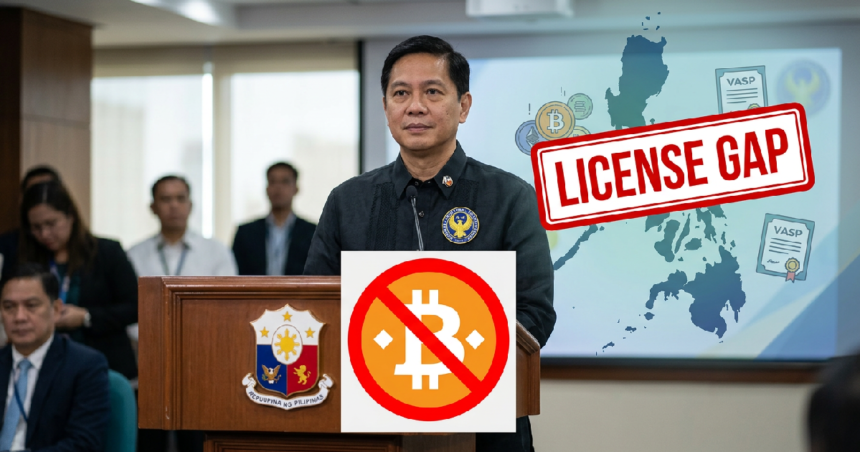
Binance’s attempted return to the Philippines through local partner BlockShoals Technologies has hit a regulatory wall after the Bangko Sentral ng Pilipinas (BSP) flagged a critical license gap.
The Philippines’ central bank confirmed on June 11, 2026, that neither Binance nor BlockShoals Technologies holds the required Virtual Asset Service Provider (VASP) license necessary to operate crypto payment and transaction services. This regulatory barrier effectively halts the onboarding of new users through the exchange’s infrastructure until compliance is met.
The Bangko Sentral ng Pilipinas (BSP) stated that sandbox participation under the Philippine Securities and Exchange Commission (SEC) does not exempt firms from central bank oversight.
While BlockShoals Technologies had previously secured a spot in the SEC’s StratBox sandbox, the central bank maintains that this “innovation” status is separate from the hard requirement for a VASP license. This distinction highlights the dual-layer regulatory framework in the country, where the SEC and BSP govern different facets of the digital economy.
This development is the latest setback for the world’s largest exchange in the Southeast Asian nation. In 2023, the SEC declared that Binance was operating without registration, eventually leading to a 2024 ban and the removal of the app from the Philippine Google Play Store in early 2026.
The exchange sought a “regulated path” back via BlockShoals Technologies in May, but as the BSP now oversight of crypto markets tightens globally, the path has proven more complex than anticipated.
Philippine central bank maintains strict VASP licensing requirements
The Bangko Sentral ng Pilipinas (BSP) is firm on the fact that any entity facilitating the exchange of virtual assets into fiat currency must be a licensed VASP. According to reporting from BitPinas, both Binance and BlockShoals currently lack the specific approval needed to function as payment rails.
This means that while they might have technical permission to “test” under the SEC, they cannot legally handle money or move assets between users.
The central bank’s clarification underscores a fundamental tension between innovation and regulation. The SEC StratBox was intended to let firms refine their products, with BlockShoals serving as the local intermediary while Binance provided the backend security and compliance tech. However, the BSP’s stance suggests that no amount of technical sophistication replaces a formal license under its specific banking and payment statutes.
The SEC StratBox sandbox limitations for Binance
The Securities and Exchange Commission (SEC) has also revised its terms for the ongoing pilot. Under the updated StratBox rules, BlockShoals Technologies has a strict 90-day window to integrate its systems with a separate, already-licensed domestic VASP. This effectively means Binance-linked infrastructure cannot be used for direct onboarding until it is “piggybacked” onto an existing licensed local entity.
Furthermore, the regulator has adjusted its language regarding the exchange’s role. The SEC now refers to Binance as a “global crypto-asset service provider” rather than a “global VASP.” This subtle change in terminology likely reflects the exchange’s lack of current licensing standing in the eyes of Philippine law, signaling that the “global” brand carries little weight without specific local local credentials.
Why the Philippine Binance return depends on local integration
For Binance to move forward, it must rely entirely on its local partner, BlockShoals Technologies, to navigate the domestic regulatory landscape. The current strategy involves using BlockShoals as a buffer, but even this buffer is now under scrutiny. If BlockShoals fails to complete a partnership with a licensed domestic VASP within the 90-day SEC window, the entire reentry plan could collapse.
The Philippines remains a high-growth market for digital assets, similar to how liquidity surges in other regions often drive institutional and retail interest simultaneously. By forcing the integration with established domestic players, the Bangko Sentral ng Pilipinas (BSP) is ensuring that any potential contagion or compliance failure at Binance does not directly impact the Philippine financial system without a local entity bearing the legal risk.
Market access versus supervised trial participation
The central bank’s message to the crypto industry is clear: a “sandbox” is not a “license.” Many firms have used sandbox frameworks globally to bypass traditional entry requirements, but the Philippine authorities are closing that loophole. They are separating the experimentation of a product from the actual act of taking consumer money and processing transactions.
For users in the Philippines, this means the wait for a fully restored Binance experience will continue. While some might look toward alternative altcoin recovery signals or other exchanges that already hold BSP licenses, the largest liquidity provider in the world remains locked out.
The central bank has essentially mandated that there will be no shortcuts through the regulatory perimeter by using the SEC’s innovation trials.
Future outlook for Binance and BlockShoals in the Philippines
The door is not permanently shut, but the timeline for Binance’s Philippine return has been pushed back significantly. The next three months will be the most critical for BlockShoals Technologies as they attempt to find a willing and licensed local partner. This partner would essentially act as the “legal rails” for Binance’s technology, allowing the exchange to operate indirectly.
The Bangko Sentral ng Pilipinas (BSP) likely views this friction as a success for its consumer protection mandate. By flagging the license gap early, they prevent a situation where thousands of users are onboarded onto a platform that technically lacks the authority to hold their funds.
For now, the “wall” remains in place, and the onus is on the exchange and its partner to bridge the gap through compliance rather than technical workarounds.