

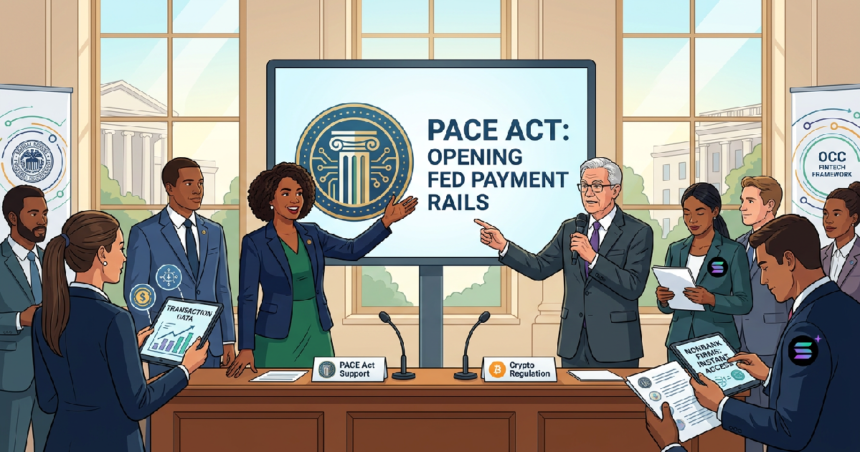
In a rare display of bipartisanship, a new proposal has been introduced to Congress by Reps. Sam Liccardo and Young Kim, aimed at dismantling the barriers separating nonbank financial firms from the nation’s core payment infrastructure. The Payments Access and Consumer Efficiency (PACE) Act represents a significant effort to modernize a financial system that many industry participants argue has become outdated and unnecessarily restrictive.
The legislation outlines an optional federal supervisory framework for payment service providers, including money transmitters that currently manage various state-level licenses. By creating a unified path under the Office of the Comptroller of the Currency (OCC), the bill would reportedly allow these “qualified payment companies” to interface directly with the Federal Reserve. For the Solana ecosystem and the broader digital asset sector, which has frequently faced challenges in accessing essential financial rails, the move is being viewed as a potential turning point for domestic payment operations.
As many experts believe utility shifts will dictate the market in the coming years, the ability for nonbank providers to settle transactions without relying on a partner bank could lower overhead costs and increase the speed of transfers for users.
Bridging the Gap Between Fintech and the Fed
The primary mechanism of the proposal involves opening the Federal Reserve’s most critical services to non-traditional financial entities. Should the legislation move forward, qualified providers would gain access to the Fedwire settlement system, the instant payment service FedNow, and the payment-process service FedACH. Currently, access to these systems is largely restricted to chartered banks, which often requires fintech and crypto firms to pay fees to intermediaries.
The bill’s sponsors argue that the current setup is a relic of an era before digital transactions became the standard. The push for efficiency coincides with a period where there are growing calls for regulatory oversight from federal agencies to ensure the crypto market operates within a stable and predictable framework. By allowing more competition at the infrastructure level, the sponsors believe they can reduce the burden of transaction fees that frequently impact everyday consumers.
Compliance and Consumer Protections
Speed and access are not the only priorities mentioned in the draft; the legislation introduces several requirements intended to preserve financial stability. Companies seeking this new federal status would reportedly be required to adhere to strict standards, which include:
- Maintaining full reserves for customer funds to ensure liquidity.
- Complying with established federal risk management and recordkeeping protocols.
- Undergoing regular supervision and audits by the OCC.
These safeguards are designed to prevent the types of liquidity issues that have previously impacted the digital asset space. By requiring strong reserve backing, the bill aims to provide consumers with a level of confidence in nonbank payment providers that is comparable to traditional depository institutions.
Digital Asset Industry Sentiment
The response from the digital asset community has been generally positive, with several advocacy groups framing the bill as a move toward a more level playing field. Industry leaders have suggested that digital asset payment companies have spent years hindered by an inability to access the same infrastructure used by their traditional competitors.
There is a growing consensus that the industry is entering a phase where tangible financial services will outweigh purely speculative interest. As the window for digital asset utility becomes a primary focus for developers and investors alike, a clear regulatory path could allow companies to demonstrate the practical value of blockchain-based payments.
The Legislative Road Ahead
While the bill has bipartisan backing, its path through the legislative process is not without obstacles. Traditional banking interests are expected to closely examine any measure that might shift transaction volumes away from established institutions or impact the exclusivity of bank charters. Furthermore, the concept of “nonbank” access to the Fed has historically been a point of contention among some regulators who worry about potential systemic risks.
But the focus on streamlining a complex web of state-level regulations into a single federal registration may prove popular among lawmakers who are eager to simplify the American financial landscape. By offering a unified federal framework, the proposal presents a vision of a more technologically advanced domestic payment system. Whether it can overcome the political hurdles in Washington remains to be seen, but the discussion regarding the Federal Reserve’s role in the digital age has clearly reached a new stage.