

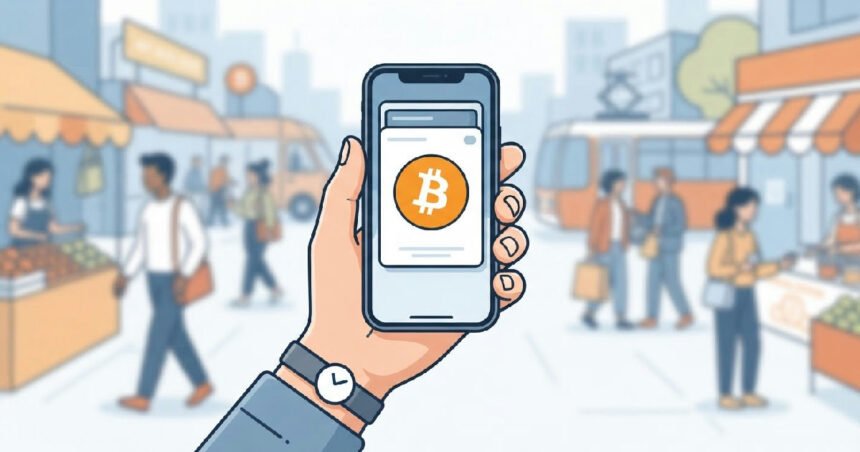
Growing Bitcoin retail adoption is fundamentally reshaping the cryptocurrency’s long-term market trajectory, driven by individual consumers increasingly buying, owning, and spending digital assets. This grassroots movement is pivotal, influencing everything from investment strategies to daily transactions and international remittances.
This escalating engagement from everyday users and businesses doesn’t just signify a trend; it represents a profound shift. It’s pushing Bitcoin towards greater demand, strengthened network effects, enhanced legitimacy, and potentially more stable price movements over extended periods.
Driving Bitcoin retail adoption
Retail adoption, in essence, refers to the rising involvement of individual customers with Bitcoin. It encompasses a wide array of activities, including direct investment, using Bitcoin for overseas family remittances, or integrating it into payment systems.
This phenomenon reflects the organic, bottom-up integration of Bitcoin into the global economy, as well as its increasing acceptance by merchants. Such widespread usage signals a crucial maturation for the digital currency, moving beyond niche speculation.
The term “long-term market trajectory” describes the sustained direction and evolution of Bitcoin’s value and stability over many years, perhaps even decades. As more people engage, they contribute to this enduring market presence.
Demand, Scarcity, and Network Expansion
A primary driver of Bitcoin’s evolving market is the interplay between increased demand and its inherent scarcity. As more individuals and merchants embrace Bitcoin for transactions and as a store of value, overall demand inevitably climbs.
This heightened demand is significant because Bitcoin has a fixed supply limit of 21 million coins, a core principle outlined by its pseudonymous creator, Satoshi Nakamoto. This hard cap ensures that as demand grows, the asset becomes scarcer, exerting upward pressure on its value.
Beyond scarcity, the network effect in cryptocurrencies plays a critical role. Each new user or merchant joining the Bitcoin network significantly enhances its utility and overall value for all existing participants. It creates a positive feedback loop where growth attracts more growth.
A larger user base encourages further adoption, directly contributing to an increase in Bitcoin’s market capitalization. This broadens its appeal to new funds and investors, solidifying its position in the financial landscape.
Widespread acceptance by cryptocurrency exchanges and a substantial user community also cultivate significant market liquidity. This makes Bitcoin easier to trade and use, reducing friction for both buyers and sellers.
Finally, a robust and active network proves highly attractive to developers, fostering innovation and improvements within the Bitcoin ecosystem. This continuous development ensures the platform remains relevant and efficient for its expanding user base.
Building Trust and Reducing Price Swings
Widespread consumer and business acceptance plays a pivotal role in normalizing Bitcoin. It helps to shift public perception from a purely speculative or niche asset towards a more legitimate and established form of money or store of value.
This increased trust can attract a much broader demographic of users who might have previously been hesitant or skeptical. It dismantles barriers to entry and fosters greater mainstream acceptance, which is vital for long-term growth.
While Bitcoin has historically experienced significant price volatility, an expanded base of users holding it for practical utility and long-term savings could foster greater price stability. This contrasts sharply with patterns driven primarily by short-term speculation.
Increased liquidity, a direct result of widespread use, helps the market absorb large buy or sell orders more effectively. This reduces the likelihood of drastic price impacts from single, significant transactions, contributing to a steadier market.
Ultimately, this maturation process allows Bitcoin to become a more reliable asset for a wider range of financial activities. It moves beyond its early reputation to become a more dependable part of investment portfolios and daily commerce.
Bolstering Infrastructure for Wider Use
Growing retail demand acts as a powerful catalyst for the continuous development of critical supporting infrastructure. This includes the creation of more user-friendly digital wallets, making Bitcoin accessible to a broader audience.
Efficient payment processors are also emerging, simplifying the use of Bitcoin for everyday purchases and services. These advancements are crucial for seamless integration into existing financial systems.
Furthermore, increased demand spurs the advancement of scalable Layer 2 solutions, designed to enhance transaction speed and reduce costs. These technological leaps make Bitcoin more practical and accessible for mass adoption.
These infrastructure developments are not just about convenience; they are essential for Bitcoin to fulfil its potential as a peer-to-peer electronic cash system. They pave the way for widespread utility beyond just investment.
The interplay between merchant acceptance and these technological improvements creates a reinforcing cycle. As businesses integrate Bitcoin, consumers find more opportunities to use it, further driving demand for better infrastructure.
The Enduring Impact of Grassroots Growth
The increasing Bitcoin retail adoption isn’t merely a fleeting trend; it represents a foundational shift with profound implications for its future. As more individuals and businesses embrace it, Bitcoin solidifies its place within the global financial ecosystem.
This organic growth establishes a virtuous cycle: increased utility leads to greater legitimacy, which in turn attracts even more users and developers. This expanding ecosystem fosters both resilience and long-term relevance.
The trajectory points towards a future where Bitcoin is not just an investment, but an integral part of everyday financial life. This sustained integration will likely redefine its role in both personal finance and global commerce.
Policymakers and financial institutions are closely watching these developments. Bitcoin regulatory speculation often intersects with these adoption trends, influencing market sentiment and future frameworks.
The collective actions of millions of individual users and thousands of businesses are collectively shaping a new economic reality. It’s a testament to the power of decentralized networks and grassroots movements in finance.
Ultimately, the long-term success and stability of Bitcoin will depend heavily on its continued ability to attract and serve this ever-growing retail base. This steady march towards mainstream acceptance is irreversible.