

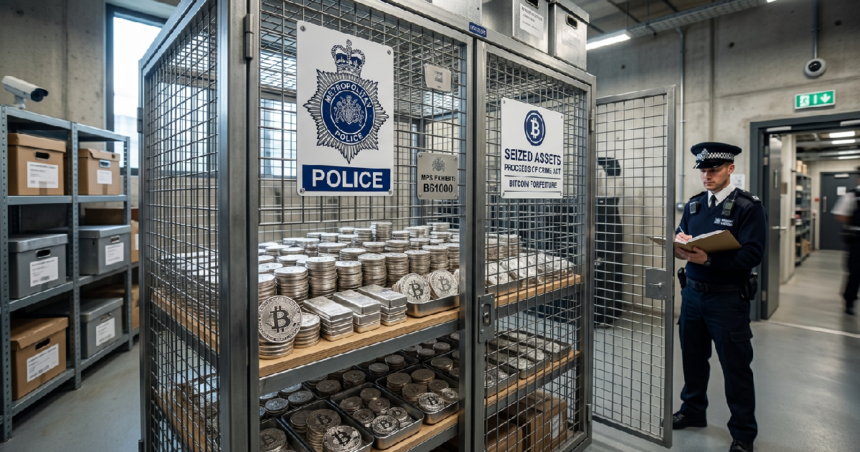
A massive legal battle has erupted over the largest cryptocurrency seizure in British history. Thousands of Chinese fraud victims are mounting a formal challenge against the UK government’s plan to potentially liquidate and absorb approximately 61,000 Bitcoin, valued at billions of dollars. The assets were recovered by the Metropolitan Police during an investigation into a massive investment scam that originated in China and laundered funds through various international channels.
The core of the dispute lies in who has the right to the recovered wealth. While British authorities have successfully seized the digital haul under the Proceeds of Crime Act, the victims of the initial fraud—mostly individuals in China who lost their life savings—argue that the UK has a moral and legal obligation to facilitate a repatriation process rather than treating the assets as a windfall for the Treasury.
The Long Road from Beijing to London
The story traces back several years to a sophisticated wealth management scam operating in China. The scheme reportedly defrauded nearly 130,000 investors, promising high returns that never materialized. The mastermind behind the operation fled to the UK using a false identity, carrying the proceeds of the fraud in a digital format that was eventually converted into the 61,000 Bitcoin now sitting in police custody.
When the Metropolitan Police raided a residence in 2018, they uncovered the hardware wallets. However, the legal complexity of the case meant that the full scale of the holdings and the ability to access them took years to resolve. Now that the Bitcoin is under state control, the victims have organized, hiring legal representation in London to ensure they aren’t left behind as the UK courts determine the funds’ fate.
Legal Friction and the Proceeds of Crime Act
Under current UK law, assets seized from criminal activity often flow into public coffers if no clear path to restitution is established. But the Chinese victims’ legal team is arguing that this case is unique due to its sheer scale. They contend that the Bitcoin represents the direct property of the defrauded individuals and that a civil recovery order should prioritize victim compensation over state seizure.
The challenge faces significant hurdles. There is no formal treaty between the UK and China that easily governs the return of seized cryptocurrency assets. Furthermore, verifying the claims of tens of thousands of individual investors in a foreign jurisdiction presents a logistical nightmare for British courts. Despite these barriers, the group is pushing for a specialized distribution scheme similar to those used in major corporate bankruptcies.
Bitcoin as a State Asset or Private Property
This case serves as a high-stakes test for the British judicial system’s approach to digital assets. If the UK keeps the 61,000 Bitcoin, it would provide a massive boost to the Exchequer, especially given that Bitcoin’s price trajectory remains a point of intense market interest. However, doing so at the expense of fraud victims could damage the UK’s reputation as a fair jurisdiction for global financial dispute resolution.
The British government has remained largely tight-lipped about its specific plans for the Bitcoin, though the standard procedure involves auctioning the coins and splitting the proceeds between the Home Office, the police, and the prosecutor’s office. The victims’ intervention aims to halt this process before the coins are moved to an exchange for liquidation.
What Happens Next
The legal proceedings are expected to drag on through the remainder of 2026. The next phase will involve a series of hearings at the High Court, where judges will weigh the rights of the victims against the state’s powers of forfeiture. International observers are watching closely, as the outcome will set a global precedent for how governments handle “stateless” digital wealth recovered from cross-border crimes.
For the victims, the clock is ticking. Many have been waiting nearly a decade for any sign of recovery. While the UK police deserve credit for the initial seizure, the real victory won’t be recorded until the funds reach the people they were stolen from in the first place.
Frequently Asked Questions
Could the UK government just keep all the Bitcoin?
Technically, yes, if they can prove in court that the assets are the proceeds of crime and that there is no viable mechanism to identify or verify the rightful owners. However, the organized challenge from the Chinese victims makes a total state “grab” much harder to justify politically and legally.
How much is 61,000 Bitcoin actually worth in 2026?
While prices fluctuate daily, we are talking about several billion pounds. It is one of the largest single stashes of Bitcoin in the world, making it a “whale-sized” position that could actually move markets if the UK government decided to sell it all at once on the open market.
Why can’t the Chinese government just take the Bitcoin back?
The Chinese government has a complicated relationship with crypto, having banned most activities related to it years ago. While they want the money back for their citizens, the lack of a formal mutual legal assistance treaty regarding crypto-assets makes the direct transfer of 61,000 Bitcoin from London to Beijing a diplomatic and regulatory minefield.