

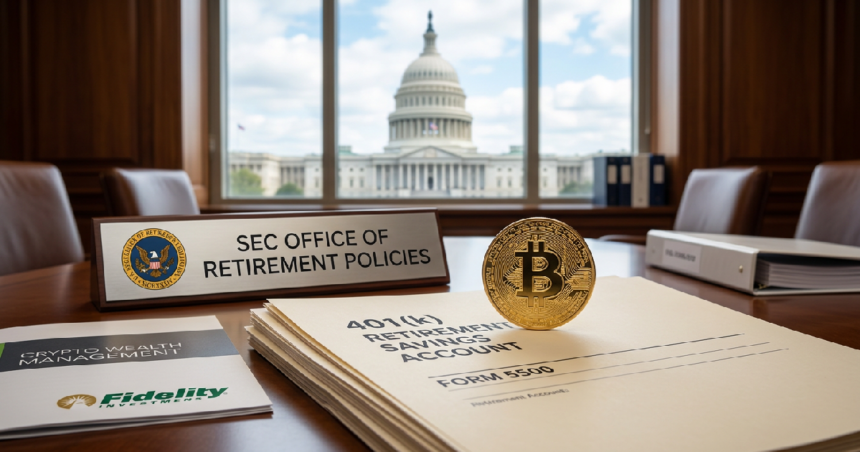
Digital assets have finally crossed the threshold into the most traditional of American financial strongholds. In a move that market observers have anticipated for years, federal regulators and major financial institutions have cleared a path for the direct inclusion of cryptocurrency within 401(k) retirement plans. This shift marks a decisive moment in the institutionalization of Bitcoin and other digital currencies, moving them from the periphery of speculative trading into the core of long-term wealth management.
The transition is not just a matter of policy but a response to relentless pressure from both individual employees and plan sponsors. For years, the Department of Labor (DOL) had issued cautionary guidance, warning fiduciaries to exercise “extreme care” before exposing retirement accounts to the high volatility of crypto markets. However, a combination of recent court rulings and the successful launch of spot Bitcoin ETFs has significantly altered the regulatory calculus.
Fiduciary shifts and the ETF influence
The primary catalyst for this integration is the massive success of regulated Bitcoin investment vehicles. By providing a familiar structure for institutional exposure, these ETFs have addressed many of the security and custodial concerns that previously kept 401(k) providers on the sidelines. Pension fund managers, who were once terrified of the liability associated with “unregulated” assets, now see a clear framework for adding digital exposure without breaching their fiduciary duties.
Fidelity and other major recordkeepers have already begun rolling out frameworks that allow employers to offer Bitcoin as a sleeve within their broader retirement menu. While it isn’t quite a “free-for-all” — most plans are expected to cap crypto exposure at 5% or 10% of a participant’s total portfolio — the mere presence of the option suggests a radical change in how the financial establishment views digital value.
But the road to inclusion hasn’t been without its detractors. Consumer advocacy groups continue to argue that the inherent volatility of crypto is incompatible with the “slow and steady” philosophy of retirement planning. They point to the 2022 market crash as evidence that a 401(k) shouldn’t be a place for assets that can lose 70% of their value in a few months.
The impact of the Crypto Clarity Act
The legislative environment is also playing a critical role. Recent moves like the New Clarity Act have helped define the boundaries of what is and isn’t allowed in the digital asset space. While that specific legislation focused on blocking interest payments on certain stablecoins, the broader effect has been to provide the legal “guardrails” that corporate lawyers demand before signing off on new retirement perks.
As the crypto market window evolves, we are seeing a shift toward utility and away from pure speculation. This is precisely what retirement planners look for. They don’t want a “slot machine” asset; they want a diversifier that has a distinct correlation profile compared to the S&P 500 or the bond market.
Employer adoption and logistical hurdles
For HR departments, the decision to add crypto isn’t just about financial theory — it’s a recruitment tool. In a competitive labor market, offering a tech-forward retirement plan can be a differentiator for younger employees who view Bitcoin as a more viable long-term store of value than traditional fiat-based products.
Despite the “green light,” the actual rollout across American workplaces will likely be a trickle rather than a flood. Each individual company’s board must still approve the addition of crypto to their specific 401(k) lineup. Many conservative firms will wait to see how the first wave of early adopters handles the litigation risks and administrative overhead. There is also the matter of fees; crypto-integrated plans often carry higher management costs than a standard Vanguard index fund, a cost that usually gets passed down to the employee.
Looking toward a digital retirement
The inclusion of crypto in 401(k)s represents a “coming of age” for the sector. We are moving toward a period where institutional adoption isn’t just a headline but a line item on a million different pay stubs. This doesn’t mean Bitcoin will stop being volatile, but it does mean it has gained a seat at the most important table in global finance.
If this trend continues at its current pace, the 401(k) may become one of the largest sources of consistent buy-pressure for digital assets. Unlike retail traders who panic-sell during a dip, 401(k) participants use automated dollar-cost averaging. This “sticky” capital could provide a new floor for the market, dampening the wild price swings that have defined the last decade of crypto history.
Retirement Crypto FAQ
Can I put my entire 401(k) into Bitcoin?
It’s highly unlikely. Most employers and plan providers will set a “guardrail” limit, typically between 1% and 5% of your total portfolio, to mitigate risk and protect the company from fiduciary liability.
How will crypto in my 401(k) be taxed?
It follows the same rules as the rest of your plan. In a traditional 401(k), the contributions are pre-tax and you pay taxes upon withdrawal. In a Roth 401(k), you contribute after-tax money and the gains (including crypto gains) are tax-free when you retire.
What happens if the exchange holding my retirement crypto goes bust?
This is why 401(k) providers are using institutional-grade custodians or ETFs. Unlike holding coins on a retail exchange, these assets are protected by rigorous federal regulations and, in many cases, private insurance, though they are not FDIC-insured like a bank account.