

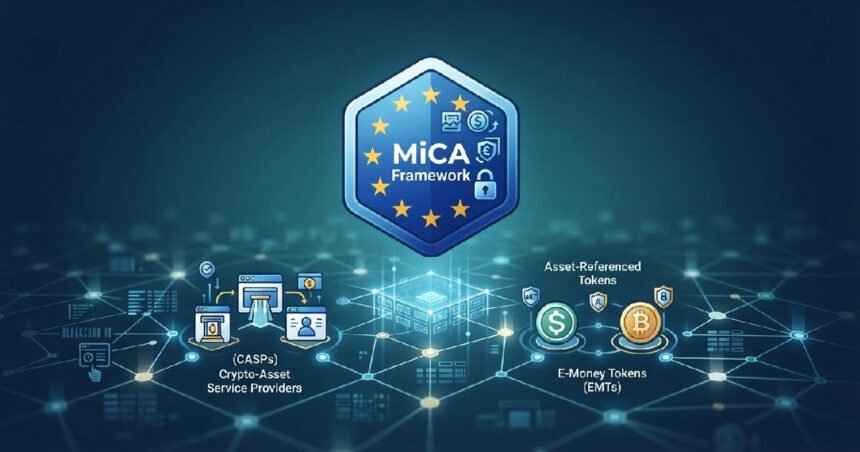
The European Union’s Markets in Crypto-Assets Regulation (MiCA), formally Regulation (EU) 2023/1114, represents a pivotal step in establishing comprehensive EU crypto regulation. This landmark legislative framework aims to create uniform rules for digital assets across all member states, fostering legal certainty and investor protection.
MiCA’s primary objective is to replace the patchwork of national regulations with a harmonized rulebook. This ensures market integrity, promotes financial stability, and encourages responsible innovation within the rapidly evolving crypto sector.
Introduction to EU Crypto Regulation and MiCA
MiCA steps in to govern crypto-assets that existing EU financial services legislation does not already cover. It provides a standardized approach for issuing crypto-assets and for the operations of crypto-asset service providers (CASPs).
The regulation is designed to bring the nascent digital asset industry into a clear regulatory fold. This move offers a clearer path for businesses while safeguarding consumers from potential risks in a previously unregulated space. Understanding the broader landscape of crypto regulation frameworks is vital for market participants.
Defining the MiCA Framework: Key Concepts
MiCA establishes a clear classification system for various crypto-assets, applying distinct requirements based on their nature. This specificity helps tailor regulatory burdens to actual risks.
Notably, the framework explicitly excludes certain types of digital assets. These include unique and non-fungible crypto-assets (NFTs), central bank digital currencies (CBDCs), and specific limited-use tokens like loyalty points, which fall outside its scope.
Understanding Crypto-Asset Categories
The regulation categorizes crypto-assets to apply proportionate rules. This three-tiered approach helps differentiate between various digital instruments based on their intended function and underlying stability mechanisms.
Asset-Referenced Tokens (ARTs) are one such category. These crypto-assets aim to maintain a stable value by referencing other values or rights, which can include official currencies, commodities, or even other crypto-assets.
E-Money Tokens (EMTs) constitute another class. They are designed to hold a stable value by pegging it to a single official currency, essentially functioning as digital equivalents of fiat money within the EU’s regulatory structure.
The final category, “Other Crypto-Assets,” encompasses those not classified as ARTs or EMTs, and not already under existing EU financial legislation. This includes many utility tokens and prominent cryptocurrencies such as Bitcoin and Ethereum.
Requirements for Issuers under EU Crypto Regulation
Issuers of crypto-assets face specific obligations under MiCA, which vary significantly depending on the type of token they intend to offer. This tiered approach ensures that regulatory intensity matches the risk profile of each asset.
This nuanced framework aims to balance innovation with necessary oversight. It prevents overly broad regulations from stifling the development of novel digital asset solutions while ensuring market safety.
Rules for Asset-Referenced Tokens (ARTs)
Issuers of Asset-Referenced Tokens must navigate stringent authorization processes. They need to be legal entities established within the EU and secure authorization from their National Competent Authority (NCA), unless specific exemptions apply or they are credit institutions.
A crucial step involves publishing a detailed crypto-asset whitepaper, which requires NCA approval. This document must contain clear, fair, and non-misleading information about the token and its associated risks, ensuring investor transparency.
Maintaining robust reserve assets is another cornerstone for ART issuers. They must hold reserves that fully cover their liabilities to token holders, placing these assets in custody with a third party. These reserves must also be invested in highly liquid financial instruments with minimal risk.
Capital requirements are also a key component of MiCA for ART issuers. They must maintain own funds equal to the higher of €350,000, 2% of their average reserve assets, or one-quarter of their preceding year’s fixed overheads.
Furthermore, ART issuers must implement sound governance arrangements. These include clear business structures, comprehensive risk management strategies, and robust policies to manage conflicts of interest effectively.
Implications for Crypto-Asset Service Providers (CASPs)
Crypto-Asset Service Providers (CASPs) are central to the digital asset ecosystem, and MiCA introduces a unified regulatory regime for their operations. This framework ensures that services like exchange, custody, and transfer of crypto-assets adhere to common standards.
This overarching framework establishes distinct requirements tailored for CASPs. These provisions contribute to a more coherent approach for crypto services across the EU.
The regulation also incorporates robust consumer protection and market integrity measures, which are essential for building trust in crypto services. Investors seeking to understand the broad spectrum of digital asset regulation will find MiCA particularly relevant.
Impact and Future Outlook for Digital Assets in the EU
The implementation of MiCA is set to profoundly reshape the digital asset landscape within the European Union. By providing a clear regulatory framework, it seeks to reduce uncertainty that has historically plagued the crypto industry.
This clarity is expected to enhance consumer protection significantly. Investors will benefit from standardized disclosures, clearer rules for service providers, and mechanisms for redress, fostering greater trust in the crypto market.
MiCA also aims to promote responsible innovation. With clear rules in place, businesses can develop new crypto-asset products and services with greater confidence, knowing the regulatory boundaries they must operate within. This unified approach positions the EU as a leader in comprehensive blockchain regulation.
The regulation’s comprehensive scope and harmonized approach could serve as a model for other jurisdictions globally. It signals a mature approach to integrating digital assets into the broader financial system, balancing potential with necessary oversight.
What is the primary goal of the MiCA Regulation?
The primary goal of the Markets in Crypto-Assets Regulation (MiCA) is to establish a unified and comprehensive regulatory framework for crypto-assets across all EU member states. It aims to provide legal certainty, protect consumers, ensure market integrity, and foster financial stability.
Which crypto-assets are excluded from MiCA?
MiCA explicitly excludes several categories of crypto-assets from its scope. These include unique and non-fungible crypto-assets (NFTs), central bank digital currencies (CBDCs), and certain limited-use tokens, such as loyalty points, which serve a very specific, restricted purpose.
What are the capital requirements for ART issuers?
Issuers of Asset-Referenced Tokens (ARTs) must hold own funds equal to at least the higher of three figures: €350,000, 2% of the average amount of their reserve assets, or one-quarter of their fixed overheads from the preceding year. This ensures financial stability for these token issuers.