

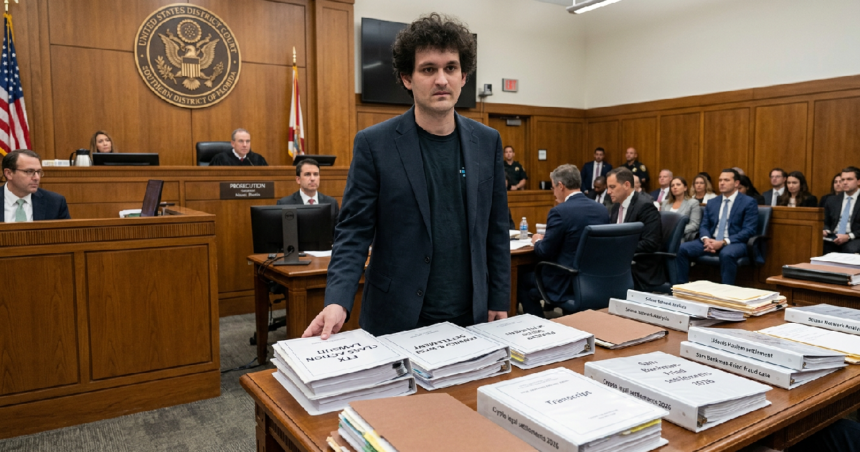
Fenwick & West, the Silicon Valley law firm that served as primary outside counsel for FTX US, has agreed to pay $54 million to settle allegations that it enabled the multi-billion dollar fraud orchestrated by Sam Bankman-Fried. The deal, detailed in a Friday court filing, represents the largest portion of a new $66.17 million settlement package involving multiple defendants.
The filing in the U.S. District Court for the Southern District of Florida also includes a $11.75 million agreement from auditor Prager Metis and a $420,000 payment from former Miami Heat forward Udonis Haslem. Together with the Fenwick & West contribution, these three entities will pay a total of $66,170,000 to resolve claims from a class of investors that could number in the millions.
U.S. District Judge K. Michael Moore is presiding over the case, which marks a second major wave of class settlements. This follow-up follows an earlier round involving 15 defendants, including FTX inner-circle members like Caroline Ellison and Gary Wang. While the new settlement deals address significant claims, Fenwick & West has publicly disputed any admission of wrongdoing.
Investors target professional firms in second wave of settlements
The legal team representing the victims, led by Adam Moskowitz and David Boies, argued that the law firm helped craft strategies that allowed the fraud to continue. David Boies, who previously represented victims of Jeffrey Epstein, is seeking to certify a single class of users who held assets on the platform.
The class includes those who held fiat currency or crypto on the exchange, as well as those who bought the native FTT token. This legal pressure comes at a time when regulatory clarity is paramount; for instance, the New Clarity Act blocks interest payments on stablecoins, changing how yield products are handled.
Fenwick & West told Reuters it was unaware of the fraud and stands by its work. Despite this settlement, the firm still faces a separate $525 million civil suit in Washington, D.C. That case, brought by 20 victims, alleges malpractice and gross negligence and is not covered by the Friday filing.
Proposed payment structure and independent administration
Plaintiffs are asking Judge K. Michael Moore to appoint JND Legal Administration to manage the settlement payouts. This move intentionally bypasses the FTX bankruptcy estate due to concerns over high costs and potential delays. JND Legal Administration recently handled a similar administrative role for the Ripple Labs class settlement.
To ensure fairness, the proposed plan uses CoinGecko price data from May 14 to value lost digital assets. Whatever a customer recovers from the main FTX bankruptcy will be subtracted from this settlement value to prevent double-charging. This focus on verifiable data is similar to how Michael Gillick says CFTC is ready to oversee the broader crypto market through stricter reporting.
Specific rules apply to the treatment of FTT tokens in this settlement. Holders will only receive credit for their documented purchase price, while any tokens received for free are valued at zero. This conservative valuation approach mirrors the current cautious sentiment where even Bitcoin faces sharp correction risk amid institutional cooling.
International holdouts resist the class deal
Not all claimants are satisfied with the proposed $66.17 million resolution. A group of 21 plaintiffs, including 18 individuals and three corporations from the UK, EU, and Asia, are pursuing their own litigation. This group claims to have lost more than $500 million and is represented by attorney Anthony Scordo.
These high-value investors have asked Judge Moore to ensure their claims are not automatically swept into the Miami settlement. They are currently waiting for a ruling on a separate motion. This resistance highlights the tension between a swift class-action resolution and the goals of larger entities seeking full recovery.
Timeline for final court approval
The settlement involving Fenwick & West, Prager Metis, and Udonis Haslem still requires preliminary approval from Judge Moore. If granted, the legal teams have requested a final approval hearing to be scheduled 90 days after that decision. This timeline would see the recovery process moving toward its final stages later this year.
The current legal activity occurs more than three years after the November 2022 collapse of FTX. While Sam Bankman-Fried serves a 25-year prison sentence, the bankruptcy estate has managed to return over $5 billion to creditors. These external settlements provide a secondary source of recovery for those impacted by the exchange’s downfall.