

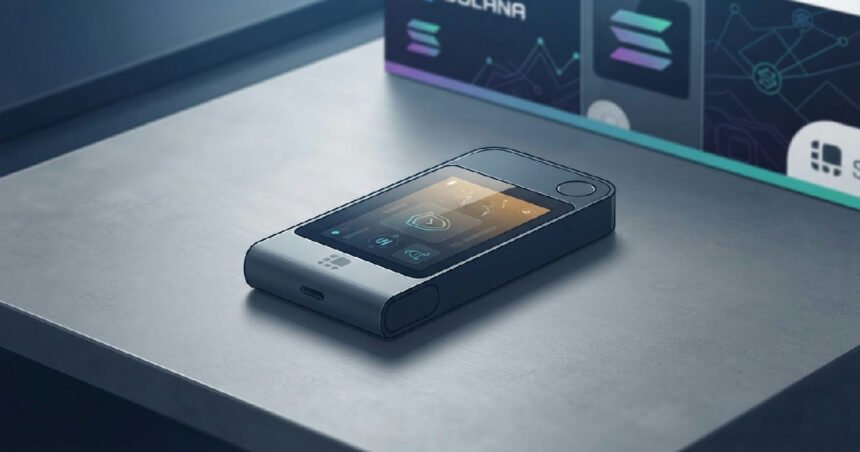
Ledger, the global leader in secure digital asset infrastructure, officially unveiled its new Atom Android device on 2026-10-15 at its Op3n event in Paris. The device, designed to protect digital assets and user privacy, integrates seamlessly with Solana Mobile and introduces advanced tamper protections.
This launch comes amidst an ongoing investigation into unauthorized modifications to existing Ledger hardware wallets sold through third-party resellers, which led to an unverified estimated $93 million in cryptocurrency losses.
Introducing the Ledger Atom: Next-Generation Security
The Atom is described as a “signer” and not just a traditional hardware wallet or smartphone, blending everyday Android functionality with Ledger’s stringent security. It’s a strategic move by Ledger, aiming to expand its market reach beyond crypto self-custody users to a broader audience focused on security, privacy, and AI agent approvals.
The Ledger Atom represents a significant evolution in secure hardware, moving beyond Ledger’s traditional hardware wallets to offer a comprehensive security and privacy device. It runs a hardened version of the Android Open Source Project software alongside Ledger OS, which operates on a Common Criteria EAL6+ secure element.
This dual operating system architecture allows Atom to switch automatically between Standard and Secure Modes. An integral Field-Programmable Gate Array (FPGA) chip physically isolates the Android environment from the Secure Mode, ensuring that sensitive transactions are reviewed and signed in an uncompromised environment.
Enhanced Security Architecture
One of the Atom’s standout features is its robust suite of tamper protections. The device incorporates advanced anti-tampering and tamper-evident solutions designed to detect physical interference. Ledger has enclosed the Secure Element, MCU, and FPGA in a monitored, protected area, guarding against attempts at drilling or opening.
The back cover is uniquely paired with the device, making simple replacements impossible. Furthermore, tamper sensors remain active even when the device is powered off, powered by a separate battery. These measures are specifically engineered to counter sophisticated attacks like the screen reader implants identified in recent incidents, providing enhanced cold wallet security.
Solana Mobile’s Strategic Partnership and Integration
A key announcement accompanying the Atom’s unveiling is its deep integration with Solana Mobile, marking Ledger as Solana Mobile’s first hardware expansion partner. The Atom will come with Solana Mobile’s Seeker app preinstalled, combining the wallet and dApp Store into a single application.
Transaction signing within the Seeker app will be securely handled by Atom’s dedicated Secure Mode. This collaboration aims to extend the reach of the Solana ecosystem, which has already seen significant adoption with over 200,000 Solana Mobile devices sold and more than $13 billion in transaction volume across 154 million transactions.
Seeker App Integration and Ecosystem Growth
Solana Labs co-founder and CEO Anatoly Yakovenko lauded the partnership, noting the success of the Seeker phone in fostering a crypto-native mobile community. He highlighted the achievement of over a thousand apps and billions in transaction volume from hundreds of thousands of users.
Yakovenko stated his excitement for Ledger Atom users to experience the “magic” that Seeker users have enjoyed for over a year, signaling a strong commitment to Solana network growth.
The integration means users will gain secure access to Solana’s expansive dApp Store, which currently boasts over 1,500 applications. This move underscores a growing trend of major blockchain ecosystems collaborating with hardware manufacturers to deliver more secure and integrated mobile experiences.
Responding to Supply Chain Vulnerabilities
The introduction of Atom, with its heightened security features, directly addresses the fallout from an ongoing investigation into modified Ledger hardware wallets. The incident involved devices sold through the third-party reseller CryptoBilis in Southeast Asia, where unauthorized hardware implants were discovered.
These implants were capable of capturing users’ 24-word recovery phrases during setup and transmitting them over a mobile network. While Ledger has not confirmed the total, on-chain researchers linked the incident to suspected cryptocurrency losses exceeding $86 million, with some reports suggesting around $93 million.
CryptoBilis Incident Drives Innovation
In response to this critical vulnerability, Ledger has pledged that Atom will feature its most advanced anti-tampering and tamper-evident solutions to date. The company has also emphasized that the new Atom device will be sold exclusively through Ledger’s official website, a direct measure to bypass potentially compromised third-party reseller networks.
This strategic shift in distribution aims to restore user trust and provide a more controlled, secure supply chain. Ledger maintains that its internal systems, operating software, and security chips were not compromised in the CryptoBilis incident, focusing the issue on physical tampering within the supply chain.
Broader Implications for Digital Asset Security
Pascal Gauthier, Chairman & CEO of Ledger, positioned the Atom as a significant shift for the company, expanding its mission beyond securing crypto to protecting an individual’s entire digital life. This includes identity, communications, and interactions with AI agents, aligning with the increasing complexity of online security threats.
The device also incorporates post-quantum cryptography, compatible with standards developed by the U.S. National Institute of Standards and Technology (NIST). This forward-looking feature prepares users for potential future threats from quantum computing, safeguarding encrypted data against advanced decryption methods.
AI Agent Control and Future Integrations
Atom introduces Ledger Agent Intent, a system designed to provide hardware-enforced control over AI agent transactions. Users can set policies, such as allowing an AI agent to move small amounts of funds without physical approval while requiring explicit authorization for larger transactions.
This capability is particularly relevant given the rise in cybercrime and software wallet compromises, with 158,000 cases involving at least 80,000 unique victims reported in 2025. The Agent Intent system will be directly integrated with OpenClaw, an AI agent platform, with its application preloaded on the Atom device.
Additionally, Kraken is exploring support for Ledger Atom, potentially allowing customers to use its Secure Mode for exchange approvals, building on a prior collaboration with Payward to expand ledger device support.
Pricing, Availability, and Market Positioning
The Ledger Atom is positioned at a premium price point compared to Ledger’s existing hardware wallets. The limited Founder’s Edition is priced at $849, requiring a $100 fully refundable deposit for reservation. Regular orders post-launch will cost $899, substantially higher than Ledger’s current product suite, which ranges from $69 to $399.
Ledger expects to begin deliveries in summer 2027, pending certification. While the company declined to disclose specific sales targets, a spokesperson indicated that Atom targets a broader market, including “crypto adjacent” users, “AI power users,” and security-conscious individuals. This strategic pricing and market expansion reflect Ledger’s ambition to redefine digital security beyond traditional cryptocurrency storage.
The device’s high-end specifications, including a 6.77-inch OLED display, a 50 MP rear camera, a 32 MP front camera, and a 4,000 mAh battery, underscore its positioning as a comprehensive secure mobile solution. By integrating advanced hardware, software, and AI controls, Ledger aims to provide a robust platform for navigating an increasingly complex digital landscape.