

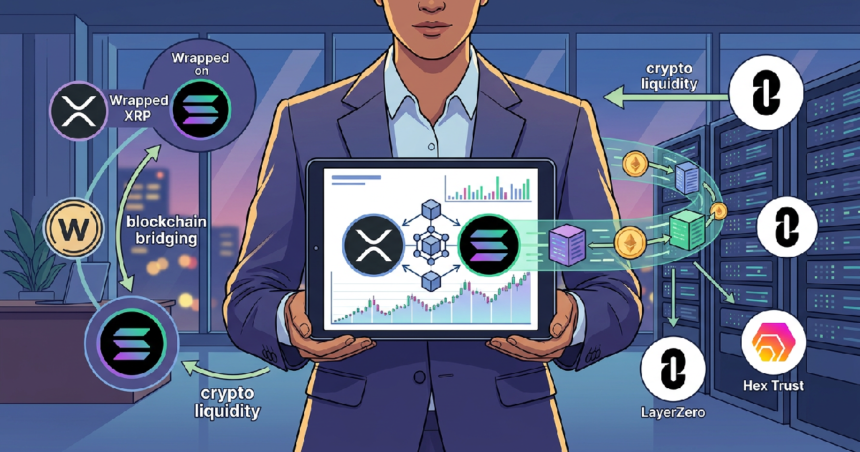
XRP holders can now access the Solana decentralized finance (DeFi) ecosystem without liquidating their positions, following the launch of Wrapped XRP (wXRP) on the network. The initiative, spearheaded by digital asset custodian Hex Trust and powered by the LayerZero messaging protocol, represents a link between one of the industry’s longest-standing payment tokens and a high-performance blockchain known for its speed.
The move allows XRP, a token traditionally used for cross-border settlements on the XRP Ledger, to transition into a landscape defined by rapid trading and yield generation. By wrapping the asset, users can interact with various Solana-based platforms. These integrations are becoming increasingly common as utility shifts dictate market trends across different blockchain architectures.
Bridging Asset Utility and Network Liquidity
The technical structure of wXRP reportedly relies on a 1:1 backing system. For every wrapped token circulating on Solana, one native XRP is intended to be held in a segregated custody account managed by Hex Trust. This setup is designed to ensure the asset remains redeemable, aiming to mitigate the de-pegging risks that have affected various bridging attempts in the past.
This deployment is part of a broader multi-chain strategy focused on expanding asset availability. While Solana is the current focus, reports suggest the roadmap may include similar expansions to other major networks. Developers are increasingly moving toward models where a primary asset remains on its home ledger while its value is exported to environments where liquidity and application variety are more concentrated.
XRP has often been viewed as a siloed asset, but its entry into Solana provides a boost to its potential use cases. Solana’s environment provides a contrast to the specific focus of the XRP Ledger. For holders, the ability to potentially earn yield or provide liquidity without selling underlying coins is a shift that may help maintain asset relevance as the window for pure speculation is closing in several market sectors.
The Role of Infrastructure and Security
At the center of this integration is LayerZero. The cross-chain protocol has emerged as a frequent infrastructure choice following various bridge exploits in recent years that impacted investor confidence. By handling the messaging between Solana and custodial services, the system aims to provide a more resilient pathway than legacy bridges that historically faced vulnerabilities.
The involvement of a custodial partner like Hex Trust also signals a lean toward institutional-standard DeFi. Unlike some earlier decentralized bridges that lacked formal oversight, the participation of a regulated custodian is intended to provide a layer of accountability. This move aligns with broader industry trends where regulatory readiness in the crypto market is becoming a significant factor for professional participants.
Future Outlook for Cross-Chain Assets
The success of wXRP on Solana will likely depend on its adoption rate within the network’s decentralized exchanges and lending protocols. It remains to be seen whether the XRP community will fully embrace Solana’s fast-paced DeFi culture, but the technical infrastructure to do so is now established.
As competition between different blockchain ecosystems continues, the focus is shifting away from which chain is superior toward which network can provide the most efficient environment for specific financial activities. For Solana, adding a veteran asset like XRP to its ecosystem is another step in expanding its reach in on-chain finance. For those holding the Ripple-linked token, it offers a way to engage with a different set of decentralized applications and liquidity pools.