

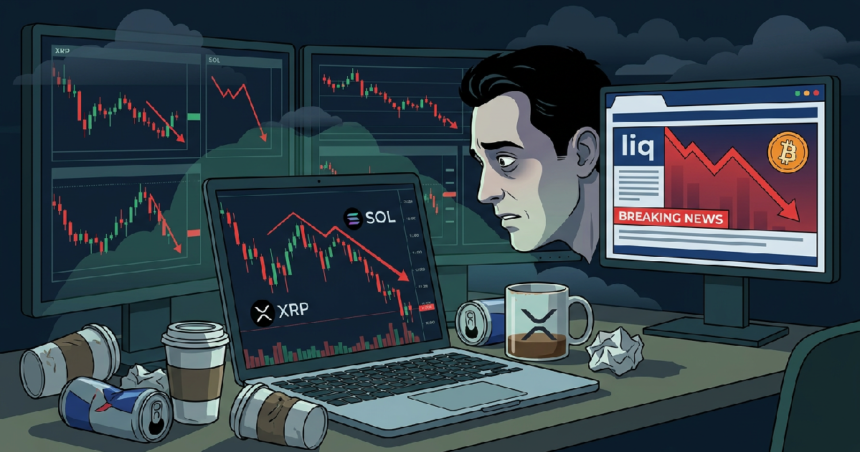
Traders holding bullish positions in the digital asset market faced a significant deleveraging event as a wave of liquidations reportedly swept through the sector following a sharp decline in the price of Bitcoin. The sudden market downdraft, which saw popular assets like Solana and XRP retreat, coincided with a broader pullback in global risk assets. This shift was reportedly influenced by volatility in the government bond market and a downturn in United States equity performance, suggesting that over-leveraged positions remained vulnerable to external macroeconomic pressures.
The swiftness of the decline caught many market participants off guard, particularly those who had built up high-leverage long positions during the recent push toward psychological resistance levels. According to reports from major derivatives exchanges, a large volume of liquidations occurred within a concentrated window as Bitcoin’s price broke below recently established technical floors. This selling pressure appeared to track with a difficult session for Wall Street, as investors reacted to rising yields in the bond market—a factor that digital asset analysts frequently cite as a headwind for speculative growth assets.
For XRP investors, the recent dip represents a temporary setback in what has otherwise been a period of tightening market structure. As XRP momentum restarts amid new liquidity surge, many traders were reportedly positioned for a breakout rather than a breakdown. The ripple effect of the primary cryptocurrency’s retreat was felt acutely across the altcoin market, where assets with higher volatility often exhibit larger percentage losses when the market leader faces a correction.
Macroeconomic Headwinds and the Bond Market Connection
The primary catalyst for the synchronized market flush appears to have originated outside the digital asset sector. As bond yields climbed, global investors reportedly shifted away from riskier holdings, resulting in a retreat across major indices such as the S&P 500 and the Nasdaq Composite. This correlation between crypto and tech-heavy indices continues to challenge the narrative of Bitcoin as an uncorrelated asset in the short term. When institutional desks face pressure in their equity or fixed-income portfolios, they may trim liquid positions in the crypto market to manage overall risk.
The volatility in the bond market serves as a reminder that digital assets do not exist in a vacuum. Higher yields on government debt can make the potential returns of volatile assets less attractive to conservative fund managers on a risk-adjusted basis. This dynamic is particularly relevant as Bitcoin faces sharp correction risk when institutional interest wanes during periods of global financial stress. Technical analysts now suggest that holding recent support levels will be essential to prevent a deeper slide in the coming weeks.
Impact on Solana and XRP Positions
While Bitcoin is the primary driver of market sentiment, the declines in Solana and XRP suggest that the “long squeeze” affected a broad range of major tokens. These assets had been showing strength in previous weeks, attracting leverage from retail traders looking to capture further gains in the current market cycle. When the market dipped, these leveraged positions reportedly hit liquidation prices, triggering automated sell orders that accelerated the downward movement for major altcoins.
The liquidations in XRP are especially notable given the long-term price targets many holders maintain through varying market conditions. Despite the current volatility, some market participants continue analyzing diverging paths for XRP value as they look past short-term leverage flushes toward long-term utility. However, the immediate reality for derivatives traders was a loss of collateral as the market efficiently cleared out an imbalance between buyers and sellers.
Regulatory Oversight and Market Recovery
Market analysts often view these large-scale liquidation events as a necessary clearing of excess leverage, theoretically building a more sustainable foundation for future price action. The scale of recent losses suggests the market may have reached a point of over-optimism regarding the pace of the current rally. For those monitoring market integrity and the structure of these products, the Commodity Futures Trading Commission (CFTC) provides ongoing oversight and reports regarding derivatives activity in the broader financial landscape.
The outlook for the near term depends largely on whether Bitcoin can reclaim its position above key psychological levels. If the global bond selloff stabilizes and U.S. equities find a bottom, buyers who remained on the sidelines during the liquidation event may find current price levels attractive. For now, the focus remains on established support levels that previously acted as resistance. If these floors fail to hold, the market may see a more extended period of consolidation or further deleveraging as participants adjust to a shifting macroeconomic environment.