

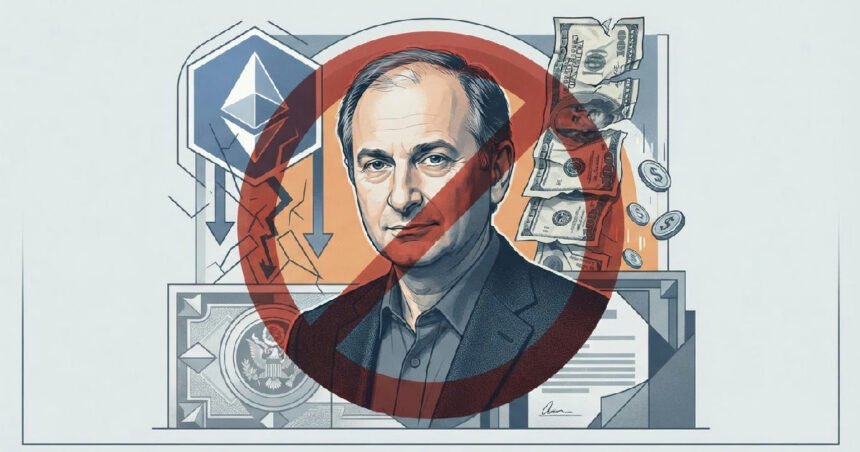
Alex Mashinsky, the founder and former CEO of the bankrupt crypto lender Celsius Network, has agreed to a lifetime ban from the cryptocurrency and securities industries. The agreement is part of a settlement with New York Attorney General Letitia James announced on October 9, 2026, resolving a civil suit over his role in the company’s dramatic 2022 collapse.
The deal also requires Mashinsky, who is currently serving a 12-year federal prison sentence for fraud, to make conditional payments of up to $35 million to the state. While the ban is permanent, a notable exception allows him to continue trading cryptocurrencies for his personal account. This settlement adds another layer to the extensive legal fallout for the once-prominent crypto boss.
Details of the Alex Mashinsky crypto ban settlement
The financial obligations outlined in the settlement are complex and conditional, designed to work in concert with Mashinsky’s existing federal penalties. The agreement stipulates two potential payments that, combined, total up to $35 million. However, these payments are not guaranteed and do not create a new fund for Celsius creditors.
The first component is a $25 million judgment for damages payable to New York. This obligation will be considered satisfied if Mashinsky pays an additional $10 million to the U.S. Department of Justice (DOJ) as part of his federal forfeiture order. Any such payments made to the DOJ after May 20, 2025, will count towards this amount.
A second, separate $10 million monetary judgment is tied directly to his prison time. This penalty will be waived entirely if Mashinsky serves his full 12-year federal sentence. The clause includes specific exceptions that would trigger the payment, such as his sentence being overturned, reduced by a court, or shortened through programs like compassionate release or certain early release credits.
This settlement follows the Celsius bankruptcy case, which emerged from Chapter 11 on January 31, 2024. As of August 2026, the bankruptcy proceedings have already resulted in the distribution of more than $3.4 billion to the firm’s creditors, a process separate from this New York agreement.
A lifetime ban with one notable exception
The centerpiece of the New York settlement is the permanent industry ban, which is broad in its scope. It permanently prohibits Alex Mashinsky from participating in the securities, commodities, and digital asset industries within the state of New York. The ban effectively ends any possibility of him returning to a leadership role in the financial world he once helped shape.
Under the terms, Mashinsky is barred from acting as a broker, investment adviser, manager, director, or consultant for any entity involved with these financial instruments. He is also forbidden from providing investment advice for compensation. The agreement formalizes his complete removal from any position where he could manage or influence other people’s investments.
Yet, the ban contains a significant carve-out: Mashinsky retains the right to make personal purchases or sales of cryptocurrencies. This means while he can no longer run a crypto company or advise clients, he is not completely walled off from the market.
As part of the deal, he also formally admitted to misleading investors about Celsius’s regulatory compliance and his own sales of the platform’s native CEL token.
A tangled web of legal woes for the Celsius founder
The New York settlement is the latest in a string of legal actions brought against Mashinsky by state and federal authorities since Celsius’s implosion. His most severe penalty came from a federal criminal case in the Southern District of New York, where he was sentenced on May 8, 2025, to 12 years in prison for securities, commodities, and wire fraud.
In that federal case, he was also ordered to forfeit more than $48 million in ill-gotten gains. The coordinated regulatory response underscores the gravity of the fraud perpetrated at Celsius, which at its peak held approximately $20 billion in digital assets from customers worldwide.
Crackdowns from the FTC and CFTC
Before the New York deal, other federal agencies had already taken significant action. In April, specifically on April 28, the Federal Trade Commission (FTC) secured a settlement that permanently banned Mashinsky from working in finance and handling consumer assets. That deal included a largely suspended $4.72 billion judgment, which could be reinstated if he is found to have misrepresented his financial status.
Two months later, in June 2025, the Commodity Futures Trading Commission (CFTC) also secured a permanent ban, prohibiting him from trading in markets under its jurisdiction and from registering with the agency. The CFTC had charged Mashinsky and Celsius with fraud and operating as an unregistered commodity pool.
An agreement with the SEC
The Securities and Exchange Commission (SEC) also filed a civil lawsuit against Mashinsky, alleging he and Celsius raised billions through unregistered and fraudulent offers of crypto asset securities. In September, the SEC announced it had reached an agreement in principle with Mashinsky to settle its case, further closing the legal net around him.
The collapse that shook the crypto world
The fall of Celsius was a pivotal event in the crypto market crisis of 2022. Mashinsky had promoted the platform as a safe alternative to traditional banks, promising depositors yields as high as 17% on their crypto assets. He repeatedly assured customers that their funds were secure, even as the company took on increasingly risky leveraged positions to generate its promised returns.
The facade crumbled in June 2022 when Celsius abruptly froze all customer withdrawals, citing “extreme market conditions.” The move trapped hundreds of thousands of investors, including over 26,000 New Yorkers, locking them out of their life savings. A month later, Celsius filed for Chapter 11 bankruptcy protection, revealing a staggering shortfall of more than $1 billion between its assets and liabilities.
The bankruptcy proceedings exposed the depth of the company’s mismanagement and the lies told to its users. The promises of high, safe yields were ultimately unsustainable, a recurring theme in a market often driven by speculation.
In announcing the settlement, Attorney General James issued a stern warning to the industry. “I will not allow scammers to use cryptocurrencies to prey on unsuspecting New Yorkers,” she stated, reinforcing her office’s commitment to policing the digital asset space.
What this settlement means for crypto regulation
The cumulative actions against Alex Mashinsky represent a landmark moment for crypto regulation in the United States. The series of lifetime bans from multiple state and federal agencies sends an unmistakable message that regulators are focused on holding individual executives accountable for corporate misconduct, not just levying fines against their companies.
This approach marks a significant escalation in enforcement. For years, critics argued that financial penalties were merely a cost of doing business for bad actors. By imposing permanent industry prohibitions, authorities are aiming to purge the ecosystem of individuals deemed to have betrayed public trust on a massive scale.
The Mashinsky case serves as a powerful precedent for ongoing and future investigations into crypto-related fraud. It demonstrates a clear playbook for multi-agency coordination, with the DOJ, SEC, CFTC, FTC, and state attorneys general working in tandem to build comprehensive cases. This coordinated pressure makes it nearly impossible for targeted individuals to find refuge in regulatory gaps.
For the broader crypto industry, the saga is a painful but necessary lesson in transparency and risk management. It underscores the dangers of centralized platforms making opaque, high-risk bets with customer funds while marketing themselves as secure savings vehicles.
As the industry continues to mature, the shadow of Celsius and the fate of Alex Mashinsky will loom large as a cautionary tale of hubris and fraud.