

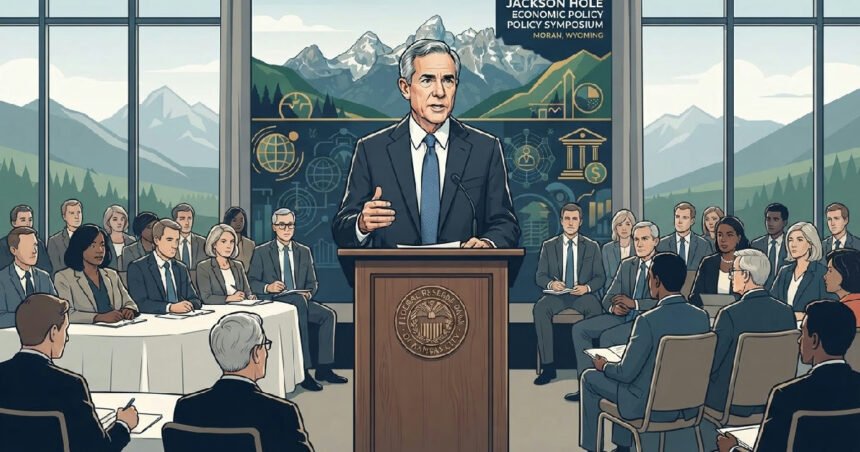
Federal Reserve Chair Kevin Warsh will deliver his keynote address today at the Jackson Hole Economic Policy Symposium, watched by crypto traders for monetary policy and digital asset regulation signals. His remarks, scheduled for 10:00 a.m. local time in Moran, Wyoming, come as Bitcoin continues to trade near the $81,000 mark.
The symposium, hosted annually by the Federal Reserve Bank of Kansas City, is renowned for shaping economic discourse. This year’s theme, “Financial Innovation: Implications for Payments and Policy,” places digital currencies and payments squarely in the spotlight for the first time in the event’s history.
Reserve Chair Kevin Warsh’s Jackson Hole address
Today marks Federal Reserve Chair Kevin Warsh’s inaugural keynote speech at the prestigious Jackson Hole gathering. He assumed the role of Fed Chair on May 22, 2026, after being nominated by President Donald Trump in January of the same year.
Warsh, 55, born in Albany, New York, in April 1970, is known for focusing on long-term economic conditions and a tougher stance on inflation. Traders are keen to discern his perspective on the regulatory trajectory of cryptocurrencies and the wider digital payments ecosystem.
His statements could significantly influence the Federal Open Market Committee (FOMC) decision expected in September. Investors will be dissecting every word for hints regarding interest rates, bond yields, and commodity prices, all directly impacting the crypto market’s liquidity and risk appetite.
The address will also delve into how financial innovation, particularly digital assets, will be integrated into the broader policy framework. It represents a crucial moment for clarifying the Fed’s official stance on this rapidly evolving sector.
Bitcoin holds firm amid policy uncertainty
As the financial world awaits Chair Warsh’s speech, Bitcoin has maintained a strong position. The leading cryptocurrency is trading near $81,000, fluctuating between $80,100 and $80,526.
Bitcoin saw a notable gain of 1.9% to 2% over the last 24 hours, as of August 27, 2026. This upward trend builds on a solid 10% increase recorded over the past week, demonstrating resilience amid macroeconomic uncertainty.
This stability suggests that while traders brace for potential shifts, positive sentiment around digital assets remains largely intact. Many investors are likely holding their positions, waiting for clear signals before making significant moves affecting cryptocurrency market trends.
The market’s reaction post-speech will reveal how deeply Warsh’s pronouncements resonate with current investor expectations. Volatility could rise sharply if his remarks diverge significantly from the market’s perceived dovish or hawkish leanings.
Navigating new monetary policy signals
Federal Reserve Chair Kevin Warsh’s communication style has introduced a new layer of uncertainty for markets. Since taking office in May 2026, he has offered fewer explicit signals regarding future interest rate decisions compared to his predecessor, Jerome Powell.
This restrained approach contrasts with the more direct guidance markets often prefer, leading to a degree of speculation. Investors are now forced to interpret subtle cues rather than rely on overt declarations, especially concerning upcoming FOMC actions and their impact on global crypto taxable activity.
The Federal Open Market Committee, at its July 28-29, 2026, meeting, voted to keep the federal funds rate target range steady at 3.50%-3.75%. However, this decision was not unanimous, indicating internal divisions within the central bank.
Three FOMC members—Beth Hammack, Neel Kashkari, and Lorie Logan—advocated for a 25 basis point rate increase, highlighting persistent concerns about inflation. This internal dissent underscores the complex economic landscape the Fed currently navigates.
Inflation remains a key concern for the central bank. The Personal Consumption Expenditures (PCE) price index rose 3.7% year-on-year in July 2026, with the core rate, excluding volatile food and energy components, increasing by 3.3%.
Both figures advanced by 0.2% from the prior month, consistently staying above the Fed’s long-term 2% inflation target. Warsh’s speech will likely address these inflationary pressures and the Fed’s strategy to bring them under control without stifling economic growth.
Jackson Hole: a forum for financial innovation
The Jackson Hole Economic Policy Symposium has long served as a vital platform for central bankers and economists worldwide. It’s here that significant discussions on structural economic questions and policy challenges often take place.
Historically, Federal Reserve Chairs have used this influential forum to telegraph forthcoming shifts in monetary policy. These signals often precede official Federal Open Market Committee decisions, making the event critical for market participants.
This year’s theme, “Financial Innovation: Implications for Payments and Policy,” marks a significant departure from previous symposiums. It’s the first time digital payments and financial technology have been the central organizing theme since the event began in Jackson Hole in 1981.
This thematic choice reflects the growing importance of cryptocurrencies and blockchain technology in the global financial system. It also acknowledges the urgent need for central banks to address the complexities and opportunities presented by these innovations.
The symposium’s agenda includes academic presentations and in-depth panel discussions. These sessions will further explore the regulatory challenges and policy responses required to manage the rapid evolution of financial technology.
Broader implications for digital asset regulation
The anticipated comments from Federal Reserve Chair Kevin Warsh could set the tone for future cryptocurrency regulation. His insights into digital payments will be particularly crucial for an industry grappling with regulatory uncertainty across multiple jurisdictions.
If Warsh signals a more hands-on approach from the Federal Reserve, it could spur other agencies to act more decisively. This might include stricter guidelines on stablecoins, digital asset exchanges, and decentralized finance (DeFi) platforms.
A clearer regulatory stance from the Fed could also influence ongoing discussions among lawmakers. Conversely, an overly restrictive tone could be seen as a setback for innovation in the sector.